
Family stories fade without recording because three forces work against them simultaneously: the people who hold them die, human memory reconstructs and distorts with every retelling, and digital files disappear faster than anyone expects. The single most useful thing you can do in the next 15 minutes is open your phone's voice memo app and call one older relative with a single question: "Tell me about the house you grew up in."
Here's the short version of what this article covers:
- Why stories disappear (mortality, memory drift, tech fragility)
- Why preserving them matters more than nostalgia
- Which recording methods work best and why
- How to handle reluctant relatives and cognitive decline
- A 30/90/365-day action plan you can start today
- The research behind it all
- Tools and resources, including Senarra
Table of Contents
- 1. Why family stories fade without recording
- 2. Why these stories matter more than you think
- 3. Which recording methods actually produce the richest results
- 4. How to handle reluctant relatives and other real obstacles
- 5. A 30/90/365-day plan to capture stories before the window closes
- 6. What the research actually shows about family narratives and loss
- 7. Tools and resources to start recording today
- Key Takeaways
- The thing most families get wrong about preserving stories
- Senarra keeps the voice alive after the conversation ends
- Useful sources
1. Why family stories fade without recording
The window to collect a family story is shorter than most people realize. Collection windows close when older relatives die or experience cognitive decline, often before anyone thought to ask. That's the blunt reality.
Memory makes it worse. Human memory is reconstructive, not archival. Every time someone retells a story, the brain fills gaps with plausible details, smooths inconsistencies, and adjusts tone to fit the audience. Each retelling can alter details, and once the chain of tellers breaks, entire story threads disappear permanently. Your grandmother's version of how she met your grandfather is already slightly different from the version she told ten years ago.
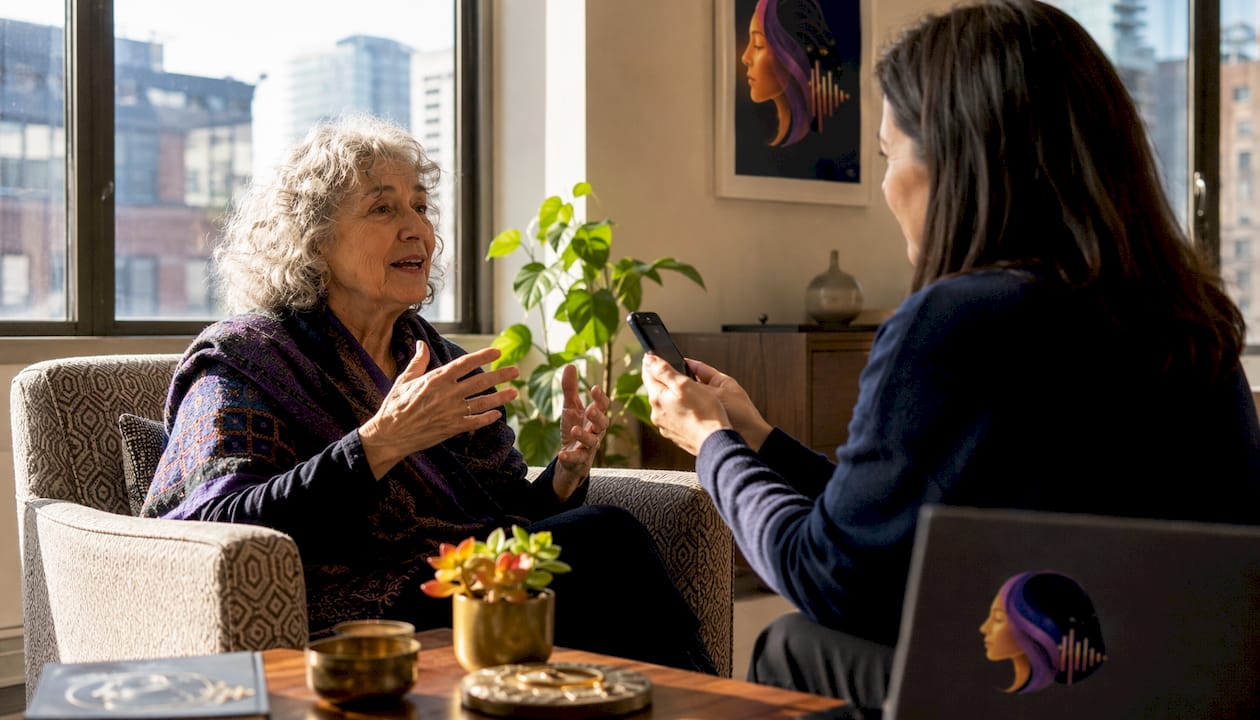
Family dynamics accelerate the loss. Dispersed families, fewer Sunday dinners, and the general collapse of intergenerational rituals mean stories that once circulated naturally at gatherings now have no venue. And then there's the technology problem. Platforms go offline, servers crash, and policies change, leaving digital-only records stranded. A decade of Facebook posts can vanish. A phone dies without a backup. The speed of digital creation outpaces archival foresight, so abundant records still leave massive gaps.
The most dangerous trap is what researchers call reasonable postponement. Families assume that because a story gets told at every Thanksgiving, it's safe. That assumption explains most of the loss.
2. Why these stories matter more than you think
The importance of preserving family stories goes well beyond sentiment. Emory University researchers Marshall Duke and Robyn Fivush, directors of the Family Narratives Lab, have spent decades studying what happens when young people know their family history. The findings are striking: adolescents and young adults familiar with family narratives show higher self-esteem, lower depression and anxiety, and a greater sense of meaning and purpose in life. The stories don't need to be triumphant. Struggles and failures carry as much weight as achievements.
Robyn Fivush, writing in Psychology Today, describes her own experience at RootsTech, the world's largest family history conference: learning the details of her grandparents' immigration from Eastern Europe gave her a firmer sense of who she is even as an older adult. The research confirmed what she felt personally.
Beyond psychology, the practical benefits are real:
- Heirlooms gain meaning. A photograph or piece of jewelry without a story is just an object. The story is what makes it worth keeping.
- Caregiving improves. Knowing a parent's history, preferences, and formative experiences helps family members and medical providers make better decisions during illness.
- Genealogical research gets grounded. Dates and ship manifests are facts; the stories give them human weight.
- Regret decreases. The most common grief after losing a parent or grandparent is not having asked enough questions while there was still time.
The value of family storytelling lies in the conversational exchange itself, where values and personality pass between people. Lists of dates don't do that. Stories do.
3. Which recording methods actually produce the richest results
Not all methods are equal. Here's how the main options compare:
| Method | Emotional richness | Detail yield | Ease of retrieval | Longevity |
|---|---|---|---|---|
| Voice recording (MP3/WAV) | High | High | Medium (needs transcript) | High with backup |
| Video | Highest | High | Lower (harder to search) | Medium (format risk) |
| Written notes | Low | Medium | High | High |
| Physical notebook | Low | Low | Low | Very high |
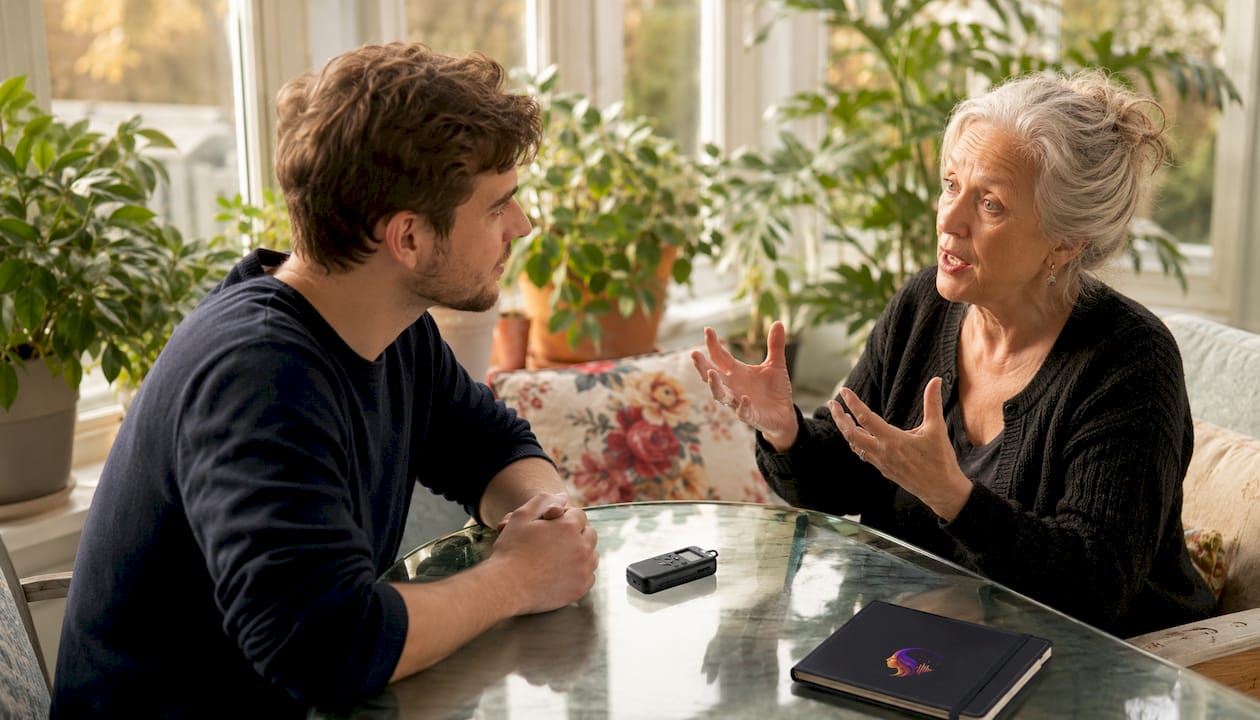
Voice recordings capture emotional nuance that typed text simply cannot. A 15-minute voice session produces far more usable material than a written response in the same time, including regional accents, pauses, and the emotional texture of how something is said, not just what is said.
Object-anchored prompts outperform open-ended questions every time. Instead of "Tell me about your childhood," try "Tell me about the kitchen table in the house you grew up in." Asking about a single object triggers specific sensory memories that broad questions never reach. The object gives the storyteller a foothold.
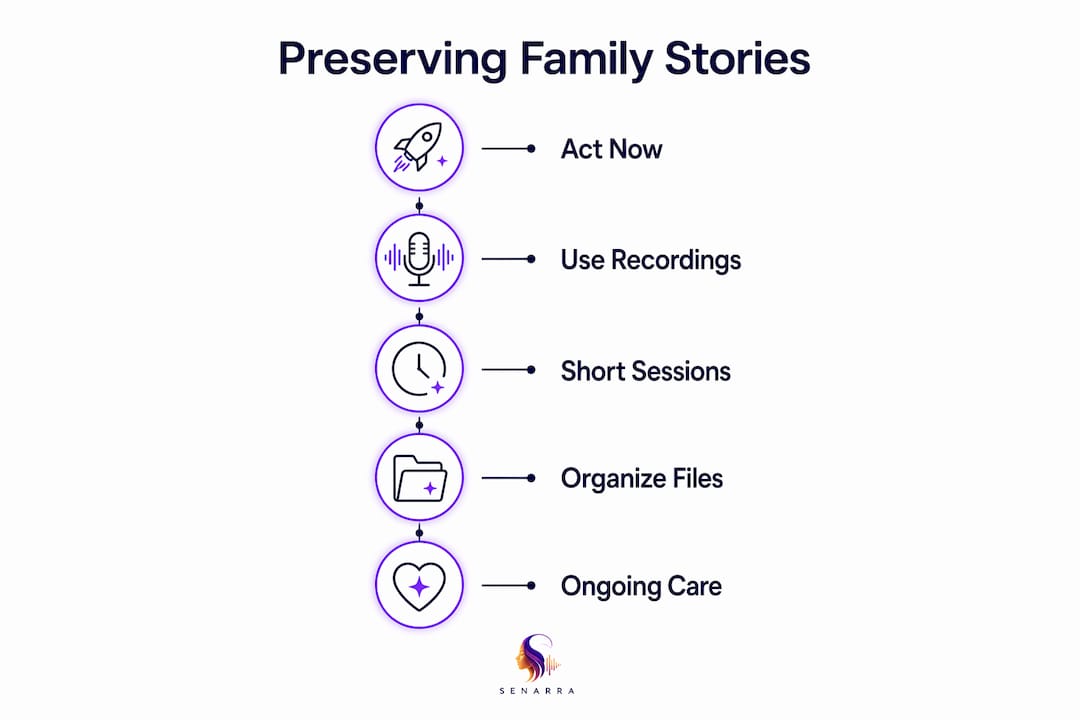
Pro Tip: Keep sessions short. Five 15-minute conversations produce richer, more detailed material than a single two-hour interview. Memory fatigue is real in older storytellers, and shorter sessions let them return to a story fresh.
On archival basics: always pair an audio file with a plain-text transcript and attach metadata. Documenting the context — who is speaking, when the recording was made, where the events took place, and the relationship between speaker and interviewer — is as important as the words themselves for anyone who finds the file 30 years from now. A file named "grandma_voice_memo_3.m4a" tells a future grandchild nothing. "EleanorHayes_interview_Chicago_1952childhood_2026-03.mp3" tells them everything.
For step-by-step voice recording guidance, including transcription tips and metadata templates, Senarra's blog covers the full workflow.
4. How to handle reluctant relatives and other real obstacles
The most common reason families don't record stories isn't lack of tools. It's human friction.
When a relative doesn't want to be recorded:
- Frame it as a gift to grandchildren, not an interview. "I want the kids to hear your voice someday" lands differently than "I want to record you."
- Start without the recorder. Have the conversation first, then ask permission to capture it next time.
- Use a phone call instead of a formal sit-down. Phone calls lower the pressure and feel more natural for many older relatives.
- Offer to share the recording only within the family, not publicly.
When cognitive decline is a factor:
Recording during dementia or early cognitive decline requires a different approach. Short sessions of 10–15 minutes work better than longer ones. Familiar objects from the person's past, photographs, or music from their era can unlock memories that direct questions cannot. A caregiver or trusted family member in the room helps the person feel safe. For detailed guidance on recording during cognitive decline, the approach differs enough from standard interviews to warrant its own preparation.
On privacy and consent:
- Always ask explicit permission before recording, even informally.
- Clarify the intended audience: family only, or potentially shared more widely?
- If you plan to publish or share publicly, get written consent. A simple signed note stating the person agreed to be recorded and how the recording may be used is sufficient for most family purposes.
- Respect requests to keep specific stories private. A story shared in confidence should stay that way unless the teller says otherwise.
- For stories involving living third parties, consider whether sharing could cause harm before distributing.
On logistics: You don't need special equipment. A smartphone held 12–18 inches from the speaker's mouth records clear audio. Free transcription tools like Otter.ai or Google's built-in transcription handle the text layer. A $10 external microphone improves quality noticeably if you want it.
5. A 30/90/365-day plan to capture stories before the window closes
That observation applies to family archives too. Here's a realistic timeline:
First 30 days:
- Identify your two or three most important storytellers — typically the oldest living relatives.
- Record one 15-minute session with each, using an object-anchored prompt.
- Create a single folder (local and cloud) named "Family Stories" with subfolders by person.
- Save each file with a descriptive name: person, topic, date.
Days 31–90:
- Transcribe your first recordings using a free tool or manually.
- Add metadata to each file: speaker name, approximate dates of events described, location, your relationship to the speaker.
- Invite one or two other relatives to listen and add their own fragments or corrections.
- Record two or three more sessions, branching into cousins, aunts, or uncles.
First year:
- Compile the strongest recordings and transcripts into a shareable artifact. A printed booklet or PDF distributed at a family gathering carries more weight than a shared folder. Physical books get read aloud at gatherings and passed between generations in ways digital files rarely are.
- Set up a two-backup rule: one local copy (external hard drive) and one cloud backup.
- Schedule an annual check-in, ideally tied to a family event, to add new recordings and update the archive.
Minimal equipment checklist:
- Smartphone with voice memo app
- Free cloud storage (Google Drive or iCloud)
- External hard drive for local backup
- Notebook for written prompts and session notes
6. What the research actually shows about family narratives and loss
The evidence behind "act now" is stronger than most people expect.
| Research area | Key finding | Source |
|---|---|---|
| Identity and resilience | Adolescents who know family stories show higher self-esteem and lower anxiety | Family Narratives Lab, Emory University |
| Memory drift | Reconstructive memory alters stories with each retelling; original recordings prevent compounding drift | ResearchGate |
| Digital fragility | Platform shutdowns, server failures, and policy changes put digital-only records at risk | Archivist commentary |
| Collection windows | Stories disappear within a generation or two when older relatives die before being asked | Preservation guides |
Marshall Duke and Robyn Fivush's work at the Family Narratives Lab is the most cited body of research on this topic. Their studies consistently show that knowing family stories, particularly stories that include both struggles and successes, builds what they call a strong "intergenerational narrative identity." Young people who have this identity handle adversity better. They know they come from people who faced hard things and got through them.
The digital fragility problem is less discussed but equally serious. Archivists now describe themselves as first responders, capturing moments before platform volatility erases them. A historian quoted in the CSUN Newsroom put it plainly: "Somewhere on the cloud are all these pictures that tell the story of what community and society was like in June 2026. It's thousands upon thousands of images and someone is going to have to sort through them all. Can you imagine what it is going to be like? A mess."
Family archives face the same problem at a smaller scale. Abundance without organization is not preservation.
7. Tools and resources to start recording today
You can start with what's already in your pocket.
Free and low-cost tools:
- Voice memos (iOS) or Recorder (Android): built-in, reliable, and good enough for most sessions
- Otter.ai: free tier transcribes up to 600 minutes per month
- Google Docs Voice Typing: free real-time transcription for live sessions
- Physical notebook: for written prompts, session notes, and backup context
Archival best practices:
- Save audio as MP3 or WAV; both are widely supported and unlikely to become obsolete soon
- Pair every audio file with a plain-text transcript (.txt or .docx)
- Follow the two-backup rule: local hard drive plus cloud storage
- Use descriptive file names, not sequential numbers
- For long-term accessible storage formats, avoid proprietary formats that depend on a single platform
Trusted resources for deeper learning:
- The Family Narratives Lab at Emory University publishes accessible summaries of their research
- The Oral History Association (OHA) offers free primers on interview technique and consent
- The digital legacy planning guide from Memory Keep covers account planning and long-term digital estate strategy
Pro Tip: Don't wait for the "right" equipment. The voice memo on your phone, recorded today, is worth more than a studio-quality recording you plan to make someday. Start rough; improve the process later.
Where Senarra fits in the workflow: Once you have raw recordings, Senarra helps you move from scattered files to something organized and shareable. Its voice capture and AI companion features preserve the authentic voice of a loved one, and its memory line makes those recordings accessible by phone, not just buried in a folder. For families working through the 30/90/365 plan, Senarra handles the organization and artifact-creation steps that most people stall on.
Key Takeaways
Family stories disappear within a generation or two when no one records them, but five 15-minute voice sessions and a simple two-backup system are enough to stop most of that loss.
| Point | Details |
|---|---|
| Act before the window closes | Collection windows close when older relatives die or experience cognitive decline, often sooner than expected. |
| Short sessions beat long ones | Five 15-minute recordings produce richer material than a single long interview, especially with older storytellers. |
| Metadata matters as much as audio | Always attach who, when, where, and why to every file so future family members can find and understand it. |
| Two-backup rule | Keep one local copy and one cloud copy of every recording; digital-only without redundancy is not preservation. |
| Senarra organizes and preserves | Senarra captures authentic voice, organizes memories, and creates shareable artifacts that outlast scattered digital files. |
The thing most families get wrong about preserving stories
The conventional advice is to "start recording." That's correct but incomplete. The harder problem is that most families treat preservation as a one-time project rather than an ongoing practice. They record one long interview at a family reunion, feel good about it, and never return to it. The file sits in a folder no one can find, in a format that may not open in ten years, with no transcript and no metadata.
What the research from the Family Narratives Lab actually shows is that the exchange matters as much as the artifact. Robyn Fivush is explicit about this: the value is in the conversational transmission of values and personality between people, not in the production of a document. Recording is how you preserve that exchange after the person is gone. But the recording only works if it's organized, accessible, and attached to enough context that a stranger could understand it.
The families who do this well treat it like a garden, not a harvest. They add a recording here, a transcript there, a photograph with a caption. They invite cousins to correct details. They print something physical every year or two. The archive grows because someone keeps tending it.
Senarra's approach to voice preservation aligns with exactly this model: not a one-time capture, but an ongoing companion that keeps the voice and the stories accessible over time.
Senarra keeps the voice alive after the conversation ends
Most families record one conversation and never return to it. Senarra is built for what comes after: it captures a loved one's voice in their own words, organizes those memories into something you can actually find and share, and makes them accessible through a phone call whenever you want to hear them again. Voice cloning and a dedicated memory line mean the person's authentic voice stays present, not buried in a folder.
If you're working through the 30/90/365 plan, Senarra handles the steps most people stall on: organizing raw recordings, creating shareable artifacts, and keeping the archive alive over time. A family working through early recordings in month one can use Senarra to turn those files into something a grandchild can call up in ten years.
Start preserving your family's voice today, before the window closes.
Useful sources
| Source | What it covers |
|---|---|
| Family Narratives Lab, Emory University — Psychology Today | Research on identity, resilience, and the psychological benefits of family storytelling |
| Why sharing family stories is vital — Psychology Today | Intergenerational narrative research and adolescent mental health findings |
| How to be the archivist of your family's stories — Psyche Guides | Practical archival technique, object-anchored prompts, and metadata guidance |
| The Collapse of Evidence as a Historical Problem — The Tattooed Historian | Digital fragility, platform volatility, and the archivist's role as first responder |
| CSUN Archivist on chronicling everyday life — CSUN Newsroom | Archivist perspective on documentation, community history, and digital abundance |
| How to Preserve Family Stories Before It's Too Late | Practical session guidance, voice recording benefits, and physical artifact value |
| Digital Legacy Planning Guide — Memory Keep | Digital estate planning and long-term account preservation strategy |
| Oral History Preservation: Step-by-Step Guide — Senarra Blog | Interview structure, consent practices, and archival best practices |