
Preserving family conversations is defined as the deliberate act of capturing spoken stories, emotional tones, and personal expressions before they disappear forever. 90% of family stories are lost within three generations. That statistic means your grandchildren may never know what your grandmother's voice sounded like, how she laughed, or what she believed. The case for recording family history is not sentimental. It is urgent, practical, and backed by psychology research showing that revisiting saved conversations builds emotional connection and a stronger sense of self.
Why preserve family conversations before it's too late
Family narrative preservation is the recognized term for what most people call "keeping family memories." It covers everything from oral history recordings to written memoirs, but voice recordings remain the most emotionally complete format. Voice captures nuances like laughter, regional accents, and spontaneous reactions that typed text simply cannot hold. A grandmother's story about immigrating to a new country lands differently when you hear the catch in her voice than when you read a summary of the same events.
The psychological case is equally strong. Revisiting saved conversations aids well-being by increasing belonging and emotional connection. That means a recorded conversation is not just a keepsake. It is a resource families can return to during grief, transition, or simply when they want to feel close to someone they love. Senarra is built on exactly this principle, allowing families to access preserved voices and memories whenever they need them.
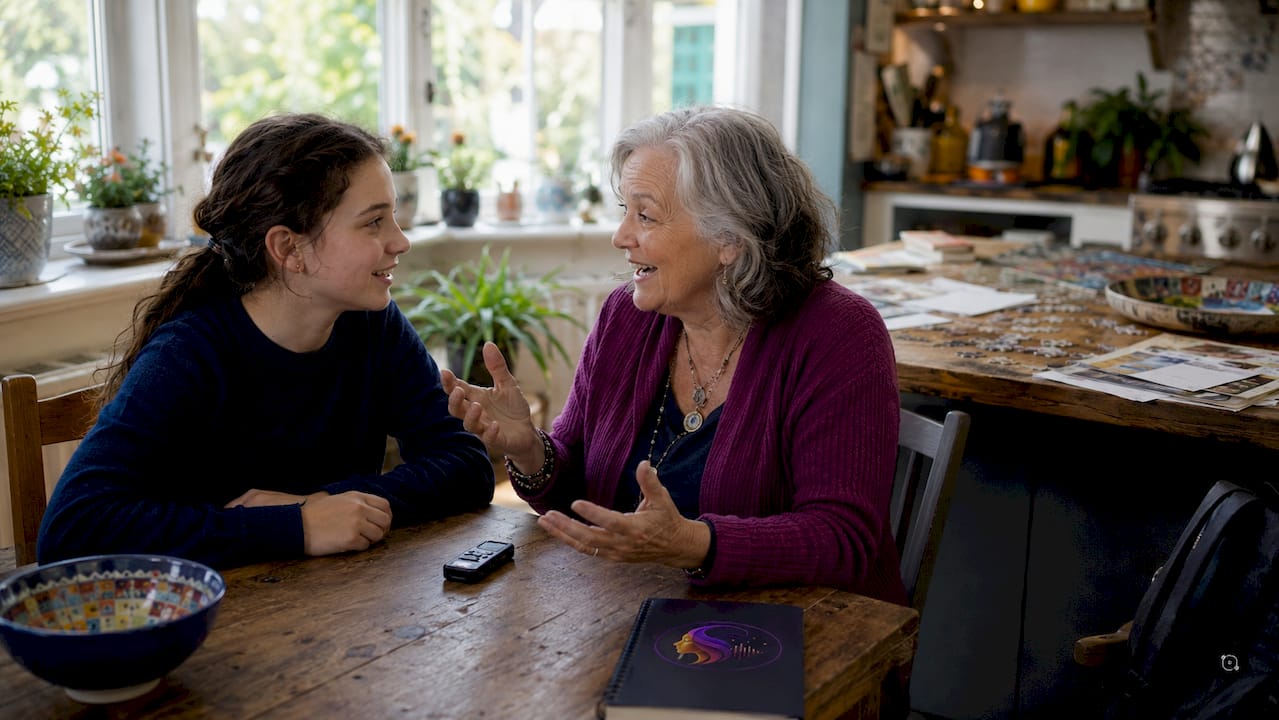
Family identity is also shaped by these exchanges. The stories a family tells about itself, its struggles, its humor, and its values, define how members see themselves and each other. When those stories disappear, so does a piece of that identity.
How does losing family stories affect future generations?
The consequences of lost family narratives are concrete and measurable. The average person loses both grandparents by age 30, which means the preservation window is shorter than most families realize. Modern life compounds the problem. Geographic distance, busy schedules, and the collapse of traditional oral storytelling cultures mean fewer families gather regularly to share stories across generations.
Waiting makes things worse in a specific way. Families that delay recording until a health crisis find that memories are less vivid and emotional authenticity is harder to capture. A person in early cognitive decline may still recall broad facts but lose the texture, the specific details, and the feeling that make a story worth preserving. The story becomes a skeleton without the life inside it.
Three practical consequences follow from waiting too long:
- Fading memory detail. Specific names, dates, and sensory details disappear first, leaving only general impressions.
- Reduced emotional depth. Storytellers who are unwell or exhausted often give shorter, flatter accounts than they would in good health.
- Missed follow-up questions. Once a storyteller is gone, there is no one left to clarify, expand, or correct the record.
The urgency is real. Starting now, even imperfectly, produces a richer archive than waiting for the right moment that never comes.
Practical methods to preserve family conversations effectively
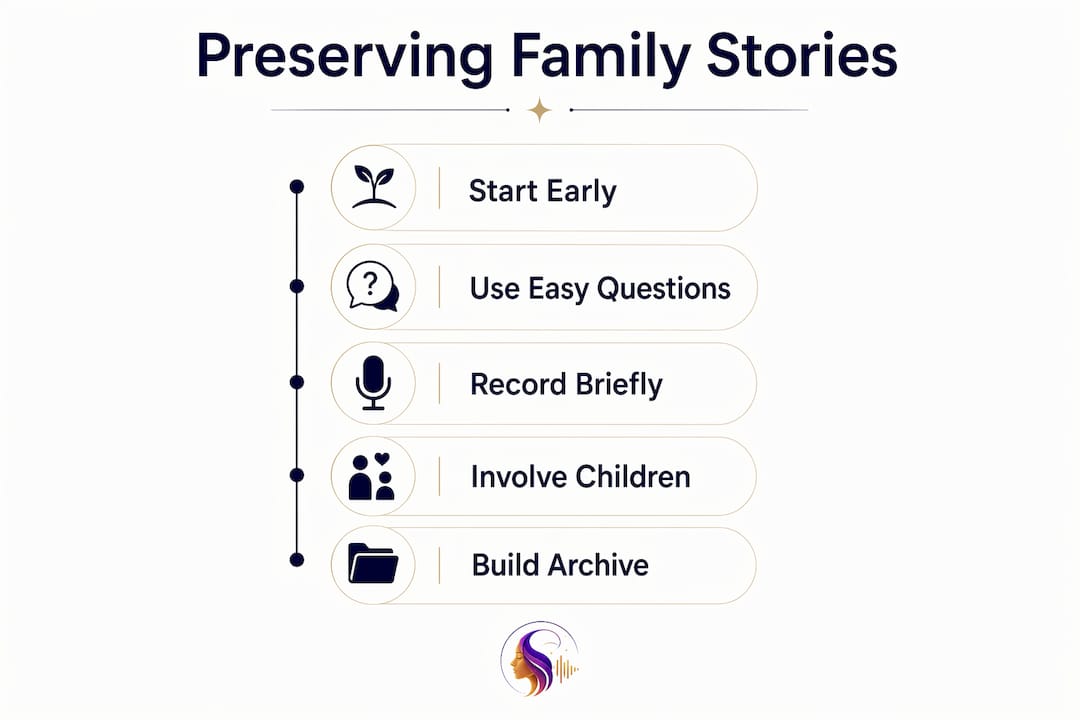
Effective family narrative preservation does not require expensive equipment or professional training. 15-minute focused conversations capture rich, authentic memories more reliably than long, exhausting interview sessions. Short sessions keep storytellers energized and natural, which is exactly when the best stories emerge.
Start with easy questions
Begin with questions about childhood, not history lessons. Ask about a favorite meal, a childhood game, or a memorable teacher. These prompts lower the emotional barrier and produce vivid, specific stories. Questions like "What did your neighborhood smell like when you were eight?" unlock sensory memory in ways that "Tell me about your childhood" never does.
Choose the right recording approach
- Smartphone voice memos: Free, always available, and good enough for most family recordings. Place the phone on a table between you and the storyteller.
- Dedicated audio recorders: Produce cleaner sound in noisy environments. Worth using for elderly relatives with softer voices.
- Video recording: Captures facial expressions and gestures, adding another layer of emotional context. Use natural light and a stable surface.
- AI-assisted platforms: Tools like Senarra go further by preserving voice patterns and making recordings accessible through a dedicated memory line, so families can hear a loved one's voice on demand.
Pro Tip: Organize recordings by theme, not by date. A folder labeled "childhood stories" is far more useful to future generations than one labeled "recordings from march 2026."
Keep the process sustainable
Healthy family dialogue requires recognizing and changing negative patterns, and the same applies to recording sessions. If a family member feels interrogated, they will shut down. Frame sessions as conversations, not interviews. Sit together over coffee. Let silences happen. The most meaningful moments often come after a pause.
Involve children early. When kids hear grandparents tell stories directly, they absorb both the content and the habit of family storytelling. That habit becomes part of how they see their own role in the family.
How do preserved conversations strengthen family bonds across generations?
The long-term benefits of preserving family conversations extend well beyond nostalgia. Children learn empathy, communication skills, and conflict resolution through everyday family conversations. Recorded stories extend that learning across time, letting children absorb the values and experiences of people they may never meet in person.
Intentional family dialogue builds foundational trust, helping children and adults safely share both joys and sorrows. Preserved conversations model that trust for future generations. A child who hears their great-grandmother describe surviving hardship with humor and grace learns something about resilience that no classroom can teach.
Cultural heritage is another direct beneficiary. Language, dialect, food traditions, religious practices, and community values all travel through story. When the stories stop, the traditions often follow. Families with strong oral archives maintain cultural continuity across diaspora, migration, and generational change in ways that written records alone cannot achieve.
The communication patterns families practice also shape how members relate to each other for decades. Open, non-judgmental family talks promote mental health and create the emotional safety that makes honest expression possible. Preserving those conversations reinforces the pattern. Future family members can hear not just what was said, but how a family chose to speak to each other.
Families that build a family narrative archive report a stronger sense of continuity and belonging. That sense of belonging is not abstract. It shows up in how children handle stress, how adults navigate loss, and how families stay connected across distance and time.
Key Takeaways
Preserving family conversations is the single most effective way to protect emotional bonds, cultural identity, and personal legacy across generations.
| Point | Details |
|---|---|
| Start early, not perfectly | 90% of family stories vanish within three generations; begin recording now, even in short sessions. |
| Voice beats text | Audio captures laughter, accents, and emotion that written summaries permanently lose. |
| Short sessions work best | 15-minute focused conversations produce richer, more authentic stories than long interviews. |
| Children benefit directly | Kids absorb empathy and communication skills from family stories, both live and recorded. |
| Delay costs quality | Waiting until a health crisis reduces the vividness and emotional depth of preserved memories. |
What I've learned from families who waited too long
The most common regret I hear from families is not that they recorded too much. It is that they waited. They assumed there would be more time. They thought the stories were already known. They felt awkward pulling out a phone and pressing record.
What I have observed is that the awkwardness lasts about 90 seconds. After that, most people forget the recording is happening and simply talk. The stories that come out in those unguarded moments are the ones families treasure most. They are not polished. They are real.
The other thing I have noticed is that families underestimate how much they do not know. A daughter who thought she knew everything about her mother's childhood will ask one unexpected question and discover an entirely new chapter. That is the nature of conversation. It goes places a questionnaire never reaches.
My practical advice: do not wait for a family reunion or a milestone birthday. Record a 15-minute conversation this week. Ask one question you have never asked before. The voice recording guide at Senarra's blog is a good place to find questions that actually open people up. Imperfect recordings made today are worth more than perfect ones planned for later.
— Bryan
Senarra: a place to keep the voices you love
Families who want to go beyond a folder of audio files have a purpose-built option in Senarra. Senarra is an AI companion designed to preserve the voices and stories of loved ones, including pets, in a way that feels personal and alive rather than archival.
Senarra captures heartfelt conversations in a person's authentic voice and makes those memories accessible through a dedicated memory line you can call by phone. Features like voice cloning mean a loved one's voice does not have to disappear when they do. For families ready to build a lasting legacy, Senarra's memory preservation app offers a place to start that is warm, accessible, and built for real people, not archivists.
FAQ
Why preserve family conversations instead of just photos?
Photos capture moments, but voice recordings capture personality, emotion, and the exact way a person expressed themselves. A voice carries information that no image can hold.
How many generations back do family stories typically survive?
90% of family stories are lost within three generations, making early preservation the only reliable way to protect them.
What is the best length for a family recording session?
15-minute focused sessions produce the most authentic and emotionally rich stories. Longer sessions often lead to fatigue and flatter storytelling.
Do children benefit from hearing preserved family stories?
Yes. Children learn empathy, communication, and conflict resolution through family conversations, and recorded stories extend that benefit across generations.
When is the right time to start recording family conversations?
The right time is now. Waiting until a health crisis reduces the quality and emotional depth of what can be captured.