
Personal voice legacy preservation is defined as the practice of capturing, storing, and sharing a person's recorded voice so that their tone, emotion, and presence remain accessible long after they are gone. A voice carries what photographs and text cannot: the exact rhythm of a laugh, the warmth of a bedtime story, the weight of a final goodbye. Families who understand why preserve personal voice legacy matters are choosing to act before loss makes it impossible. Tools like Apple's Personal Voice, AI voice cloning platforms, and apps like Senarra have made this practice more accessible than ever. The time to start is now, not after.
Why does preserving a personal voice legacy matter most?
Voice recordings become powerful emotional anchors that families return to across generations. A photograph shows a face. A letter shares words. But a voice delivers presence. You hear the hesitation before a hard truth, the joy in a name being called, the specific cadence that belongs to one person alone.
Grief experts consistently note that voice is the sense most closely tied to emotional memory. When you lose someone, their voice is often what you miss first and forget fastest. A recording changes that. It gives you something to return to when memory starts to blur.
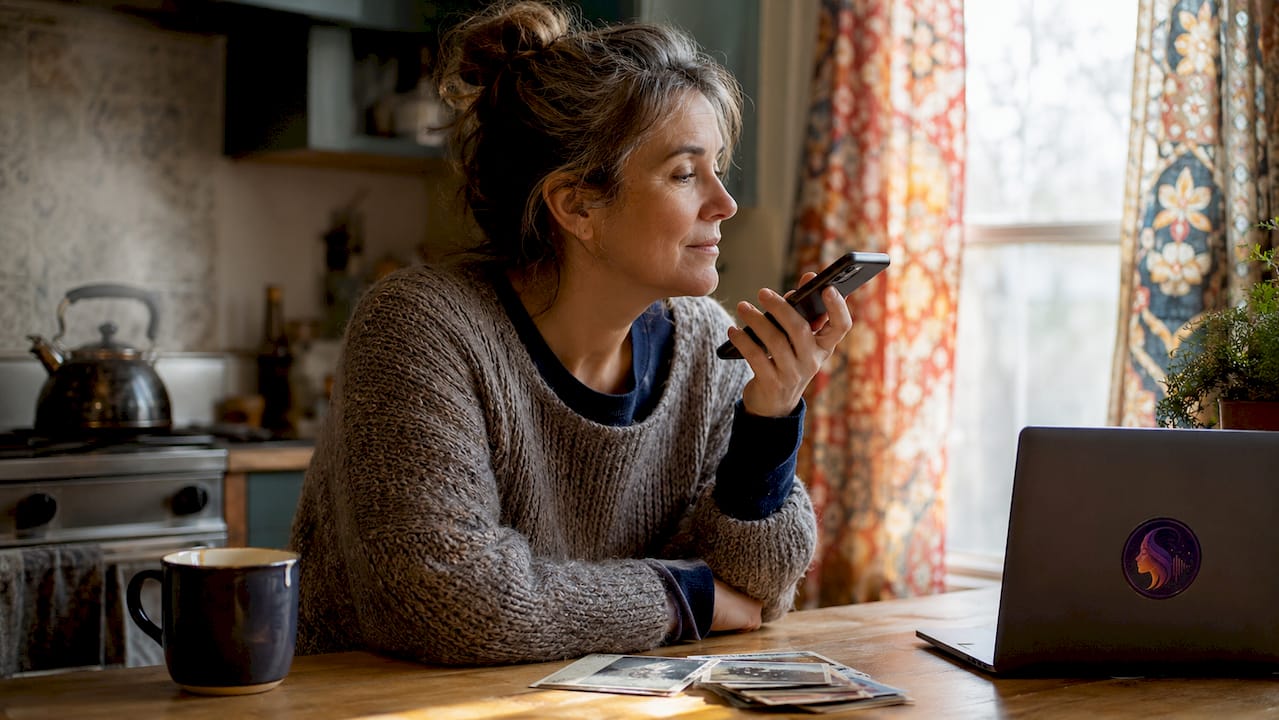
Voice legacy preservation also serves a practical purpose for people facing illness. The Voice Preservation Clinic at Northeastern University's Bouvé College of Health Sciences works with individuals who have degenerative diseases, recording their voices early so that authentic vocal identity is retained. This is voice preservation as a proactive health decision, not just a sentimental one.
How does preserving a loved one's voice strengthen emotional connections?
Families who preserve voice legacies report a sense of ongoing connection that helps them navigate grief in a healthier way. They describe consulting a recording before a big decision, playing it during a difficult moment, or simply listening to feel less alone. That is not nostalgia. That is a living memory system at work.
"Even short recordings become treasured possessions over time. Listening to an old voice recording can evoke presence and emotional connection that comfort people during grief and loss." — Funeral.com Legacy Preservation Guide
Voice recordings do things that other memory formats cannot:
- They reproduce the exact emotional tone of a moment, not just the content.
- They allow children who never met a grandparent to hear that person speak directly to them.
- They give grieving families a way to feel accompanied rather than abandoned.
- They preserve cultural and linguistic identity, including accents, dialects, and expressions that written records erase.
Pro Tip: Record everyday moments, not just formal speeches. A grandparent reading a recipe aloud or a parent leaving a voicemail carries more emotional weight than a scripted message.
The importance of personal legacy becomes clearest in hindsight. Families who did not record a loved one's voice consistently report regret. Those who did describe the recordings as irreplaceable.
In what ways does AI help recreate and preserve authentic family voices?
AI voice cloning works by analyzing recordings of a person's speech to build a digital model that reproduces their tone, pauses, and breathing patterns. Apple's Personal Voice feature requires recording about 50 phrases to build a usable voice model. That model can then be used with Live Speech, Read and Speak, and VoiceOver, serving both accessibility and legacy purposes.
Traditional recordings vs. AI voice synthesis
| Feature | Traditional voice recording | AI voice synthesis |
|---|---|---|
| Captures original voice | Yes | Yes, from source recordings |
| Requires advance planning | Yes | Yes |
| Can generate new speech | No | Yes |
| Preserves tone and pauses | Yes | Yes |
| Works after person is gone | Playback only | Can respond interactively |
| Ethical safeguards needed | Low | High |
AI voice synthesis creates possibilities that traditional recordings cannot. A preserved voice model can answer a question the original speaker never addressed. It can read a story to a grandchild born years after the speaker passed. That capability carries real emotional value and real ethical responsibility.
Ethical safeguards matter here. Voice models should only be created with the explicit consent of the person being recorded. Platforms like Senarra build consent and privacy controls directly into their process. The goal is authentic preservation, not fabrication.
Pro Tip: Start recording now, while your loved one is healthy and willing. AI voice models built from clear, high-quality recordings produce far more accurate and emotionally resonant results.
Key considerations when using AI for voice preservation:
- Consent must be documented before any recording or modeling begins.
- Source recordings should be clear, varied, and captured in multiple emotional contexts.
- Storage of AI voice models requires secure, private platforms with strong data policies.
- Families should discuss how and when the preserved voice will be accessed.
What are practical ways to preserve and curate personal voice legacies today?
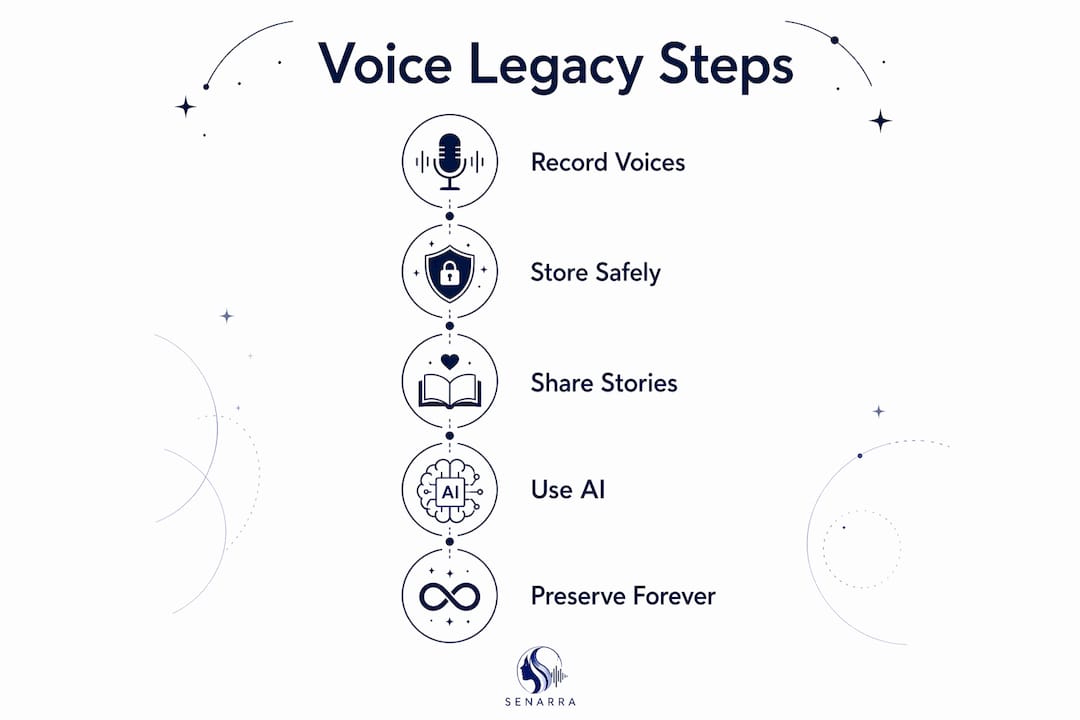
Effective voice legacy preservation follows a clear process. Skipping steps leads to the most common failure: recordings that exist but cannot be found, played, or trusted to last.
- Record with intention. Use a dedicated microphone or a high-quality smartphone app. Record in a quiet room. Capture conversations, stories, and spontaneous moments alongside any formal messages.
- Choose storage carefully. Legacy recordings stored on consumer cloud services can be vulnerable to platform policy changes. Use at least two storage methods: one cloud-based and one physical backup such as an external hard drive.
- Use a dedicated memory preservation app. Senarra organizes voice recordings alongside stories and memories, making them easy to retrieve and share. Its memory line feature lets family members call in and hear a loved one's voice directly.
- Document the context. Label every recording with the date, location, and names of everyone present. A voice clip without context loses meaning over generations.
- Integrate voice into your broader legacy plan. Pair recordings with photographs, written stories, and keepsakes. A voice recording guide can help you structure this process.
Storage options compared
| Storage method | Longevity | Access ease | Risk level |
|---|---|---|---|
| Consumer cloud (Google Drive, iCloud) | Medium | High | Medium (policy changes) |
| Dedicated memory app (Senarra) | High | High | Low |
| External hard drive | High | Medium | Medium (physical damage) |
| USB drive | Medium | Medium | High (loss, corruption) |
| Family server or NAS | High | Medium | Low with maintenance |
Voice legacy planning is now recognized as a missing piece in end-of-life preparation. Grief experts note that families start too late. The best time to begin is while your loved one is present, healthy, and able to speak freely.
Why is preserving a personal voice legacy essential for future generations?
Voice preservation turns memories into living experiences rather than static records. A great-grandchild born in 2040 can hear a voice from 2025 and feel a real connection to someone they never met. That is something no photograph or written biography achieves.
Voice recordings carry cultural identity in ways that other formats miss. An accent tells a story about where someone grew up. A phrase in a regional dialect connects descendants to a place. A lullaby sung in a grandparent's voice passes on something that cannot be written down.
The benefits of voice preservation for future generations include:
- Direct, personal connection to ancestors who would otherwise be abstract names on a family tree.
- Preservation of language, dialect, and cultural expression that written records flatten.
- Emotional grounding for descendants navigating questions of identity and belonging.
- A richer family archive when combined with family stories and photographs.
- A model for future generations to follow, encouraging them to preserve their own voices.
Professional memorial consultants describe voice preservation as a living memory system integrated into everyday life rather than a one-time project. That framing matters. A voice legacy is not an archive you seal and forget. It is something you return to, share, and build upon over time.
Key takeaways
Preserving a personal voice legacy is the most direct way to keep a loved one's presence, personality, and cultural identity alive for the people who come after them.
| Point | Details |
|---|---|
| Voice outlasts other formats | Recordings capture tone and emotion that photos and text cannot replicate. |
| Start early, especially during illness | Recording voice before decline ensures authentic, high-quality preservation. |
| AI expands what's possible | Tools like Apple's Personal Voice can build interactive voice models from 50 recorded phrases. |
| Storage choice determines longevity | Use dedicated apps like Senarra alongside physical backups to protect recordings long term. |
| Future generations benefit most | Descendants gain a direct emotional connection to ancestors through preserved voice. |
Voice legacies: what I've learned from working with families
I have spent years watching families navigate loss, and the pattern is consistent. The recordings that exist become treasures. The ones that were never made become regrets.
What surprises most families is how little it takes to start. A phone, a quiet room, and a willing conversation partner are enough. The barrier is not technology. It is the belief that there is still time. There usually is, until there is not.
AI voice preservation changes the stakes in a way I find genuinely significant. The ability to build a voice model that can speak new sentences is not a gimmick. For a parent with ALS who wants to read bedtime stories to a child not yet born, it is a profound gift. For a grandchild who grows up hearing a grandparent's voice answer questions, it reshapes what ancestry means.
My honest concern is consent and context. A preserved voice used without clear family agreement can cause pain rather than comfort. The technology works best when the person being recorded is part of the decision, when they choose what to say and how to say it. That is why platforms with built-in ethical frameworks matter more than raw capability.
The families I have seen do this well treat voice preservation as an ongoing practice, not a single recording session. They capture ordinary moments. They update recordings as life changes. They build something their descendants will actually want to return to.
— Bryan
How Senarra helps you preserve voices with care
Senarra is built specifically for families who want to preserve voices and stories with both emotional depth and ethical care. The platform captures heartfelt conversations in a loved one's authentic voice, organizes them alongside memories and photographs, and makes them accessible through a memory line you can call from any phone. Senarra also offers voice cloning features that let families build interactive voice models with full consent controls built in. For families thinking about how to preserve voice legacy across generations, Senarra's ethical framework ensures that every recording is handled with privacy and respect at every step.
FAQ
What is a personal voice legacy?
A personal voice legacy is a collection of recorded audio that captures a person's voice, speech patterns, and stories for future listening. It preserves emotional presence in a way that photographs and written records cannot.
Why should I preserve a loved one's voice before they pass?
Voice recordings become irreplaceable after a person is gone, and quality declines sharply when recording is delayed by illness. Starting early produces clearer, more emotionally rich recordings.
How does AI recreate a family member's voice?
AI voice cloning analyzes existing recordings to build a digital model that reproduces tone, pauses, and breathing. Apple's Personal Voice requires roughly 50 recorded phrases to generate a working voice model.
What is the safest way to store voice recordings long term?
Use at least two storage methods: a dedicated memory preservation app like Senarra and a physical backup such as an external hard drive. Consumer cloud services alone carry risk from platform policy changes.
When is the right time to start preserving a voice legacy?
The right time is while your loved one is healthy and willing to participate. Grief experts and legacy planning specialists consistently note that families who wait until illness or crisis produce lower-quality recordings and carry more regret.