
Recording milestone stories in family history means capturing the life events, emotions, and turning points that define who your family is, using writing, voice recordings, photographs, and video to preserve those memories for future generations. Most families own the raw material already: old photos in shoeboxes, a grandparent with sharp recall, a parent who tells the same story every Thanksgiving. The gap is not material. The gap is method. This article gives you a clear, practical system to document family events, organize what you collect, and share it in a way that actually lasts.
What are milestone stories in family history and why do they matter?
Milestone stories are not the same as timeline events. A timeline event is a date and a fact: "Grandma Rosa immigrated in 1952." A milestone story is the emotional truth behind that fact: why she left, what she carried, and what she found. Storytelling expert Jill Sarkozi draws a direct line between timeline and story events, noting that story events explain why something mattered and shaped the family. That distinction is the foundation of meaningful family history documentation.
Common milestone stories include:
- Births and adoptions: The circumstances, the fear, the joy, the name choice and its meaning
- Marriages and partnerships: How two people met, what the wedding day felt like, the early years
- Losses and grief: Deaths, miscarriages, estrangements, and how the family moved through them
- Achievements and firsts: First in the family to graduate, to own a home, to leave the country
- Hardships survived: Job loss, illness, war, migration, and the decisions made under pressure
The emotional core of family history lives in why something mattered, not in the dates themselves. A child reading a family history book in 2060 will not care that a great-grandparent was born on a specific date. They will care that she walked three miles to school in the snow and still became a teacher. That is the story worth recording.
Pro Tip: When you sit down to write or record a milestone, ask "Why did this change us?" before you ask "What happened?" That single question shifts the story from a report to a memory.
What tools do you need to start recording family milestone stories?
Starting a family history storytelling project does not require expensive equipment. The tools you already own cover most of what you need.
| Tool | Best use | Cost |
|---|---|---|
| Smartphone voice memo app | Quick audio recordings of stories | Free |
| Smartphone camera or video app | Short video interviews with family members | Free |
| Flatbed scanner or scanning app | Digitizing old photos and documents | Free to low |
| Notebook or word processor | Written narrative and transcription | Free |
| Cloud storage (Google Drive, iCloud) | Backup and sharing across family members | Free to low |
Beyond the tools themselves, organization matters as much as capture. A folder of unlabeled audio files is nearly as useless as no recording at all. Set up a simple digital filing system before your first session. Create folders by person, then by decade or life stage. Label every file with a name, a date, and a one-line description the moment you save it.
A few additional steps make the whole project more sustainable:
- Schedule a dedicated time. A 30-minute Sunday session with a grandparent beats an ambitious project that never starts.
- Prepare a short list of questions before each session so you do not lose time thinking of what to ask.
- Keep a physical backup. Print key photos and written summaries annually and store them separately from your digital files.
- Use a scanning app like Google PhotoScan or Microsoft Lens to digitize fragile documents without damaging them.
The family history preservation methods that work long-term are the ones that fit into real life, not the ones that require a dedicated studio or a full weekend every month.
How can you effectively capture milestone stories?
The most common mistake in family history storytelling is waiting for the perfect moment. Short, regular sessions produce far better results than rare, ambitious ones. Four-minute writing sessions or 30-second voice anecdotes build lasting family narratives over time. That is a low bar, and it is intentional.
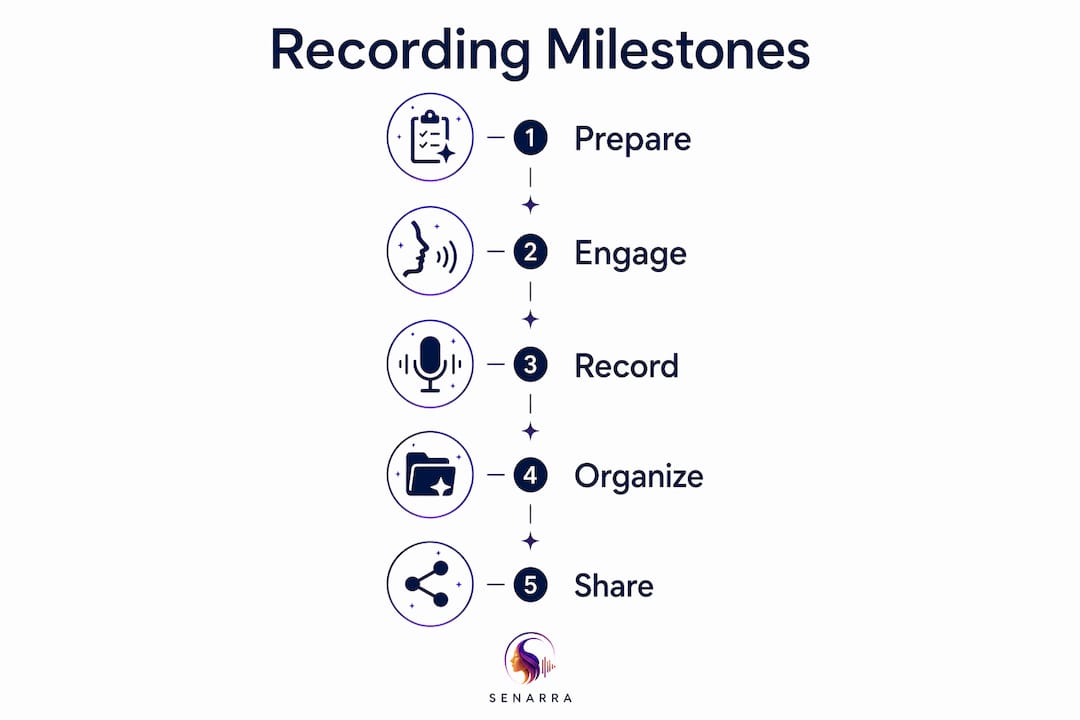
Follow this sequence to capture stories without overwhelming yourself or your family members:
-
Start with one person. Focusing on one person at a time is the simplest way to build detailed, coherent stories. Pick the oldest living relative or the one whose stories are most at risk of being lost.
-
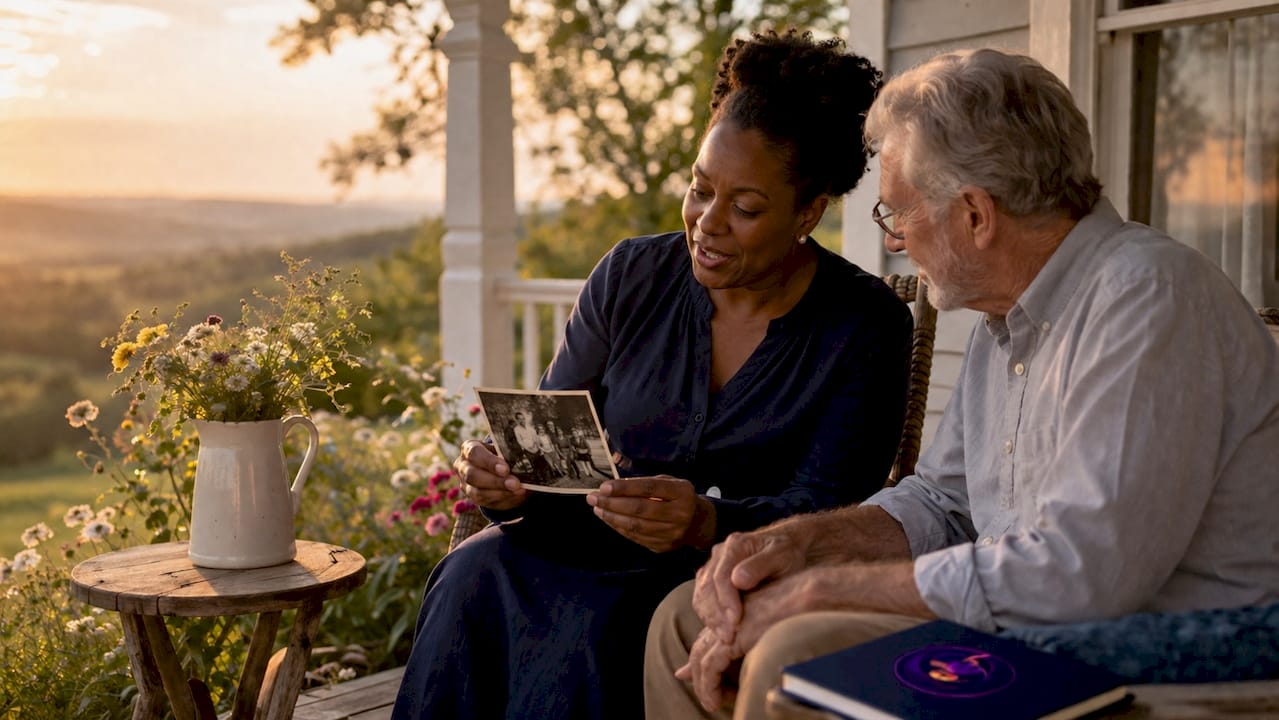
Use photographs as prompts. Sorting through old photos unlocks deeper memories and pulls out details that a direct question never would. Hand someone a photo from 1975 and ask, "What was happening that day?" The stories that follow are almost always richer than anything you planned to ask.
-
Record audio or video whenever possible. A written transcript captures words. A voice recording captures tone, laughter, pauses, and personality. Audio and video recordings become precious family keepsakes in a way that typed text rarely does. Even a shaky smartphone video of a grandparent telling one story is worth more than a perfectly formatted document.
-
Ask for emotion, not just facts. Replace "When were you born?" with "What do you remember about the house you grew up in?" Replace "What did you do for work?" with "What was the hardest day you ever had at a job?" Emotion-first questions produce story-first answers.
-
Transcribe and tag within 48 hours. Memory fades fast. Write a short summary of each session while the details are fresh, even if you have a full audio recording. Tag the file with names, dates, and locations so future family members can search and find it.
-
Back up immediately. Save every file to at least two locations: a local drive and a cloud service. One backup is not a backup. It is a single point of failure.
Pro Tip: If a family member is reluctant to be recorded, start by showing them a photo and asking them to describe it. Most people forget the recorder is running once they are looking at a memory.
How to organize, preserve, and share recorded family milestone stories
Capturing stories is only half the work. A multi-layered archive that combines physical and digital materials is what authoritative archivists recommend for long-term preservation. That means pairing your audio files with scanned photos, written summaries, and any relevant documents like letters or certificates.
Strong organization practices include:
- Consistent file naming. Use a format like "LastName_FirstName_Year_Topic" for every file. "Garcia_Elena_1968_Immigration" is searchable. "IMG_4892" is not.
- Metadata and captions. Add captions to every scanned photo. Include who is in the image, where it was taken, and the approximate year.
- Version control. Keep original files untouched. Make a separate copy for any editing or sharing.
- Printed keepsakes. A printed photo book or bound family history document gives relatives something physical to hold. Digital files disappear when platforms change. Paper survives.
Sharing is where the work pays off. A digital archive with proper organization makes sharing easier and reduces the need to handle fragile originals. Share a curated folder with family members via a shared cloud drive. Read a story aloud at a family reunion. Send a short audio clip on a birthday. These small acts of sharing turn a private archive into a living family tradition.
The voice recording guide for documenting ancestry stories offers detailed steps on how to structure and share audio files across generations, which is worth reading before your first recording session.
Key Takeaways
The most effective way to record milestone stories in family history combines short, regular sessions with multiple media formats and a consistent organization system from day one.
| Point | Details |
|---|---|
| Story events over timeline events | Capture why a moment mattered, not just when it happened. |
| Start with one person | Focus on one family member at a time to build detailed, coherent stories. |
| Use photos as prompts | Old photographs unlock richer memories than direct questions alone. |
| Record audio and video | Voice and video preserve tone and personality that written text cannot. |
| Organize before you share | Label every file consistently so future generations can find and use the archive. |
Why the voice is the part most families lose first
Bryan here. I have spent years thinking about what actually survives in a family after someone is gone. The answer is almost never the facts. Nobody forgets that great-grandpa served in the war. What disappears is the sound of his voice, the way he laughed before the punchline, the specific phrase he used when he was proud of you.
Written records are better than nothing. But they are a translation. A voice recording is the original. The single most common regret I hear from families is that they waited too long to record someone. The technology to capture a voice has been in every pocket for over a decade. The obstacle is never equipment. It is the assumption that there is more time.
The other thing families underestimate is how small, frequent efforts accumulate. A four-minute recording session every Sunday for a year produces hours of irreplaceable material. That is not a project. That is a habit. And habits do not require motivation. They just require a scheduled time and a low enough bar to start.
The families who do this well are not the ones with the most resources. They are the ones who started before they felt ready, recorded something imperfect, and kept going anyway.
— Bryan
Senarra: preserve the voices your family cannot afford to lose
Capturing a family member's stories is one thing. Preserving their actual voice, in a form the whole family can access anytime, is another level entirely.
Senarra is an AI companion built to preserve the voices and stories of the people and pets you love, during their lifetime and beyond. It captures heartfelt conversations in an authentic voice, so family members can connect with those memories whenever they need to. Senarra includes voice cloning and a memory line accessible by phone, making it possible to hear a loved one's voice long after they are gone. For families who want to go beyond a folder of files and create something truly lasting, Senarra is the place to start.
FAQ
What counts as a milestone story in family history?
A milestone story is any life event that shaped your family's identity, including births, marriages, losses, migrations, and major achievements. The key is capturing why the event mattered, not just when it happened.
How do I start recording family stories if I have no experience?
Start with one person and one photograph. Ask them to describe what was happening in the photo. Short sessions of 4 minutes or less are enough to build a rich archive over time.
What is the best format for preserving family milestone stories?
A combination of audio or video recordings, written summaries, and scanned photographs creates the most complete archive. Multi-layered archives are what professional archivists recommend for long-term preservation.
How do I get reluctant family members to share their stories?
Show them a photo and ask a simple, open-ended question about it. Most people open up naturally when they are looking at a memory rather than facing a recorder directly.
How often should I record family stories?
Consistency matters more than duration. A short session once a week produces far more material than a single long session once a year. Regular small efforts accumulate into a rich, lasting family history.