
Recording family stories during cognitive decline is the most time-sensitive act of love a family can take. Approximately 33.8% of adults aged 40–55 report memory-loss symptoms linked to anxiety and reduced quality of life. That number signals how early the window for capturing stories can begin to close. The Alzheimer's Association and memory care specialists agree: the best time to document a loved one's voice, memories, and personal history is before significant decline makes communication difficult. This guide gives families the tools, techniques, and confidence to start now, even when the process feels uncertain.
How to record family stories during cognitive decline: what you need to know first
Recording family stories from someone with cognitive decline is formally called life review or reminiscence therapy in clinical settings. Both terms describe the structured practice of helping older adults recall and narrate personal history. The process benefits not just the family archive but the storyteller too. Digital storytelling supports memory, identity, and self-confidence among older adults facing cognitive challenges. Starting with that understanding reframes the work from a documentation task into a genuine act of care.
Mild cognitive impairment affects 20% of adults over 65, and the condition disrupts daily function in ways that directly affect storytelling. Vocabulary retrieval slows. Timelines blur. Names slip away mid-sentence. Families who understand this in advance approach sessions with patience rather than frustration, and that shift in attitude changes everything about the quality of what gets recorded.
What tools and preparations do you need before recording?
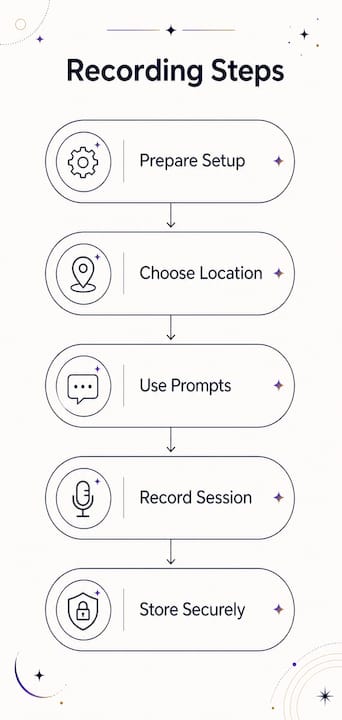
The right setup makes the difference between a session that flows and one that stalls. Choose recording equipment that requires minimal steps to operate. A smartphone voice memo app, a simple digital audio recorder, or a tablet with a large-screen video app all work well. Avoid devices with complex menus or small buttons that create friction for both you and your loved one.
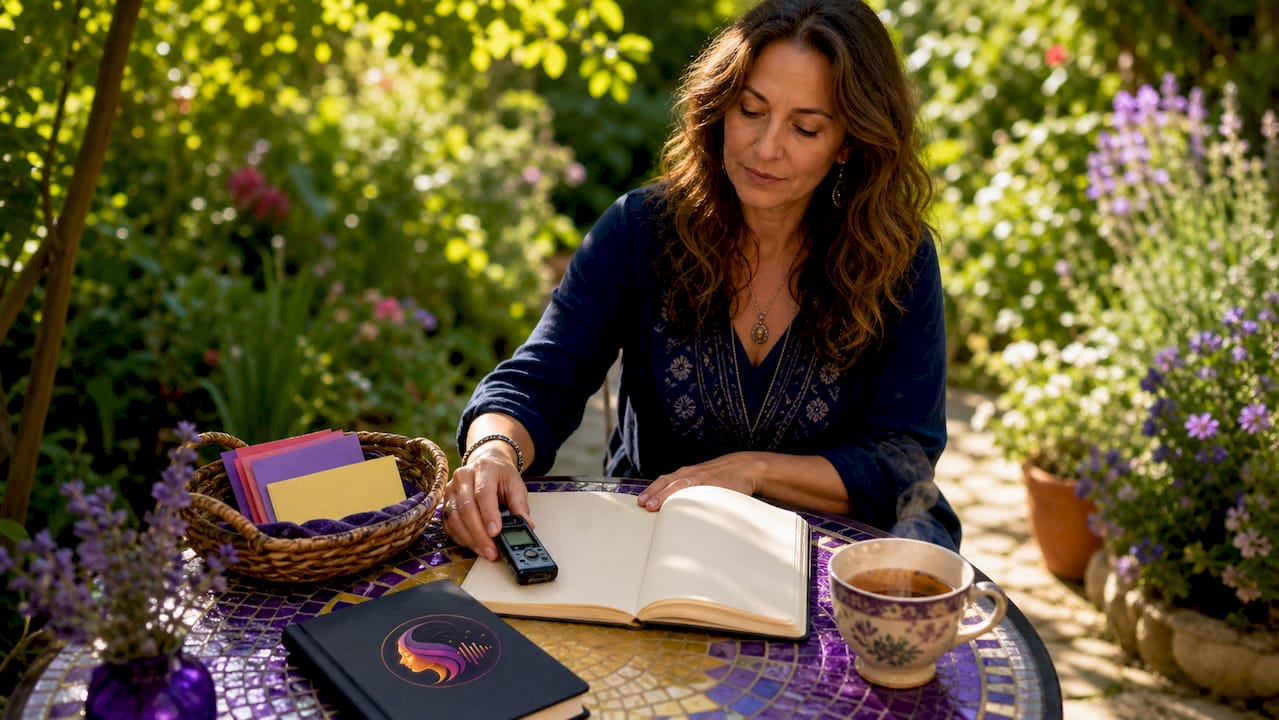
Environment matters as much as equipment. A quiet, familiar room with soft lighting and no background noise reduces cognitive load and helps your loved one feel safe. Sit at the same level, make eye contact, and keep the recorder out of direct sight if it causes self-consciousness.
Prepare your prompts in advance. Open-ended questions work best: "Tell me about the house you grew up in" or "What did your mother cook on Sundays?" Avoid yes-or-no questions, which close conversations down. Avoid questions that require precise dates or names, which can trigger frustration when memory fails.
Pro Tip: Write your prompts on index cards and keep them in your lap. This lets you glance at the next question naturally without breaking the conversational rhythm.
Sessions around 30–45 minutes are more effective than longer ones because attention and clarity decline over time. Plan to stop before your loved one shows signs of fatigue, not after. Always explain what you are doing and ask for consent before pressing record. A simple "I'd love to capture your stories so our family can hear them forever. Is that okay?" sets a warm, respectful tone.
| Preparation step | Why it matters |
|---|---|
| Choose simple recording device | Reduces technical barriers for both parties |
| Set a quiet, familiar environment | Lowers anxiety and encourages open sharing |
| Prepare open-ended prompts | Stimulates recall without causing frustration |
| Plan 30–45 minute sessions | Matches cognitive stamina and prevents fatigue |
| Obtain consent beforehand | Respects dignity and builds emotional safety |
How do you conduct a recording session with empathy and skill?
The first few minutes of any session set the emotional tone for everything that follows. Start with a topic your loved one knows well and feels proud of. Childhood memories, a first job, a wedding day, or a favorite hobby are reliable anchors. These long-term memories often stay accessible longer than recent ones, even as cognitive decline progresses.
Use the following sequence to guide each session:
- Open with a warm-up question. Ask about something sensory and specific, like a smell, a sound, or a place. "What did your grandmother's kitchen smell like?" unlocks memory through a different pathway than "Tell me about your grandmother."
- Allow pauses. Silence is not failure. Give your loved one 10–15 seconds to retrieve a memory before gently rephrasing the question.
- Accept fragments. A half-remembered story is still a story. Partial narratives on dementia and memory loss carry emotional truth even when facts are incomplete.
- Use confirmation gently. If a detail seems confused, say "I think I remember you mentioning it was in Ohio. Does that sound right?" rather than correcting directly.
- Bring in visual aids. A photo album, a piece of jewelry, or a familiar object can unlock memories that words alone cannot reach. Sharing memories with elderly loved ones works best when multiple senses are engaged.
- Close with affirmation. End every session by thanking your loved one and naming something specific they shared. "I loved hearing about your first car. That story is going to mean so much to everyone."
- Back up immediately. Transfer recordings to a second device or cloud storage the same day. Memory cards fail. Phones get lost.
Pro Tip: Keep a small notebook nearby and jot down names, places, or dates your loved one mentions. These notes help you verify details later and build a richer archive.
Subjective memory complaints double the risk of dementia within five years and are linked to increased depression and stress. That statistic underscores why the emotional atmosphere of each session matters as much as the technical quality of the recording. A loved one who feels anxious or embarrassed will share less. One who feels celebrated will share more.
How should you store and share recorded family stories?
Capturing the recording is only half the work. Organizing and preserving it so future generations can actually find and use it is the other half. Start with a clear file naming system: use the person's name, the date, and the topic. "GrandmaRose_2026-03_FirstJob.mp3" is infinitely more useful than "Voice Memo 47."
Store recordings in at least two locations. A local hard drive plus a cloud service like Google Drive or iCloud provides basic redundancy. For families who want a dedicated solution, platforms built specifically for legacy storytelling offer organized archives, transcription tools, and family sharing features designed around this exact need.
Transcription adds a layer of accessibility that audio alone cannot provide. A written transcript lets family members search for specific names or events, share excerpts in cards or eulogies, and preserve the story even if the audio file becomes unplayable decades from now. Free transcription tools like Otter.ai or Rev handle most audio quality levels well.
Organize recordings into themed collections rather than a flat chronological list. Categories like "Childhood," "Work Life," "Marriage and Family," and "Wisdom and Advice" make the archive feel like a library rather than a folder of files. Share access with trusted family members through a password-protected link or a shared cloud folder. Always respect your loved one's privacy by confirming which stories they are comfortable sharing beyond the immediate family.
What are the most common challenges when recording stories during cognitive decline?
Every family hits obstacles. Knowing what to expect reduces the emotional weight when they arrive.
- Repetition. Your loved one may tell the same story in multiple sessions. Record each version. Repetition in narratives on dementia often reveals what matters most to the person, and slight variations across tellings add texture to the archive.
- Emotional distress. Some memories carry grief, regret, or trauma. If a topic causes visible distress, redirect gently: "That sounds like it was really hard. Can you tell me about a time that made you laugh instead?" Never push through visible pain.
- Technical anxiety. Some people freeze when they know they are being recorded. Try leaving the recorder running during casual conversation before formally "starting." Many of the best recordings happen in the warm-up.
- Your own grief. Families often underestimate how emotionally taxing these sessions are for the person doing the recording. Early medical evaluation is critical as new therapies emerge, and that same urgency applies to your emotional preparation. Seek support from a caregiver group or counselor if the process feels heavy.
- Cognitive fatigue mid-session. Watch for signs: trailing sentences, increased confusion, or withdrawal. Stop the session, not the relationship. Come back in a day or two.
"Grace is the word I keep coming back to. When words fade, what remains is the feeling of being truly heard. That is what families can give, and no recording device can replace it." This insight, shared by caregivers living with primary progressive aphasia, applies directly to every family recording session.
The importance of grace and patience in communication cannot be overstated when words become unreliable. Families who approach sessions as conversations rather than interviews consistently capture richer, more emotionally resonant stories.
Key Takeaways
The most effective way to preserve a loved one's legacy is to start recording family stories early, use short and empathetic sessions, and store recordings in organized, redundant formats that the whole family can access.
| Point | Details |
|---|---|
| Start early | Cognitive decline progresses unpredictably; begin recording at the first signs of memory change. |
| Keep sessions short | Sessions of 30–45 minutes match cognitive stamina and produce better quality stories. |
| Use open-ended prompts | Questions about sensory memories and specific places unlock recall more reliably than date-based questions. |
| Store in two locations | Local and cloud backups protect recordings from device failure or data loss. |
| Prioritize emotional comfort | A loved one who feels safe and celebrated shares more than one who feels tested or corrected. |
Why I think families wait too long to start recording
Families almost always tell me the same thing after a loved one's condition worsens: "We thought we had more time." I have seen this pattern repeat enough times to say with confidence that the biggest mistake is not a technical one. It is a timing one.
The window for capturing clear, coherent stories is narrower than most families expect. Anxiety about memory loss can worsen cognitive decline and negatively affect mood, which means waiting until a loved one "seems ready" often means waiting until the opportunity has already narrowed. The best sessions I have witnessed happened when the family treated recording as a celebration, not a medical necessity.
Technology helps. AI tools and dedicated memory platforms make capturing elder narratives more accessible than ever before. But the human presence in the room matters more than any device. Your loved one is not performing for a recorder. They are talking to you. That distinction shapes everything about what they share and how freely they share it.
Start imperfect. A shaky recording made today is worth more than a perfect one planned for next month. The stories that feel ordinary right now, the Sunday dinners, the work commutes, the neighborhood gossip, are the ones families treasure most when they are gone.
— Bryan
Senarra makes memory preservation easier for families
Families navigating cognitive decline need tools that work without a learning curve. Senarra is a memory preservation platform built specifically for this moment. It captures your loved one's voice and stories in their own words, using guided prompts that make sessions feel like conversations rather than interviews.
Senarra's voice cloning and memory line features let family members reconnect with preserved stories by phone, any time they need to hear a familiar voice. The platform handles secure storage and family sharing, so the archive you build today stays accessible for generations. Families using Senarra report that the process feels less like documentation and more like a gift. Learn more and start preserving your loved one's voice at Senarra.
FAQ
When should families start recording stories?
Start at the first signs of memory change, not after a formal diagnosis. Early action gives families the widest window for capturing clear, coherent stories before communication becomes difficult.
How long should each recording session be?
Sessions of 30–45 minutes are most effective. Attention and clarity decline over time, so shorter and more frequent sessions produce better results than long, exhausting ones.
What if my loved one refuses to be recorded?
Respect the refusal and try again another day in a more casual setting. Some people relax once recording becomes a regular, low-pressure part of family visits rather than a formal event.
How do I handle repeated or confused stories?
Record every version without correction. Repetition in stories of cognitive decline often reveals what matters most to the person, and gentle confirmation techniques help clarify details without causing embarrassment.
What is the best way to share recordings with family?
Use a password-protected cloud folder or a dedicated family memory platform that supports organized sharing. Always confirm with your loved one which stories they are comfortable sharing beyond the immediate family.