
Personal history preservation is the practice of capturing your lived experiences, voice, and memories in a lasting format before time, illness, or loss makes that impossible. The question of why record personal history now has a clear answer: memories fade faster than most families expect, and the window to capture an authentic voice is shorter than anyone wants to admit. Research from the Emory University Family Narratives Lab shows that young people who know their family history report higher self-esteem and lower rates of depression. That finding alone reframes personal storytelling from a sentimental hobby into a measurable act of care for the people you love most.
Why record personal history now, before it's too late
The most common reason families delay recording personal history is the belief that there is always more time. There is not. Cognitive decline, unexpected illness, and sudden loss remove the opportunity without warning. The stories that feel ordinary today, a grandmother's account of her first job, a father's memory of a neighborhood that no longer exists, become irreplaceable once the person who holds them is gone.
Personal history preservation also serves a function that goes beyond nostalgia. Recording personal histories creates an evidence-based, contestable record that resists selective memory and manipulation. That means the nuance, the contradictions, and the full emotional truth of a life stay intact. A polished summary written by someone else decades later cannot replicate that.
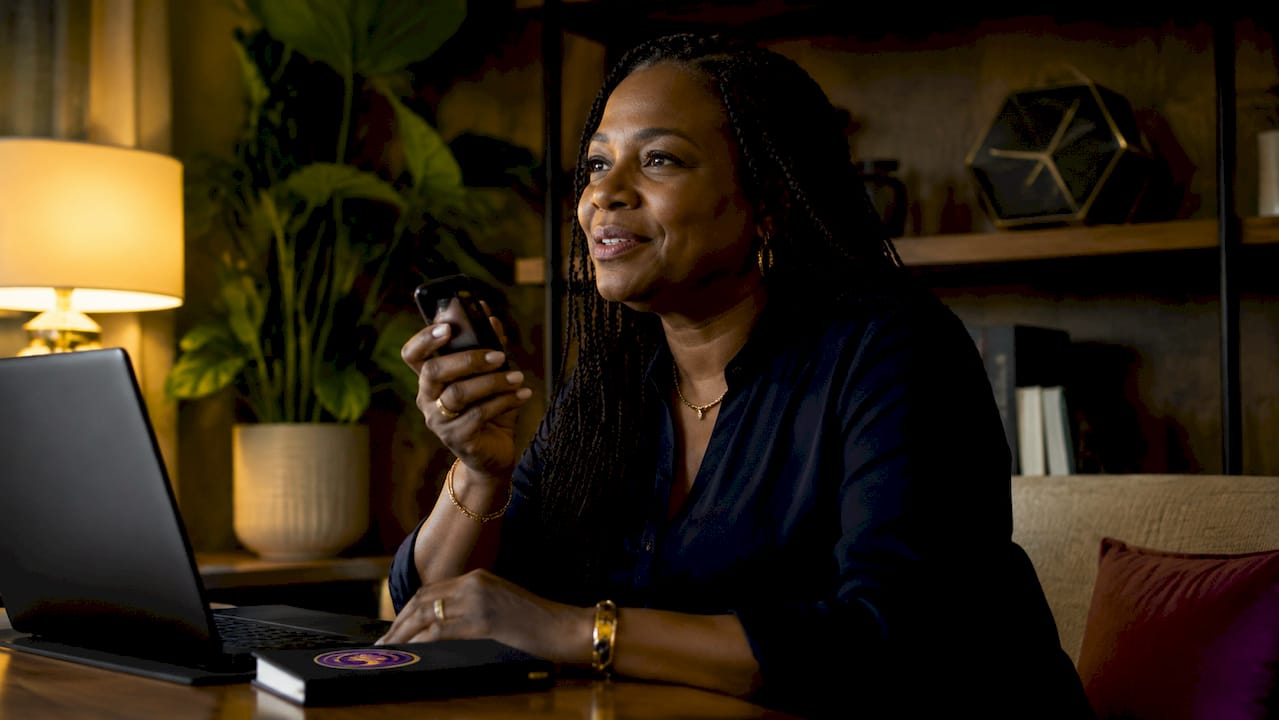
The urgency is real for families facing illness or aging. But it applies equally to anyone in a period of transition: a move, a divorce, a retirement, a new chapter. These are the moments when the meaning of a life comes into sharpest focus, and they are exactly the right time to start.
Pro Tip: Don't wait for a "significant" story. Record the ordinary ones first. Genealogists consistently report that everyday diary details about daily routines, meals, and small moments are the entries future generations treasure most.
What benefits does recording personal history provide?
The psychological benefits of personal storytelling are well documented and specific. Young people connected to their family narrative archive show stronger resilience in the face of stress. The Emory Family Narratives Lab research found that children who know where their grandparents grew up, what their parents struggled with, and how the family overcame hardship develop a more stable sense of self. That stability translates directly into lower anxiety and better mental health outcomes.
The benefits extend beyond children. Adults who record their own stories report emotional healing through the act of articulating their experiences. Putting words to a difficult period, a loss, a failure, or a fear, gives it shape and reduces its power. This is not therapy in the clinical sense, but the mechanism is similar: naming an experience creates distance from it.
Families that record stories together also strengthen their bonds in a concrete way. Sitting down to record a grandparent's memories is an act of attention. It tells the person being recorded that their life matters and that their perspective is worth preserving. That message lands differently than a birthday card.
Recording personal history also builds critical thinking by teaching causality, context, and complexity. When you trace how a decision your grandfather made in 1962 shaped your family's trajectory, you are practicing exactly the kind of historical reasoning that makes people better citizens and more thoughtful decision-makers.
- Psychological resilience: Children with strong family story knowledge show measurably lower depression and higher self-esteem.
- Emotional processing: Articulating difficult experiences through storytelling reduces their emotional weight over time.
- Family cohesion: The act of recording together creates shared attention and reinforces that each person's story matters.
- Critical thinking: Tracing cause and effect through personal narratives builds the same reasoning skills used in civic life.
- Cultural continuity: Stories passed down through families preserve language, values, and identity across generations.
Pro Tip: Focus on feelings and turning points, not chronology. The most emotionally resonant recordings ask "How did that make you feel?" and "What did you learn from that?" rather than "What happened next?"
How does recording personal history counter misinformation?
Misinformation spreads fastest where authentic records are absent. When a community's history exists only in official documents or dominant narratives, the full picture gets flattened. Personal stories fill that gap with specificity, contradiction, and lived truth that no summary can replicate.
"Conserving our cultural record is more important than ever. The loss of cultural material threatens free speech, equity, and education. Personal histories are part of that record, and their absence creates space for manipulation and selective memory to take hold." Source: Phys.org, 2025
Power dynamics shape which stories get told and which get erased. Official histories tend to reflect the perspectives of those with institutional authority. Personal recordings from ordinary people, especially from communities that have been marginalized, create a counter-archive. That archive is not just emotionally valuable. It is politically and socially significant.
The table below shows how personal history recording compares to other forms of memory preservation across key dimensions:
| Dimension | Official records | Personal recordings |
|---|---|---|
| Emotional nuance | Low | High |
| Resistance to manipulation | Moderate | High |
| Accessibility for families | Low | High |
| Preservation of multiple perspectives | Low | High |
| Cultural and identity value | Moderate | Very high |
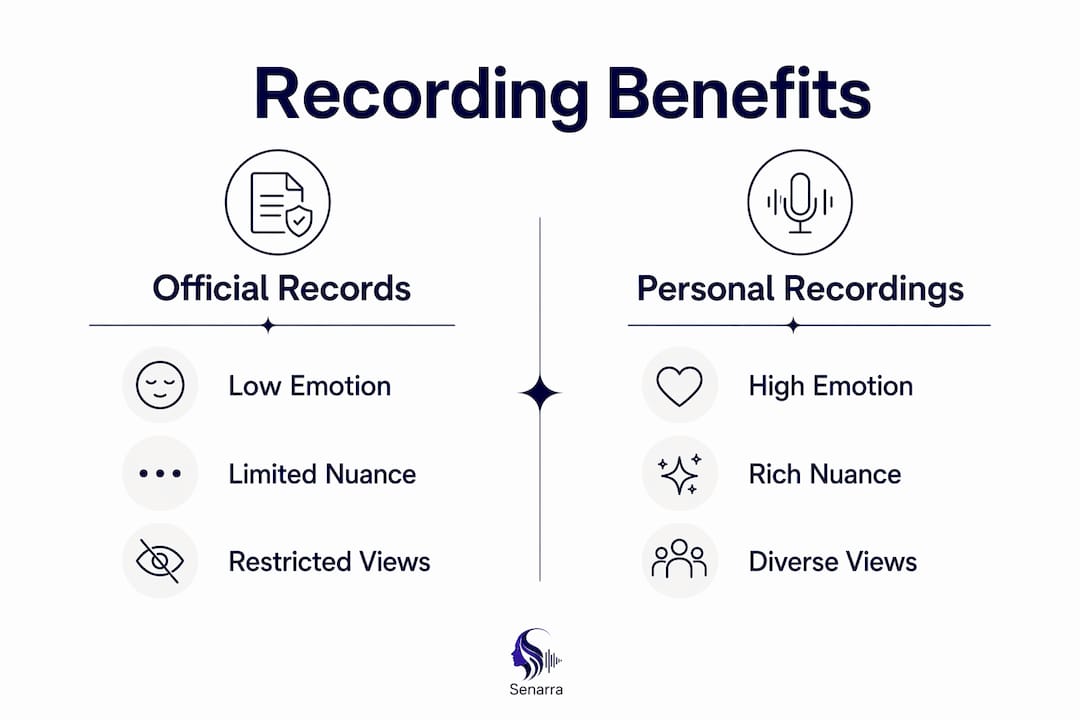
Personal recordings also protect memory's role in identity by anchoring a family's sense of self to specific, verifiable experiences. When a family can play back a recording of a grandparent describing a historical event in their own words, that account becomes harder to distort. The voice itself is evidence.
What are practical ways to start recording your personal history today?
The single biggest barrier to starting is the mistaken belief that you need to be a skilled writer. You do not. Informal oral storytelling holds as much emotional and legacy value as a polished memoir. A recording made on a phone in a kitchen carries the same weight as a professionally produced audio book, often more, because it captures the real voice, the pauses, the laughter, and the accent.
- Start with a phone recording. Open the voice memo app on any smartphone and ask one question: "What's the most important thing you want me to know about your life?" Record the answer without interruption.
- Write one paragraph, not a chapter. Pick a single memory and describe it in five sentences. Focus on what you saw, heard, and felt. Do not worry about context or chronology.
- Create a video diary entry. Set your phone on a table, press record, and talk for three minutes about one specific day or decision. The camera does not need to be professional.
- Collect physical artifacts with audio context. Photograph old letters, recipes, or objects, then record a short explanation of what each one means and why it matters.
- Use a structured prompt list. Questions like "What was your neighborhood like growing up?" or "What do you wish you had known at 25?" produce richer answers than open-ended requests to "tell me about your life."
- Leverage digital tools built for memory preservation. Platforms like Senarra capture voice recordings and allow families to document ancestry stories in an organized, shareable format that persists across generations.
The goal is not a finished product. The goal is a record that exists. A three-minute recording made today is worth more than a perfect memoir planned for next year.
Why is now the best time to preserve your personal history?
Stories recorded during difficult times are the richest ones. A person describing a job loss, a health crisis, or a family rupture captures something that a story told in comfortable retrospect cannot: the texture of uncertainty, the specific fear, the small decisions that felt enormous. Periods of stress and change generate the narratives that families return to most often because they are honest in a way that polished retrospectives rarely are.
Delay carries a real cost. Memory degrades with time, and the specific sensory details, the smell of a room, the exact words someone used, the feeling of a particular afternoon, fade first. What remains is a general impression, not a story. Recording now preserves the version of a memory that still has its edges.
- Urgency is real: Cognitive decline and unexpected loss can remove the opportunity without any warning.
- Transition moments are rich: Retirement, illness, relocation, and grief produce stories with unusual depth and honesty.
- Delay costs specificity: The details that make a story vivid, sensory and emotional, are the first to fade.
- Empowerment through articulation: Putting your experience into words gives you ownership of your own narrative.
- Today's story is tomorrow's treasure: What feels mundane now becomes precious to the next generation within one lifetime.
Families facing impending loss feel this urgency most acutely. But the same logic applies to anyone who has ever wished they could ask a question of someone who is no longer here. The time to capture aging parent memories is before the conversation becomes impossible, not after.
Key Takeaways
Recording personal history now is the single most effective way to preserve authentic voices, build family resilience, and protect your story from the distortions of time and selective memory.
| Point | Details |
|---|---|
| Start before you think you need to | Memory degrades faster than expected; record now while details are still vivid and voices are present. |
| Informal recordings hold full value | Oral stories and phone recordings carry as much emotional weight as polished written memoirs. |
| Family stories build resilience | Young people connected to family narratives show measurably lower depression and higher self-esteem. |
| Personal histories counter misinformation | Recorded accounts preserve nuance and multiple perspectives that official records routinely flatten. |
| Difficult times produce the best stories | Periods of stress and change generate the most honest, meaningful narratives families return to most. |
The stories I wish I had recorded sooner
I spent years assuming the people I loved would always be available for one more conversation. That assumption cost me stories I will never recover. My grandfather could describe the smell of his mother's kitchen in a way that made the room feel real, but I never recorded it. I have the impression of the story. I do not have the story.
The most common misconception I encounter is that personal history recording is for people with extraordinary lives. It is not. The value of life chronicles comes from their specificity, not their drama. A factory worker's account of a Tuesday in 1974 is as historically and emotionally significant as any public figure's memoir, often more so, because it captures a life that would otherwise leave no record.
Busy lives are real. But the recording does not need to be long. Three minutes of authentic voice is worth more than three hours of planned silence. The families I have seen do this well are not the ones with the most time. They are the ones who decided that the cost of not recording was higher than the cost of starting imperfectly.
— Bryan
How Senarra helps you preserve what matters most

Senarra is built for exactly the moment when you realize a story needs to be captured before it is gone. The platform uses AI to preserve voices and memories in an authentic, accessible format, so families can connect with personal voice legacy long after a loved one is no longer present. Features include voice cloning, a memory line accessible by phone, and organized story archives that families can return to whenever they need to feel close to someone they love. Whether you are facing a loss, honoring an ancestor, or simply want your own story to outlast you, Senarra makes it possible to start today, without needing to be a writer, a technologist, or anything other than someone with a story worth keeping.
FAQ
Why should I record personal history now instead of later?
Memory degrades over time, and unexpected loss can remove the opportunity entirely. The specific sensory and emotional details that make a story vivid are the first to fade, so recording now preserves the fullest version of any memory.
Do I need to be a good writer to document my personal history?
No. Oral and informal recordings hold as much emotional and legacy value as polished memoirs. A phone recording in a kitchen captures voice, tone, and feeling that no written summary can replicate.
What are the best ways to document personal history at home?
Start with a smartphone voice memo, a single written paragraph about one memory, or a short video diary entry. Structured questions like "What do you wish you had known at 25?" produce richer answers than open-ended prompts.
How does recording family stories benefit children?
Young people who know their family history report higher self-esteem and lower depression, according to Emory University Family Narratives Lab research. That connection to family narrative builds psychological resilience that persists into adulthood.
How does personal history preservation counter misinformation?
Personal recordings create a contestable, evidence-based archive that preserves nuance and multiple perspectives. Cultural preservation experts argue that the loss of personal and cultural records directly threatens free speech, equity, and historical accuracy.