
Generational memory preservation is the intentional process of capturing, curating, and transmitting family stories, values, and lived experiences across generations to maintain identity continuity and foster emotional resilience. It draws on storytelling, archiving, and active participation to keep the voices and lessons of loved ones alive. Research published in late 2025 highlights a tri-generational model called "Narrate-Preserve-Participate," which assigns distinct roles to each age group to sustain cultural continuity. Families that practice this deliberately build stronger emotional bonds and a clearer sense of shared identity. Senarra was built specifically to support this kind of living, voice-centered legacy work.
What is generational memory preservation and how does it work?
Generational memory preservation operates through three interconnected roles: narrating, preserving, and participating. Each generation contributes differently, and the process only works when all three are active. Cultural continuity research confirms that memory transmission breaks down when any one generation disengages from the cycle.
The narrator role: older generations
Older family members are the primary storytellers. They hold firsthand accounts of hardship, migration, celebration, and daily life that no document can fully replicate. Their job is to speak, and to speak often, before those stories are lost.

The preserver role: middle generations
Middle generations carry the practical weight of archiving. They digitize old photos, maintain family timelines, organize physical documents, and manage digital storage. They also serve as translators between the oldest and youngest family members, making older stories accessible and relevant.
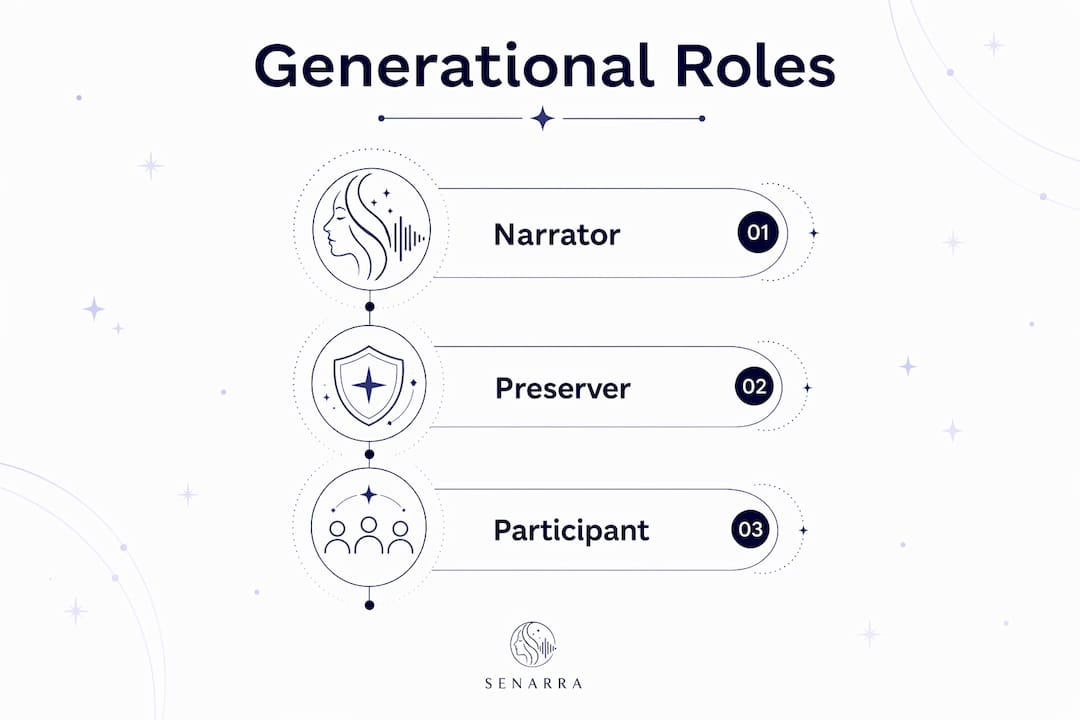
The participant role: younger generations
Younger family members keep memory alive by engaging with it. They attend family rituals, ask questions, and carry stories forward into new contexts. Their participation transforms preservation from a passive archive into a living exchange.
Emotional mapping and spatial memory also support this process. Returning to meaningful places, handling physical objects, or hearing a familiar voice triggers deep emotional recall. These sensory anchors reinforce identity continuity in ways that written records alone cannot.
- Older generations: narrate lived experience and family history
- Middle generations: archive, digitize, and maintain physical and digital collections
- Younger generations: participate in rituals, ask questions, and carry stories forward
- All generations: contribute to a living, evolving family narrative
Pro Tip: Schedule a short family conversation recording once a month. Fifteen minutes of a grandparent describing a childhood memory is more valuable than hours of scanning documents.
What are the best techniques for preserving family memories?
The most effective memory preservation systems are built on repeatable routines, not single large efforts. Experts recommend manageable quarterly updates and monthly conversation recordings as the foundation of a sustainable archive. Families that attempt to do everything at once typically abandon the project within weeks.
-
Digitize fragile originals first. Old photographs, handwritten letters, and printed documents degrade over time. Scan these at high resolution before anything else. Prioritize items that show visible wear or fading.
-
Record oral histories in high-quality audio formats. MP3 and WAV files capture voice authentically and remain accessible across devices. A simple USB microphone and free recording software are enough to produce clear, lasting audio.
-
Use acid-free storage for physical items. Professional archives recommend acid-free, lignin-free containers stored in stable temperature and humidity conditions. Avoid basements and attics, where fluctuating conditions accelerate material breakdown.
-
Build a family timeline. A timeline document or spreadsheet paired with your physical and digital collections acts as a navigational map. It reveals gaps in the record and helps you prioritize what to capture next.
-
Schedule regular archive sessions. Quarterly reviews keep the project moving without overwhelming any single family member. Use these sessions to add new recordings, update the timeline, and check storage conditions.
The most common pitfall is scope creep. Families often try to document everything simultaneously and lose momentum. Start with one person's story, one decade, or one box of photos. Build from there.
Pro Tip: Assign one family member as the "archive keeper" for each year. Rotating the role distributes the work and keeps multiple generations invested in the project.
Why is generational memory preservation important?
Knowing your family history directly increases your sense of agency and emotional stability. Research confirms that family stories serve as anchors for identity, transforming past hardships into shared sources of strength. Youth who are connected to their family history report greater resilience when facing personal or societal challenges.
Family stories that include overcoming adversity carry particular weight. Psychologists note that honest narratives about struggle and survival model resilience for younger generations. A grandmother's account of rebuilding after loss teaches more about coping than any abstract lesson could.
The benefits of memory preservation extend across emotional, relational, and cultural dimensions:
- Stronger personal identity: Knowing where you come from clarifies who you are.
- Emotional resilience: Family stories provide frameworks for processing personal hardship.
- Cultural belonging: Shared narratives create a sense of pride and continuity across generations.
- Reduced regret: Families who document stories early report fewer feelings of loss after a loved one passes.
- Intergenerational connection: Active storytelling strengthens bonds between grandparents, parents, and children.
"Generational memory is best understood not as a static record but as a continually evolving, living exchange that strengthens family identity in the present."
This distinction matters. Preservation is not about building a museum. It is about keeping a conversation going.
How is technology shaping the future of generational memory preservation?
AI-mediated memory systems now make it possible to catalog, analyze, and share family archives at a scale that was impractical a decade ago. Digital tools can organize thousands of photos by date, transcribe audio recordings, and generate interactive family timelines automatically. The practical barrier to starting a family archive has dropped significantly.
Voice cloning and AI companion technology represent the most personal application of these tools. Platforms like Senarra capture a person's voice and conversational patterns during their lifetime, creating a living record that families can return to after loss. This goes beyond a recording. It preserves the texture of how someone spoke, the phrases they used, and the stories they told.
| Method | Format | Best for |
|---|---|---|
| Physical archiving | Printed photos, documents | Long-term tangible keepsakes |
| Digital scanning | JPEG, PDF | Fragile originals at risk of decay |
| Audio recording | MP3, WAV | Voice, tone, and oral history |
| Video documentation | MP4 | Visual storytelling and family events |
| AI voice preservation | Platform-based | Capturing conversational voice legacy |
| Interactive timelines | Web-based tools | Navigating and sharing family history |
Technology also introduces ethical responsibilities. Legacy experts stress that individuals must retain "cognitive sovereignty," meaning the right to choose what they share and how. Families should always ask permission before recording, and never treat a person's memories as data to be extracted.
Pro Tip: Pair every digital archive with a printed backup. Hard drives fail and platforms change. A printed photo book or binder of key documents survives technology shifts.
What challenges should families expect when preserving generational memories?
Generational memory preservation is not always straightforward. Families encounter emotional, ethical, and practical obstacles that can stall or derail even well-intentioned projects. Recognizing these challenges early makes them easier to navigate.
- Differing memory perceptions: Two siblings may remember the same event very differently. Both versions are valid. Document multiple perspectives rather than forcing a single account.
- Difficult or traumatic histories: Some family stories involve grief, abuse, or displacement. Approach these with care. Not every story needs to be shared with every generation at the same time.
- Consent and narrative agency: Empowering individuals to choose what they share preserves their dignity. Never record or publish someone's story without their explicit agreement.
- Generational amnesia: When younger generations disengage, stories disappear within one or two generations. Active participation is not optional. It is the mechanism that keeps memory alive.
- Balancing legacy and privacy: Some family members may not want certain stories shared publicly. Establish clear boundaries about what stays within the family and what can be shared more broadly.
The goal is not a perfect archive. It is an honest, respectful record that future generations can trust.
Key takeaways
Generational memory preservation works best as a living, repeatable practice that combines storytelling, structured archiving, and active participation from every generation.
| Point | Details |
|---|---|
| Define the practice clearly | Generational memory preservation is the intentional capturing and transmitting of family stories, values, and experiences across generations. |
| Use the tri-generational model | Assign narrating to older generations, archiving to middle generations, and participation to younger generations. |
| Build repeatable routines | Monthly recordings and quarterly archive reviews sustain momentum better than single large efforts. |
| Prioritize physical and digital safety | Use acid-free storage, avoid unstable environments, and back up digital files in multiple formats. |
| Respect consent and narrative agency | Always ask permission before recording or sharing a family member's personal story. |
Why memory preservation is more than saving old photos
Most families treat memory preservation as a rainy-day project. They mean to get to it eventually, and then a grandparent passes and the stories go with them. I have seen this happen enough times to say plainly: the cost of waiting is permanent.
What strikes me most about the research on family narrative archives is how consistently it points to the same finding. Families that actively engage with their history do not just feel more connected. They function better under stress. They have a framework for hardship because they have heard how their own family survived it before.
The families I find most inspiring are not the ones with the most organized archives. They are the ones where a teenager asks a grandparent a question at dinner and actually listens to the answer. That exchange, repeated over years, is the real preservation system.
Technology like Senarra makes the formal side of this easier. Voice cloning and accessible memory lines mean a loved one's voice does not have to disappear. But the technology only works if the human relationship comes first. Record the conversation because you want to hear that voice again. The archive is a byproduct of genuine connection.
The personal voice legacy you build today is the gift your family will reach for when they need it most. Start small. Start now. The stories are already there.
— Bryan
Senarra: preserve the voices your family cannot afford to lose
Families who want to move beyond photo albums and document folders now have a more personal option. Senarra is an AI companion that captures a loved one's voice, stories, and conversational patterns during their lifetime, creating a living memory that families can return to at any time.

Senarra's voice cloning and memory line features make it possible to hear a familiar voice long after a loved one is gone. The platform is built for families who want to honor the people and pets they love, not just archive them. Whether you are documenting your own story for future generations or preserving a parent's voice while you still can, Senarra's memory app gives you a way to do it that feels personal, not clinical. The setup is straightforward, the experience is private, and the result is something your family will return to for years.
FAQ
What is generational memory preservation?
Generational memory preservation is the intentional process of capturing, curating, and transmitting family stories, values, and lived experiences across generations. Its purpose is to maintain identity continuity and build emotional resilience within families.
How do I start preserving family memories?
Start by digitizing fragile originals like old photos and letters, then record short audio conversations with older family members monthly. Build a family timeline to track what you have and identify what is still missing.
Why does generational storytelling matter for younger generations?
Family stories that include overcoming hardship model resilience and give younger generations a framework for their own challenges. Research shows that youth connected to family history report stronger emotional stability and a clearer sense of identity.
What is the best format for recording oral histories?
MP3 and WAV audio formats capture voice authentically and remain accessible across devices and platforms. A basic USB microphone paired with free recording software produces clear, lasting results without technical expertise.
How does AI support generational memory preservation?
AI tools can transcribe audio, organize photo archives, and generate interactive family timelines automatically. Platforms like Senarra go further by capturing a person's voice and conversational style, creating a living memory that families can access after loss.