
Biographical memory technology is the set of tools and systems that capture, store, organize, and retrieve personal life stories, voices, and experiences to create lasting emotional connections. Also called autobiographical memory systems in psychology research, this field combines voice recording, AI narration, and narrative reconstruction to preserve the people and moments families treasure most. Whether you want to save your grandmother's stories before they fade or create a voice memorial for a beloved pet, understanding how these systems work helps you make the best choice for your family.
What is biographical memory technology and how does it work?
Autobiographical memory includes two distinct layers: episodic memory, which stores specific events with time and place, and semantic memory, which holds general life knowledge like values and relationships. When you recall a memory, your brain reconstructs it rather than replaying it like a video. Biographical memory technology mirrors this process by capturing raw data, organizing it into meaningful narratives, and making it retrievable on demand.
The technical pipeline behind these systems follows a clear sequence:
- Recording. A conversation, voice message, or interview is captured through a microphone or phone call.
- Transcription. Automatic speech recognition (ASR) converts spoken words into text with high accuracy.
- Organization. AI models tag events by date, person, emotion, and topic, building a structured memory archive.
- Retrieval. When a family member asks a question, the system searches the archive and surfaces the relevant memory.
- Narration. Text-to-speech or voice cloning delivers the answer in the original speaker's voice.
One critical design distinction separates good systems from weak ones. Durable memory storage lives in an external database maintained across sessions, not inside the AI model's temporary context window. That separation means the system remembers your grandfather's stories in february of one year and can still reference them accurately two years later.
Pro Tip: When recording stories, ask open-ended questions like "What was the hardest year of your life?" rather than yes/no questions. Open prompts produce richer episodic detail that AI systems can organize and retrieve far more effectively.
How do different types of biographical memory systems compare?
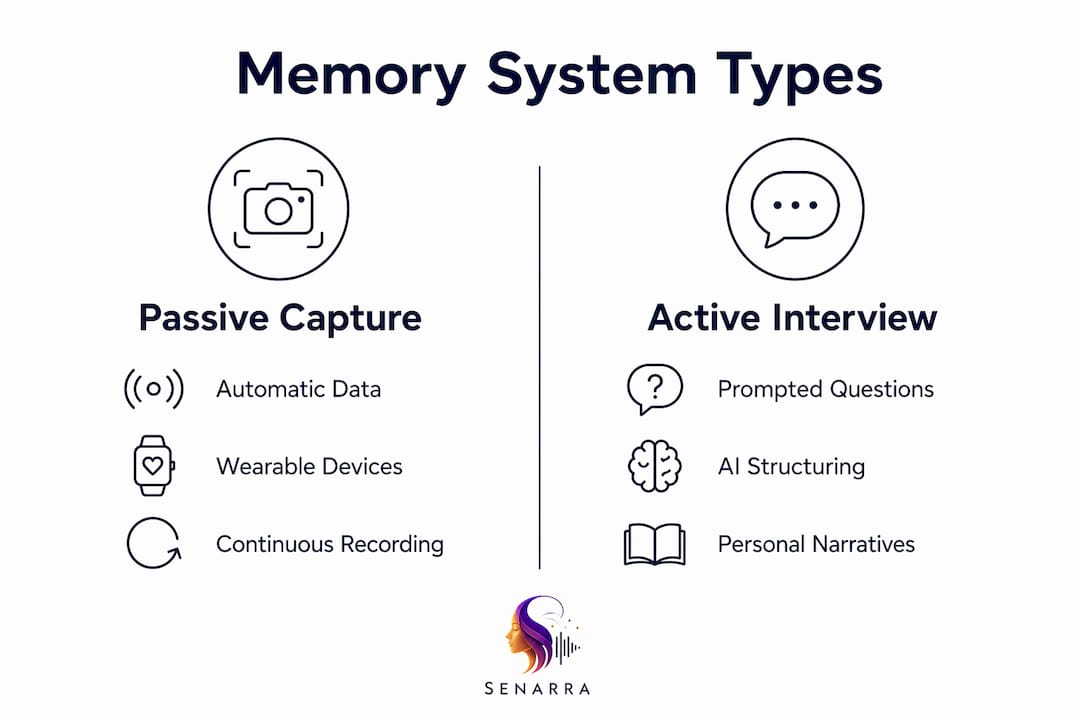
The market for memory preservation tools splits into two broad categories: passive capture systems and active interview-based systems.
Passive capture tools record life data automatically without requiring the subject to do anything. Wearable cameras like SenseCam trigger image capture through motion and light sensors, building a visual log of daily life. These tools work well for people with cognitive impairment who cannot actively participate in storytelling. The limitation is significant: more raw data alone does not improve memory quality without organization and retrieval support layered on top.
Active interview-based systems prompt the subject with questions, record their spoken answers, and use AI to structure the resulting stories into a coherent narrative. These systems produce richer emotional content because the subject consciously selects and frames their memories. Voice cloning adds another layer, allowing future generations to hear responses in the original speaker's voice.
| Feature | Passive capture tools | Active interview systems |
|---|---|---|
| User effort required | Minimal | Moderate |
| Emotional depth | Low to moderate | High |
| Voice preservation | Rarely included | Core feature |
| Best use case | Daily life logging | Legacy storytelling |
| AI narrative structure | Limited | Central function |
| Accessibility | Good for cognitive impairment | Best for willing participants |
Key features families should look for in any biographical memory system:
- Voice cloning that preserves the speaker's tone, rhythm, and accent
- Narrative structuring that organizes stories into timelines rather than flat transcripts
- Emotional contextualization that tags memories with the feelings attached to them
- Temporal graph architecture that stores events as timestamped nodes, making timeline questions easy to answer
- Hallucination resistance so the system does not invent details the speaker never shared
AI persona extraction systems now report 94.37% accuracy on biographical memory benchmarks. That level of precision matters when the goal is preserving someone's actual words and personality, not a generic approximation.
Why does biographical memory technology matter psychologically?
Biographical memory is reconstructive by nature. Empathic social interaction enhances the quality of that reconstruction, producing narratives that support self-understanding and emotional regulation. Technology that mimics this social dynamic, by asking warm questions and responding with genuine curiosity, produces better stories than cold data capture ever could.
Sharing memories through technology also sustains identity across generations. When a grandchild hears their grandmother's voice describing her childhood home, that story becomes part of the grandchild's own sense of family. The impact of memory technology on emotional wellbeing is measurable: families who preserve stories report less regret about conversations they never had.
Memory personalization goes deeper than transcripts. Effective systems capture what researchers call behavioral specification, meaning how a person processes experiences, what they value, and how they express emotion, not just the words they spoke. That layer of interpretation is what separates a living voice from a recording.
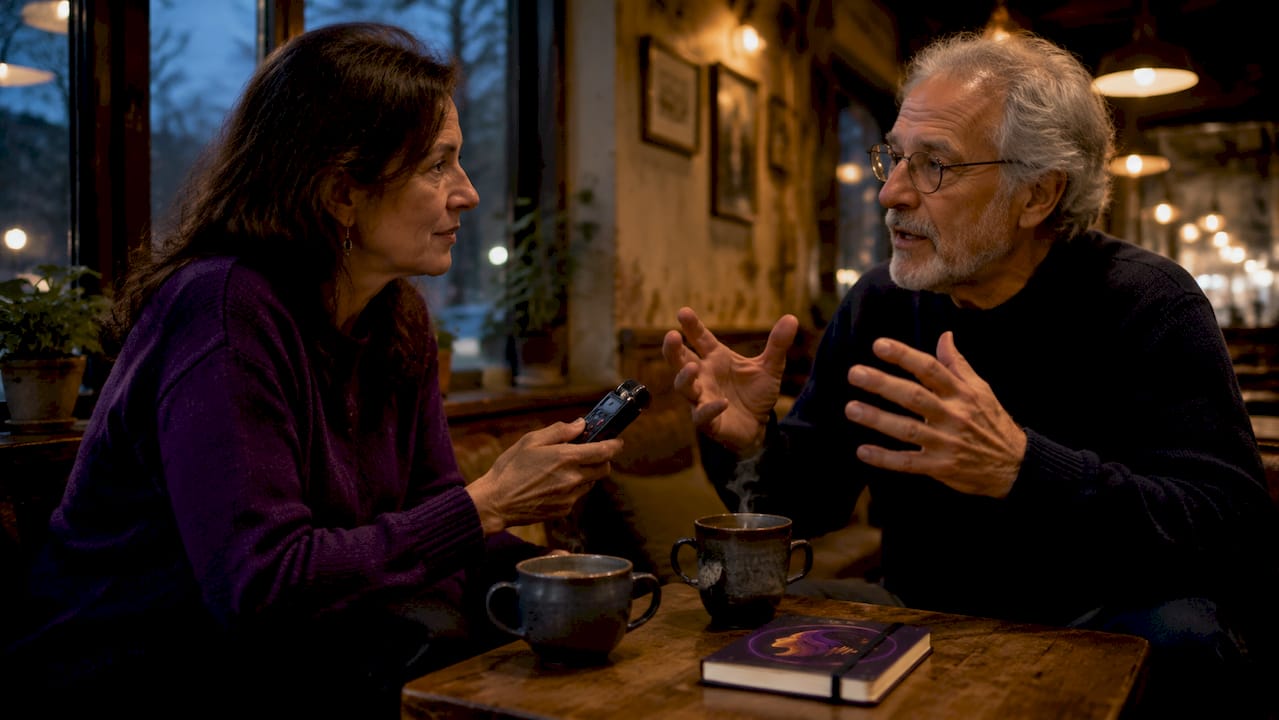
Pro Tip: Design recording sessions around emotional safety. Start with happy memories before moving to difficult ones. People share more honestly when they feel the conversation is a gift, not an interrogation.
Practical applications for families preserving voices and stories
The most common family use cases for biographical memory technology fall into three groups: recording elders' stories before they are lost, creating voice memorials after a loved one passes, and archiving a person's own life narrative for future generations.
A typical workflow for recording an elder's stories looks like this:
- Schedule short sessions of 20–30 minutes to avoid fatigue.
- Use a phone or dedicated app to record the conversation in high audio quality.
- Let the system transcribe and tag the recording automatically.
- Review the organized archive and add context notes where needed.
- Share selected stories with family members through the platform's retrieval interface.
The benefits of biographical memory extend well beyond the immediate family. Children who grow up knowing their family's stories show stronger identity formation and resilience. Grandparents who participate in story recording sessions report a stronger sense of purpose and legacy.
Practical best practices for emotionally healthy recording:
- Choose a quiet, comfortable space where the speaker feels relaxed.
- Record with consent and explain clearly how the stories will be stored and shared.
- Let the speaker guide the pace. Never rush or redirect mid-story.
- Back up recordings in at least two locations immediately after each session.
Voice cloning applications extend these benefits further. A speech-to-speech pipeline evaluated with 20 participants rated voice naturalness at 4.2 out of 5 and persona consistency at 82%. Those numbers show that modern systems can preserve not just words but the feeling of a person's presence. Families can use a voice recording guide to prepare for their first session and get the most from the technology.
Key Takeaways
Biographical memory technology works best when it combines voice preservation, AI narrative structure, and empathic interaction design to create stories that feel alive across generations.
| Point | Details |
|---|---|
| Core definition | Biographical memory technology captures, organizes, and retrieves personal life stories using AI and voice tools. |
| Technical foundation | Effective systems use ASR, durable external memory storage, and voice cloning to preserve authentic narratives. |
| Psychological value | Empathic, narrative-centered interaction produces richer and more emotionally resonant memories than passive capture alone. |
| Family applications | Recording elder stories, creating voice memorials, and archiving life narratives are the three primary family use cases. |
| Quality markers | Look for voice cloning, temporal graph architecture, and hallucination resistance when choosing a system. |
The part of this technology most families overlook
Most conversations about biographical memory technology focus on the recording step. Families buy a microphone, sit down with a grandparent, and capture an hour of stories. Then the files sit on a hard drive for years, unlistened to and unsearched. The recording is the easy part. The architecture that makes those stories retrievable, searchable, and emotionally present is where the real work happens.
What I find most striking about the best systems is how they handle contradiction. A person might describe the same event differently at age 70 than they did at 50. A good biographical memory system does not flatten those differences. It preserves both versions and timestamps them, because the evolution of a memory is itself part of the story.
The ethical dimension matters too. Voice cloning is a powerful tool, and families should think carefully about consent before creating a voice memorial. The person whose voice is being preserved should understand and agree to how it will be used. Privacy, consent, and emotional boundaries are not obstacles to this technology. They are the conditions that make it trustworthy.
The future of this field points toward systems that feel less like archives and more like conversations. AI that can ask follow-up questions, notice emotional shifts in a speaker's voice, and gently surface forgotten stories will change how families relate to their own history. That future is closer than most people realize.
— Bryan
Senarra: preserve the voices your family cannot afford to lose
Senarra is built for exactly the families this article describes: people who want to capture a loved one's voice and stories before time runs out, and people who want to stay connected to someone they have already lost.
Senarra uses voice cloning, AI-driven narrative organization, and a memory line accessible by phone to make biographical memory technology practical for everyday families. You do not need technical skills. You need a conversation and a few minutes. Senarra handles the transcription, organization, and retrieval so the stories stay alive and accessible whenever your family needs them. Visit Senarra to see how the platform works and start preserving the voices that matter most.
FAQ
What is biographical memory technology in simple terms?
Biographical memory technology is any system that captures, stores, and helps you relive personal life stories and voices. It combines recording, AI organization, and retrieval tools to preserve memories across time.
How does voice cloning work in memory preservation?
Voice cloning records a person's speech patterns and uses neural text-to-speech models to reproduce their voice. Systems like those evaluated in memorial bot research have achieved voice naturalness ratings of 4.2 out of 5 with 20 participants.
Is biographical memory technology only for people who have passed away?
No. The most effective use is recording stories while a person is still alive. Active participation produces richer, more emotionally detailed narratives than any posthumous reconstruction can achieve.
How is biographical memory different from a simple voice recording?
A voice recording is a flat audio file. A biographical memory system organizes recordings into searchable, timestamped narratives with emotional context, making specific stories retrievable years later rather than buried in a folder.
What should families look for when choosing a memory preservation platform?
Look for voice cloning, durable external memory storage, narrative structuring, and clear consent and privacy practices. Platforms that store memory in an external database rather than a temporary AI context window provide the most reliable long-term access.