
A pre-loss digital archive is a long-term, organized repository of digital assets created before a significant loss occurs, built to preserve authenticity, integrity, and accessibility over decades. The term "pre-loss" is descriptive rather than a formal industry term. Archival science professionals call this practice digital preservation, and the two terms work together throughout this guide. Unlike a simple backup or a folder of photos on your phone, a true digital archive applies metadata, open file standards, and structured organization so that memories remain findable and meaningful long after the original context fades. For families preparing for the loss of a parent, a spouse, or even a beloved pet, building this kind of archive before loss happens is the single most effective way to protect what matters most.
What is a pre-loss digital archive, exactly?
A pre-loss digital archive is defined as an organized, long-term repository of personal digital assets, built with the explicit goal of preserving authenticity and usability over time. Backups are typically kept for 30–90 days. Archives are retained indefinitely, often for seven or more years, and frequently across generations. That difference in intent changes everything about how you build one.
The assets inside a pre-loss archive span multiple formats: audio recordings of a grandparent's voice, video of a pet's daily routines, scanned family photographs, personal documents, and written stories. Each file type requires a specific approach to stay accessible as technology changes.
Why file format matters more than you think
Standard non-proprietary formats like JPEG for images, PDF/A for documents, and WAV for audio are the backbone of any serious archive. Proprietary formats tied to specific software can become unreadable within a decade when that software is discontinued. Open standards survive because any future system can interpret them without a license.
Metadata is the other critical layer. A photo without metadata is just pixels. A photo tagged with a person's name, the date, the location, and a short description becomes a searchable, shareable memory. Metadata gives files meaning and future findability, which is what separates a true archive from a hard drive full of unnamed folders.
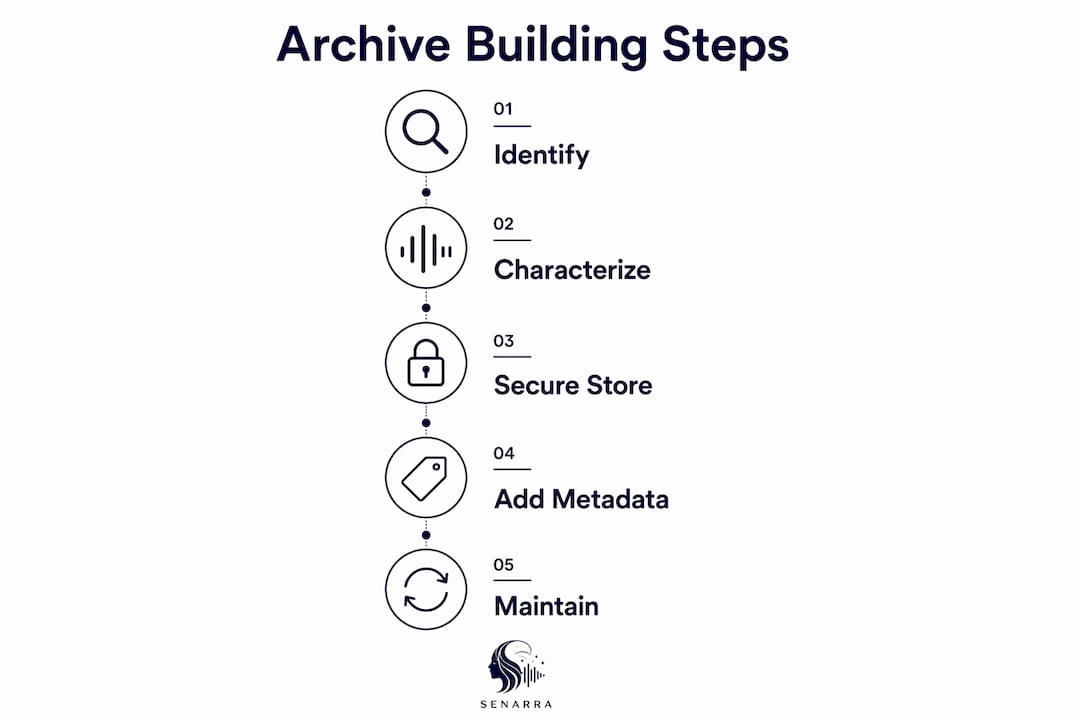
The four steps that define a proper digital archive are identification, characterization, secure storage, and metadata addition. Identification means deciding which files are worth preserving. Characterization means understanding each file's format, condition, and context. Secure storage means placing copies in protected locations. Metadata addition means labeling everything so it can be found and understood years from now.
Pro Tip: Start with the files that exist in only one place. A voice message saved only on one phone is the most urgent thing to archive, not the photos already backed up to the cloud.
Why does a pre-loss archive matter for families facing loss?
Personal legacy disappears faster than most families expect. A voice recording left only on an old smartphone becomes inaccessible when the device fails. A home video saved in a proprietary format from 2005 may already be unplayable today. Digital files degrade over time through bit rot and format obsolescence, and without systematic maintenance, data is lost even when it appears to be stored safely.
The emotional stakes are real. Families who lose a parent or a pet without capturing their voice, their stories, or their personality often describe a specific grief: the grief of forgetting. Memories fade. Details blur. An archive does not replace the person, but it preserves the texture of who they were.
"Digital preservation is not just storage. It is an active commitment to authenticity and shareability for future generations. The best archive is created before loss happens, when fresh context and accurate detail are still available."
Archival science professionals consistently emphasize that preservation goals include maintaining authenticity, integrity, and reliability. An archive built before loss captures context that cannot be reconstructed afterward. You can record your mother explaining a family recipe in her own words. You can document your dog's personality through video and voice. Once that window closes, it is gone.
Generational memory preservation also carries documented psychological benefits. Families with access to preserved stories and voices report stronger identity, deeper connection to their heritage, and a more concrete sense of continuity across generations. The archive becomes a resource that grows in value over time, not a static folder that collects digital dust.
How do you build and maintain a pre-loss digital archive?
Building a pre-loss archive follows a clear process. The steps below reflect current archival best practices for individuals and families.
- Identify what matters most. Start with irreplaceable materials: voice recordings, home videos, handwritten letters, and personal photographs. Prioritize anything that exists in only one location or on aging hardware.
- Characterize each file. Note the format, the condition, and the context. Is the audio clear? Is the video in a standard format? Does the document need scanning? This step prevents surprises later.
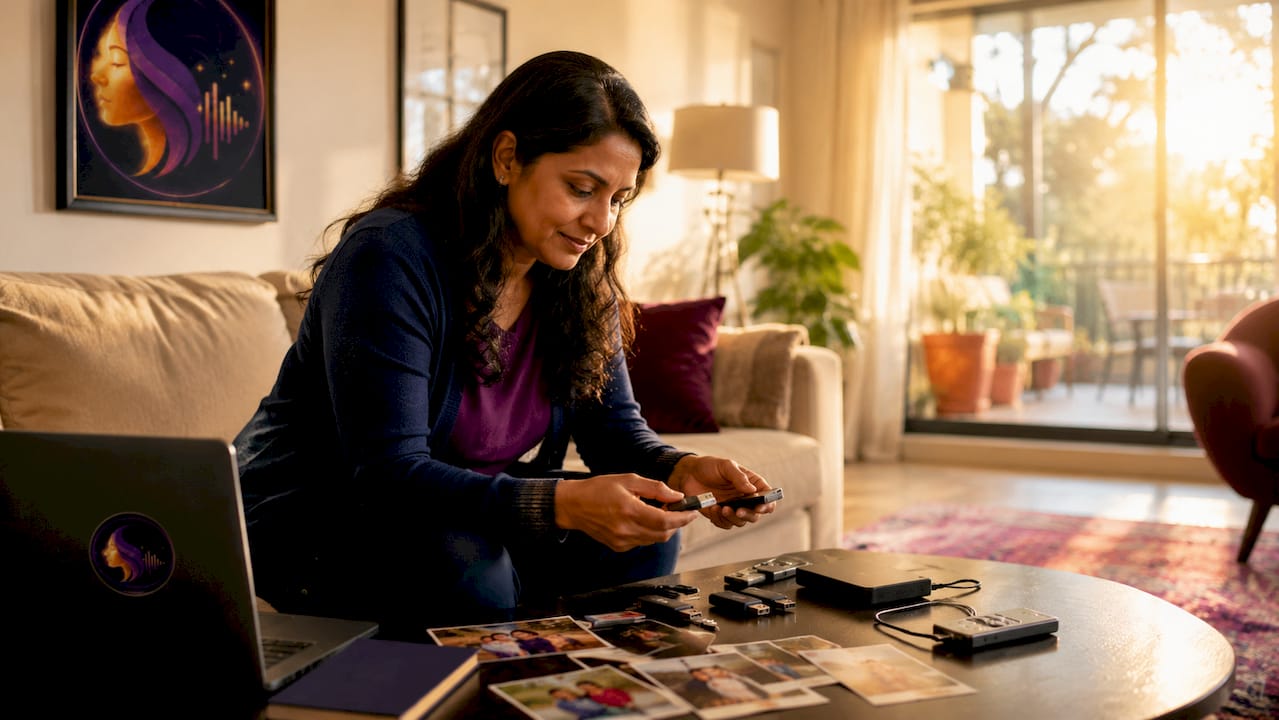
- Choose your storage media wisely. Use at least two types of physical media, such as an external hard drive and a USB drive, combined with one cloud storage location. This follows the 3-2-1 preservation strategy: three copies, on two types of media, with one stored off-site.
- Add metadata to every file. Include names, dates, locations, and a brief description. Use consistent naming conventions across all files so the archive stays organized as it grows.
- Schedule periodic integrity checks. Open files, verify they play or display correctly, and confirm storage media is functioning. Do this at least once a year.
- Plan for format migration. Long-term archives require migration to current formats and storage media roughly every 5–10 years. Technology evolves, and an archive that is not actively maintained will eventually become inaccessible.
Organization is as important as storage. A well-labeled archive with clear folder structures and consistent naming is usable by anyone in the family, not just the person who built it. Think about who will access this archive in 20 years and organize it for them.
Pro Tip: Capture aging parent memories in audio as early as possible. Archival professionals confirm that early capture preserves metadata context and prevents data loss. The stories told today carry details that will not be remembered tomorrow.
What are common misconceptions about digital archives?
Several misunderstandings lead families to believe they have an archive when they actually have something far more fragile.
- Cloud storage is not an archive. Google Drive and similar platforms focus on file synchronization and accessibility, not preservation. They lack intentional metadata tagging, organization, and periodic integrity checks. Files stored there can be deleted, corrupted, or lost when a subscription lapses.
- A backup is not an archive. Backups are designed for short-term recovery, typically 30–90 days. They do not include metadata, do not use open file standards, and are not built for decades of access. An archive is a deliberate, long-term structure.
- Metadata is not optional. Families often skip metadata because it feels like extra work. Without it, a collection of files becomes unsearchable and loses context within a single generation. Future family members will not know who is in the photo or when it was taken.
- Digital files are not permanent by default. Bit rot, hardware failure, and format obsolescence are real threats. A file that exists today on a single hard drive has a meaningful chance of being unreadable within 10 years without active management.
- More storage does not mean better preservation. Quantity of copies matters less than quality of organization, format choice, and ongoing maintenance. Ten poorly labeled copies in a proprietary format are less valuable than two well-labeled copies in open formats with full metadata.
A digital archive transforms files into a living historical resource designed for accessibility, engagement, and enduring preservation. That transformation requires intention, not just hard drive space.
Key Takeaways
A pre-loss digital archive requires open file formats, structured metadata, redundant storage, and active maintenance to preserve personal memories reliably across generations.
| Point | Details |
|---|---|
| Archives differ from backups | Backups last 30–90 days; archives are built for indefinite, multi-generational access. |
| Open formats protect accessibility | Use JPEG, PDF/A, and WAV to prevent files from becoming unreadable as technology changes. |
| Metadata gives files meaning | Tag every file with names, dates, and descriptions so future family members can find and understand them. |
| 3-2-1 storage strategy reduces risk | Keep three copies on two types of media with one copy stored off-site to guard against data loss. |
| Active maintenance is required | Plan format migrations every 5–10 years and run annual integrity checks to keep the archive usable. |
Why I think most families wait too long
The hardest part of building a pre-loss archive is not the technology. It is the timing. Most families start thinking about preservation after a loss, when the window for capturing authentic voice, context, and detail has already closed. I have seen this pattern repeatedly. The intention was always there. The urgency was not.
What changed my thinking was realizing that an archive built before loss is a fundamentally different object than one assembled from grief. When your parent is still alive, you can ask them to explain the photo. You can record them telling the story behind the recipe. You can capture the sound of their laugh in a real conversation, not a reconstructed one. That context is irreplaceable, and preserving family conversations while they are still happening is the only way to keep it.
The same principle applies to pets. A dog or cat occupies a specific emotional space in a family. Their sounds, their habits, their personality traits are deeply personal. Families who document these details before loss consistently report that the archive becomes one of their most treasured possessions.
The practical barriers are smaller than people assume. You do not need professional equipment or archival training. You need a clear process, open file formats, and the discipline to start before you feel the urgency. The family history preservation methods that work best are the ones started early and maintained consistently, not the ones built perfectly from scratch after loss.
Start now. Not because loss is imminent, but because the context available today will not be available tomorrow.
— Bryan
Senarra and the art of preserving what matters most
Families who understand what a pre-loss digital archive requires often realize they need more than a folder structure and a hard drive. They need a way to capture authentic voice, personality, and story in a format that stays accessible and meaningful for decades.
Senarra is a memory preservation app built specifically for this purpose. It captures heartfelt conversations in a loved one's authentic voice, applies AI-assisted organization, and makes memories accessible through a dedicated memory line you can call anytime. Whether you are preserving the voice of an aging parent, documenting a pet's personality, or building a personal legacy for future generations, Senarra's memory preservation platform gives you the structure and tools to do it right, before the moment passes.
FAQ
What is a pre-loss digital archive?
A pre-loss digital archive is an organized, long-term repository of personal digital assets, including audio, video, photos, and documents, created before a significant loss to preserve authenticity and accessibility over time.
How is a digital archive different from a backup?
Backups are short-term recovery tools, typically retained for 30–90 days. A digital archive is built for indefinite preservation using open file formats, metadata, and structured organization.
What file formats should I use for a digital archive?
Use open, non-proprietary formats: JPEG for images, PDF/A for documents, and WAV for audio. These formats remain readable as technology changes, unlike proprietary formats tied to specific software.
How do I keep a digital archive accessible long-term?
Follow the 3-2-1 strategy: three copies on two types of media with one off-site copy. Plan to migrate files to current formats and storage media every 5–10 years and run annual integrity checks.
Can I use cloud storage as my digital archive?
Cloud storage alone is not a true archive. Platforms like Google Drive prioritize file access over preservation and lack the metadata tagging, organization, and integrity checks required for long-term digital preservation.