
A personalized memory experience is defined as a continuity-driven interaction that adapts to individual histories, preferences, and emotional context to create meaningful, lasting connections rather than generic recollections. This concept draws directly from cognitive science, specifically the distinction between episodic memory (personal events and moments) and semantic memory (values, preferences, and identity). For people coping with loss or wanting to honor a loved one or pet, memory personalization transforms remembrance from a passive act into an active, deeply personal practice. Senarra is built on exactly this principle, preserving authentic voices and stories so that connection does not end with loss.
What is personalized memory experience, and how does it work?
A personalized memory experience is a continuity layer that stores and reuses user-specific context, preferences, and history to make every interaction feel tailored and recognized. Generic memorials treat everyone the same. Personalized memory experiences do the opposite: they adapt to the individual, drawing on what made that person or pet truly unique.
The cognitive science behind this is well established. Human memory operates on two distinct tracks:
- Episodic memory captures autobiographical events. These are the specific moments: the way your grandmother laughed at a particular joke, the afternoon your dog first ran on a beach, the last conversation you had before a goodbye.
- Semantic memory holds general knowledge and identity attributes. These are the stable facts: a person's values, their favorite music, their characteristic phrases, their role in the family.
A 2025 arXiv study on personalized LLMs modeled this dual-memory structure directly, building separate episodic and semantic memory components to improve personalization coherence. The finding matters because it confirms what grief counselors and memory-care practitioners have known for years: stable identity attributes and specific recollections serve different emotional functions. You need both to truly honor someone.
"Treating episodic and semantic memories separately improves personalization coherence, especially for memorial experiences that need stable identity alongside specific recollections." — PRIME, 2025 arXiv
When technology applies this framework, the result is a memory system that does not just store facts. It understands context. It knows when to surface a specific story and when to reinforce a core identity trait. That distinction is what separates a meaningful personalized memory experience from a digital scrapbook.
How does personalization support grief and emotional healing?

Personalized memory experiences reduce the emotional burden of loss by creating a sense of continuity. Research on user memory systems confirms that personalized continuity reduces the fatigue of repetition and creates a genuine feeling of being recognized and seen. For someone grieving, that recognition carries profound weight.
Memory-care practitioners have applied this principle for years. Personalization in memory care means honoring individual identity and shaping daily routines around a person's unique history, interests, and needs rather than offering generic support. A resident who spent decades as a jazz musician gets a different engagement rhythm than one who was a gardener. The same logic applies to digital remembrance.
Here is how personalized memory experiences provide emotional support in practice:
- Identity-anchored remembrance. Preserving a loved one's values, humor, and characteristic expressions keeps their identity present, not just their image.
- Specific moment recall. Episodic memories, such as a pet's favorite game or a parent's bedtime story, create emotional touchpoints that generic tributes cannot replicate.
- Reduced repetition fatigue. When a memory system already knows the context, you do not have to re-explain who someone was every time you want to connect with their memory.
- Ongoing emotional access. Personalized memory tools let you return to a loved one's voice or story on your own schedule, not just on anniversaries.
- Recognition of the whole person. Memory systems that capture roles, preferences, and ongoing stories honor the full complexity of a life, not just its end.
Pro Tip: When building a personalized memory experience for a loved one, start with semantic memories first. Write down their core values, favorite sayings, and defining roles before capturing specific stories. This foundation makes episodic memories far more emotionally coherent when you return to them later.
Preserving memories reduces regret over time, particularly when the preservation captures the person's authentic voice and specific stories rather than only photographs or dates.
How do memory systems manage what gets saved and what gets forgotten?
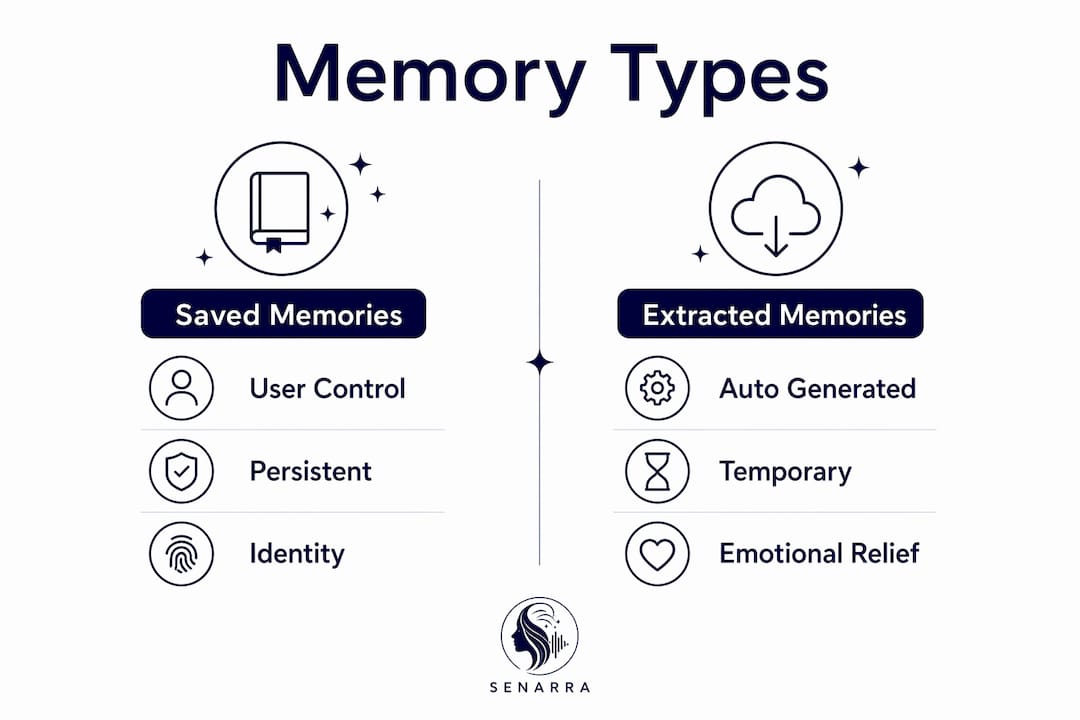
Not every memory should persist forever. Well-designed personalized memory systems distinguish between two types of stored information, and that distinction protects both emotional wellbeing and privacy.
| Memory type | Who controls it | How long it persists | Primary use |
|---|---|---|---|
| Saved memories | The user | Until manually deleted | Core identity, values, key stories |
| Extracted memories | The system | 30-day regeneration cycle | Contextual details, recent topics |
Memory retention models define saved memories as user-controlled and persistent until deletion, while extracted memories are automatically mined and transitory, subject to 30-day regeneration cycles. This structure matters because it gives the person doing the remembering real control over what stays and what fades.
Privacy is the other critical dimension. Persistent memories increase breach risk, which is why well-designed systems include audit controls and temporary modes for sensitive conversations. For grief-adjacent use cases, this is not a technical detail. It is an ethical requirement. A person sharing raw emotions about a lost child or a beloved pet deserves to know that those moments are protected.
Memory systems also preserve identity markers including roles, stylistic preferences, and ongoing projects. This depth of personalization is what makes a memory experience feel alive rather than archival. The goal is not a database. The goal is a living record that reflects who someone truly was.
How to create personalized memories that last
Building a meaningful personalized memory experience requires intentional curation, not just data collection. The quality of what you preserve determines the quality of what you can return to.
- Separate your memory types. Use one format for episodic memories (specific stories, dated events, sensory details) and a different format for semantic memories (values, preferences, identity traits). Different authoring approaches are needed for each because they serve different emotional functions.
- Apply relevance ranking. Not every memory carries equal weight. Prioritize the stories and facts that defined the person's character. Relevance scoring in AI memory systems works the same way: it surfaces contextually appropriate memories rather than flooding you with everything at once.
- Use audit and control features. Review saved memories periodically. Remove anything that feels inaccurate or that no longer serves the emotional purpose you intended.
- Capture voice and tone. Written summaries are useful, but authentic voice recordings or voice-cloned interactions preserve the texture of a person's presence in a way that text cannot.
- Explore digital memory keepsakes as formats for organizing and sharing what you preserve. These range from audio recordings to interactive memory timelines.
Pro Tip: Use a temporary or private mode when first capturing raw grief-related memories. This gives you space to record honestly without committing every detail to permanent storage. You can always promote the most meaningful entries to your permanent record later.
Preserving a personal voice legacy is one of the most powerful forms of personalized memory creation because voice carries emotional information that words alone cannot convey.
Key Takeaways
A personalized memory experience requires both episodic and semantic memory structures, user-controlled privacy safeguards, and authentic voice preservation to create lasting emotional connection.
| Point | Details |
|---|---|
| Dual memory structure | Separate episodic (events) and semantic (identity) memories for coherent, emotionally resonant remembrance. |
| Emotional continuity | Personalized memory reduces repetition fatigue and creates a genuine sense of recognition for those grieving. |
| User-controlled retention | Saved memories persist until deleted; extracted memories regenerate on a 30-day cycle for privacy protection. |
| Relevance over volume | Curate memories by emotional weight, not quantity, to keep the experience coherent and meaningful. |
| Voice as the anchor | Capturing authentic voice preserves emotional texture that written records alone cannot replicate. |
Why I think most people approach memory preservation backwards
Most people start with photographs and dates. They build timelines. They organize events chronologically and call it a memorial. I understand the impulse. Chronology feels orderly. But it misses the point almost entirely.
What you actually miss about someone is not the sequence of their life. It is the texture of it. The specific way they phrased a complaint. The opinion they held that nobody else in the family agreed with. The sound of their voice when they were genuinely happy versus politely happy. Those details are semantic and episodic memories working together, and they are almost never what people capture first.
The ethical dimension of this work also gets underestimated. Storing someone's voice, their stories, their emotional patterns creates real privacy obligations. Not just for the person being remembered, but for the people doing the remembering. Grief is raw. What you record in the first weeks after a loss may not be what you want preserved permanently. Systems that offer temporary modes and audit controls are not just technical features. They are acts of care.
The future of personalized memory experiences will move toward greater emotional intelligence, not just greater storage capacity. The question worth asking is not "how much can we preserve?" but "what is worth preserving, and who gets to decide?" That question deserves more attention than it currently receives.
— Bryan
Senarra and the art of keeping someone close
Grief does not follow a schedule. You might want to hear your mother's voice on a Tuesday afternoon, not just on her birthday. You might want your children to know your dog's personality, not just see a photo.
Senarra is built for exactly that kind of connection. It captures the authentic voices and stories of loved ones and pets during their lifetime, then makes those memories accessible whenever you need them. Features like voice cloning and a phone-accessible memory line mean that the people and animals you love remain present in a real, personal way. Senarra is not a static archive. It is a living record designed for the moments when you most need to feel close to someone you have lost.
FAQ
What is the definition of a personalized memory experience?
A personalized memory experience is a continuity-driven interaction that adapts to individual histories, preferences, and emotional context to create tailored, meaningful recollections. It draws on both episodic memory (specific events) and semantic memory (identity and values) to honor the full complexity of a person or pet.
How is personalized memory different from a standard memorial?
Standard memorials store static content like photos and dates. Personalized memory experiences actively adapt to the individual, surfacing relevant stories and identity traits based on context, reducing repetition, and creating a genuine sense of ongoing connection.
What types of memories should I preserve first?
Start with semantic memories: core values, favorite sayings, defining roles, and personality traits. These create the stable identity foundation that makes specific episodic stories (events, moments, anecdotes) far more emotionally coherent when you return to them.
How do personalized memory systems protect privacy?
Well-designed systems distinguish between user-controlled saved memories and automatically extracted transient memories with 30-day regeneration cycles. Audit controls and temporary modes for sensitive content reduce privacy risk, which is especially important for grief-related conversations.
Can personalized memory experiences help with pet loss?
Yes. The same principles apply: capturing a pet's personality traits, favorite routines, and specific moments creates a richer, more emotionally resonant record than photographs alone. Platforms like Senarra are designed to preserve the voices and stories of both people and pets.