
Preserving family stories and voices in a format that is easy for all relatives to access is still complicated. Many legacy and memory preservation platforms either lack phone or print access for less tech savvy relatives or lock key features behind subscriptions. This comparison covers access, formats, and privacy across top alternatives so families and individuals can match the best option to their budget and preferred recording or sharing method.
Table of Contents
Senarra
At a Glance
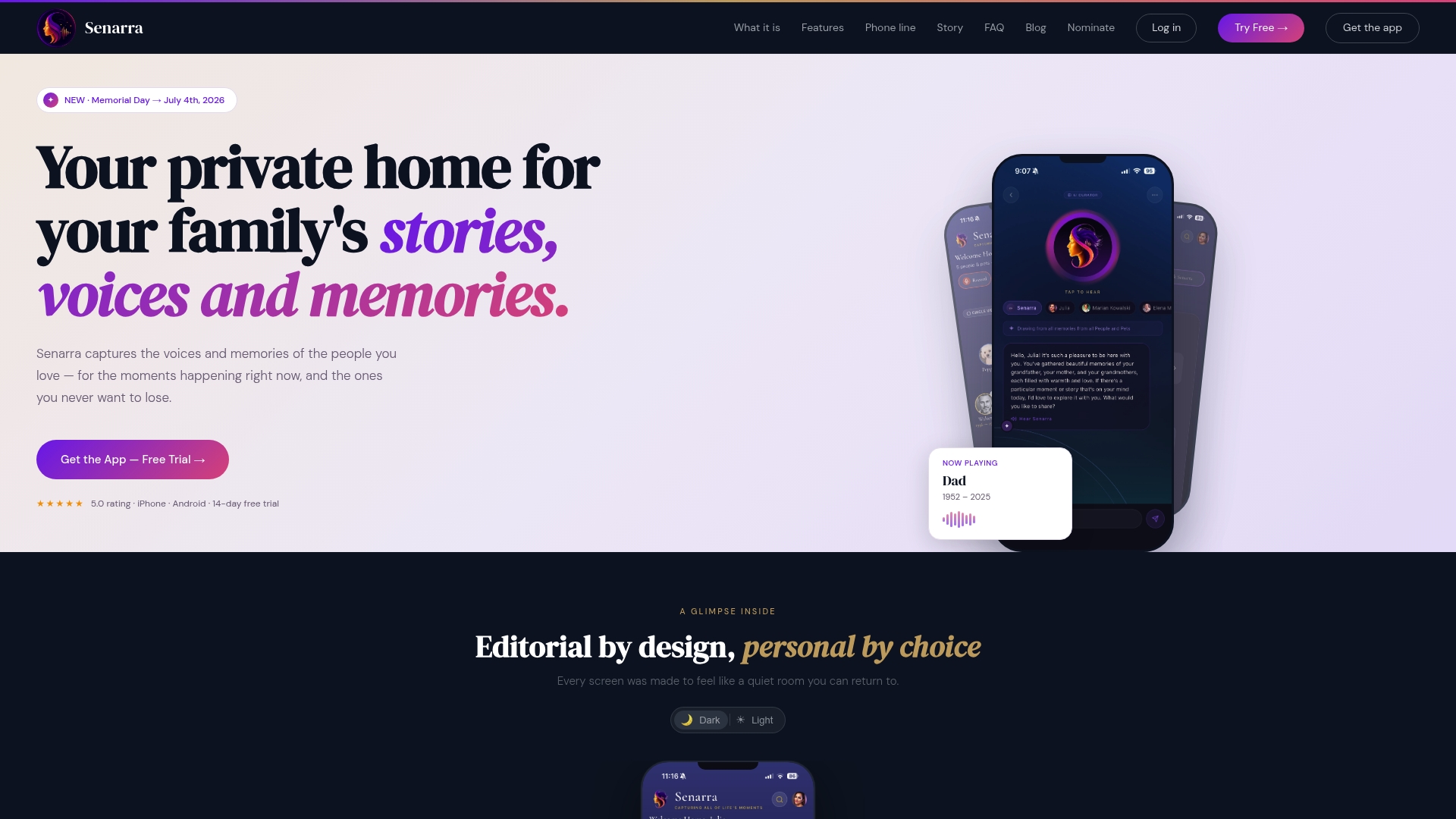
Senarra preserves voices and stories and offers a phone memory line so families can call preserved voice recordings. The platform supports voice cloning, animated video memories, guided interviews, and pet personas. It was founded after a personal family loss to provide a private, respectful archive for long term connection.
Core Features
Senarra captures memories through recorded interviews, photos, and video and organizes them into memory chapters for easy browsing. The platform creates voice clones and powers AI conversations that reference stored memories so replies feel grounded and specific. Animated video memories and pet personas let families revisit stories in voice and image, and a phone memory line provides access for less tech savvy relatives.
Key Differentiator
Senarra combines voice cloning, AI chat grounded in captured material, animated video memories, collaborative family sharing, and a phone memory line in one private product. That mix keeps archives both searchable and conversational while preserving the original voice timbre. The pet personas feature treats animals as named family members with their own stored memories and responses.
Pros
High privacy commitments and a respectful design reduce concerns families commonly raise when preserving sensitive stories. Multiple capture modes let you record elders over the phone, upload old tapes, and stitch photos and video into organized memory chapters. The phone line and simple sharing model bring nontechnical relatives into the archive without forcing them to learn an app. Pet personas give pet owners a way to include animals in family histories, which is rare among memory tools.
Cons
- The platform may lack advanced multimedia editing features for users who want heavy video and audio postproduction.
Who It's For
Families and individuals who want a private, dignified way to preserve and revisit voices, stories, and pet memories will benefit most. Military families and people facing end of life who want to record legacy conversations will find the phone access helpful. People who need tight privacy controls and a respectful presentation of memories will appreciate the design.
Unique Value Proposition
The phone memory line stands out. It makes preserved voices available by phone to relatives who cannot or will not use an app. That accessibility shortens the path from memory capture to regular listening and keeps elders and less technical family members engaged. The result is a living archive that relatives can actually use.
Real World Use Case
A family records a grandfather with guided interview prompts, uploads photo scans, and generates a voice clone for conversational playback. They create animated video memories for holiday gatherings and let distant relatives call the memory line to hear his stories. The family uses the archive to keep his voice present at family events and milestones.
Pricing
Senarra offers a 14-day free trial followed by paid plans. Specific plan tiers and prices are not publicly listed in the material supplied, so contact the vendor for current rates and payment options.
Website: https://senarra.app
StoriedLife
At a Glance
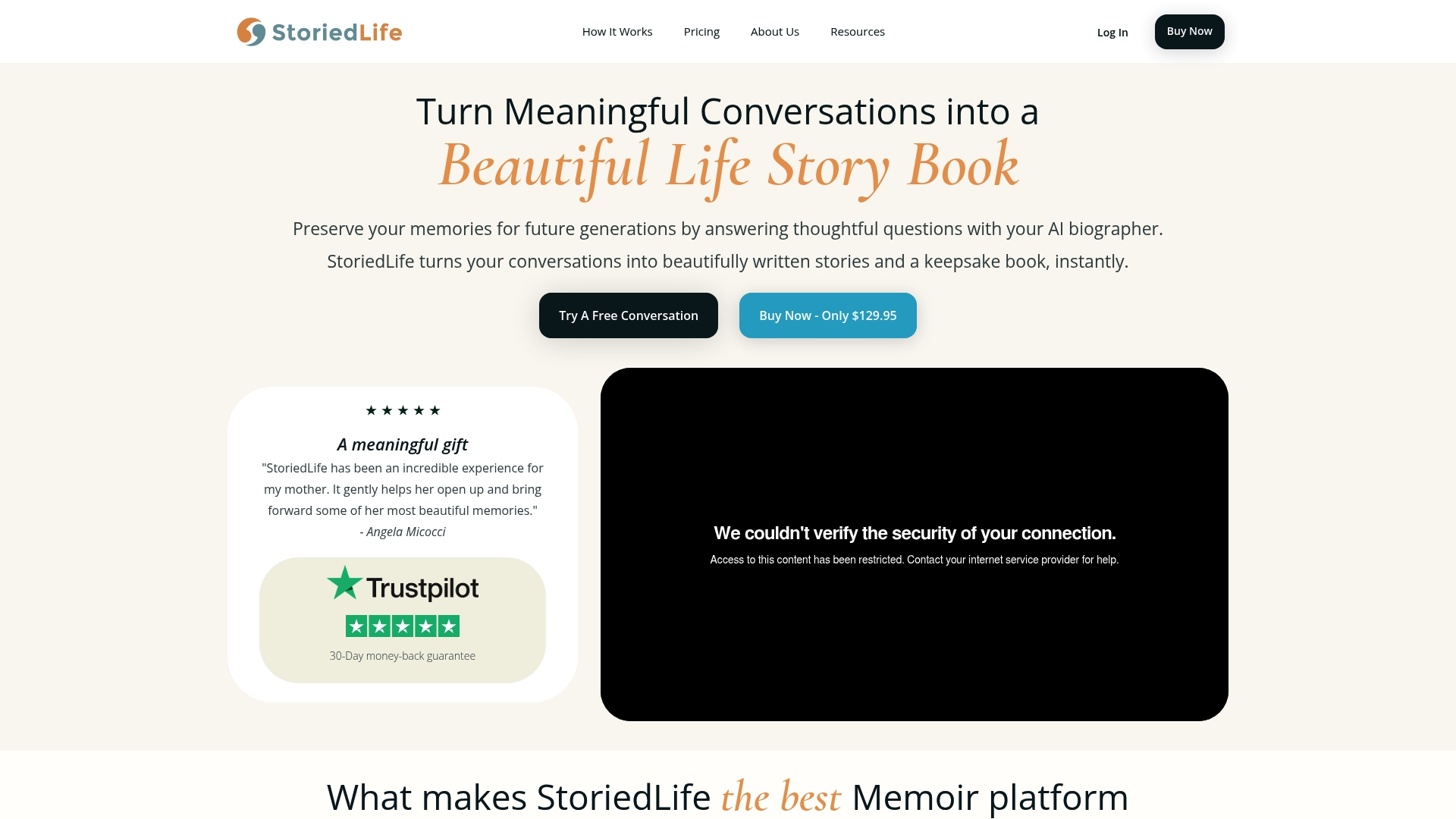
StoriedLife reports a 96% completion rate for users finishing their life stories. That figure reflects the platform’s guided, conversational workflow led by the AI biographer Eva. The result is a voice first process that converts memories into instant digital copies and optional printed keepsakes.
Core Features
StoriedLife uses voice-guided, conversation-led sessions with Eva, so members speak naturally rather than type. Conversations are transformed into polished narratives and organized into chapters to build a complete life story over time. The platform includes a digital gallery for photos and recordings and offers digital memoirs plus optional printed keepsake books up to 200 pages with extra charges.
Key Differentiator
The defining feature is Eva, the guided AI biographer that prompts emotional, memory rich conversation and shapes those recordings into readable chapters. That approach removes the need to draft or edit text manually. It aims to keep interviews authentic and paced to each member’s comfort level.
Pros
StoriedLife reports a high completion rate and that figure suggests the guided approach helps people follow through with longform memories. The platform supports multimedia additions such as photos, letters, awards, and voice recordings to enrich each story, and digital copies appear immediately after sessions. Flexible recording lets family members record at home or on the go, which suits seniors and veterans who prefer speaking to typing, and printed books provide a tangible legacy option.
Cons
- The format favors conversational storytelling. People who prefer a traditional writing or structured editing workflow may find it awkward.
- The service follows a subscription model, with additional charges for physical books and extra memorabilia, which raises total cost of ownership.
- Elderly members with hearing or limited tech experience often need help getting started and managing uploads.
When It May Not Fit
This platform will not fit users who want a conventional writing or book editing tool rather than voice based sessions. It also may disappoint people who prefer a one time purchase because the model is subscription based. Groups that need hands off transcription and heavy text editing work may need a different tool.
Who It's For
Adults and families seeking an easy, conversational way to capture memories will get the most value. The platform matches seniors, veterans, and historians who have stories to tell but do not want to write them down. Family members who plan keepsake books and want an accessible recording method will find this approach practical.
Real World Use Case
A family records grandmother interviews with Eva over several weekends, adding photos and an old letter to chapters as they go. The team receives instant digital memoirs to review, then orders a hardcover printed book to give at a family reunion. The printed keepsake becomes a physical heirloom that mirrors the recorded conversations.
Website: https://storiedlife.ai
Vona
At a Glance
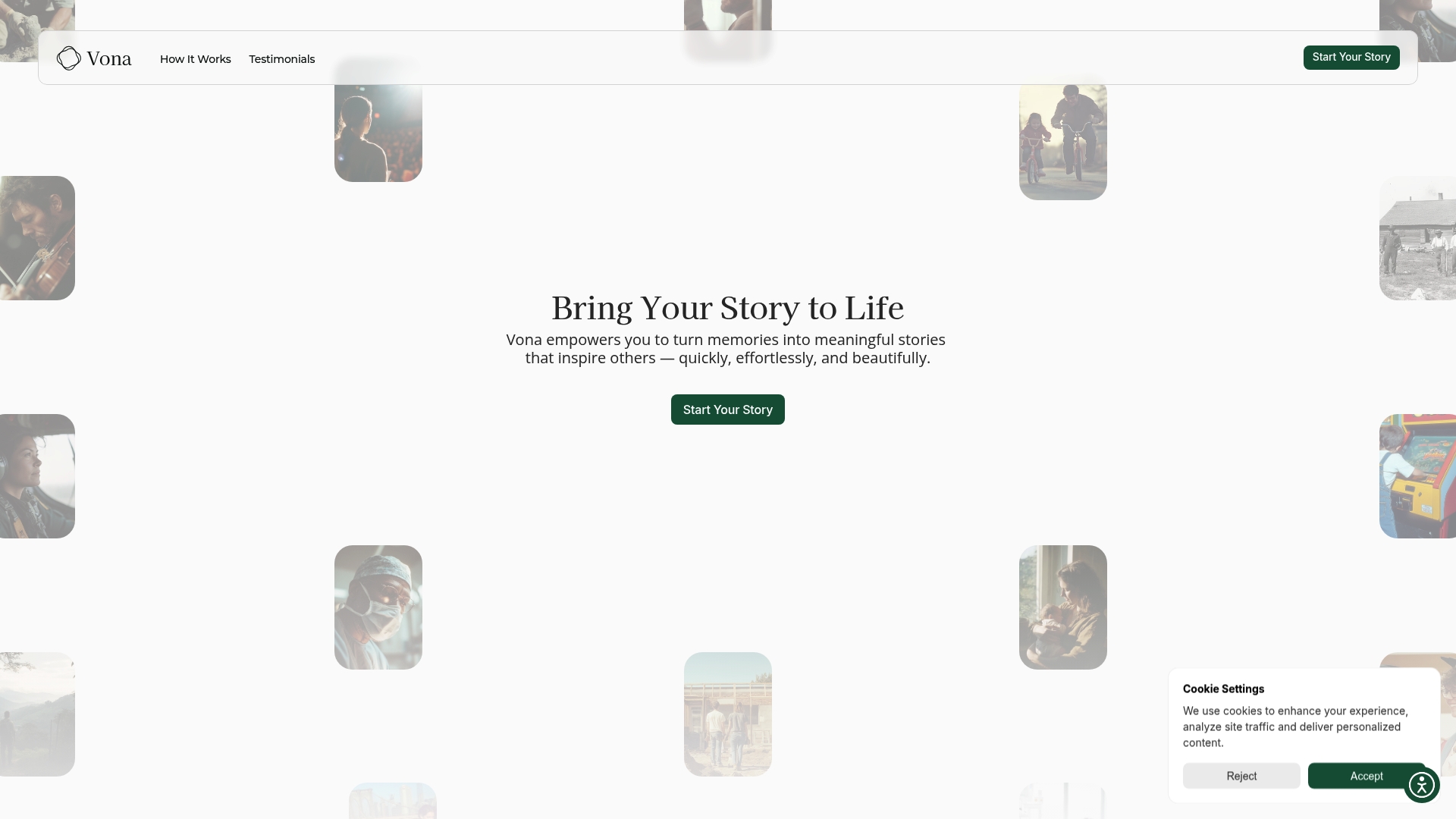
Vona can turn a single project into printed books, audiobooks, eBooks, and videos. The platform guides contributors through interviews and records audio or video for each story. That multi format output makes it practical for schools, charities, and community archives that need physical and digital deliverables.
Core Features
Vona uses an AI guided storytelling process to shape raw recordings into polished narratives and heirlooms. The service accepts audio, video, and text uploads and includes an AI interviewer plus a feedback assistant that helps refine voice and structure. Final outputs cover print and digital formats so a single account can produce a book, an audiobook, and shareable video clips.
Key Differentiator
Vona’s defining trait is its focus on multi format publishing together with privacy and ethical AI practices. That emphasis makes it well suited to organizations that must handle consent and sensitive community material. Compared with Senarra, Vona targets group oriented projects rather than individualized voice cloning and a personal memory line.
Pros
Vona offers a guided experience that reduces the barrier to collecting stories from many contributors. The platform supports print and audio as well as video exports, which helps charities create donor facing printed books while keeping digital archives. The privacy and ethical AI emphasis is a visible part of the product messaging, which matters for schools and nonprofit programs that need clear handling of permissions. The AI assistance automates editing and polishing so coordinators spend less time on manual transcription and more time organizing outreach.
Cons
- Limited public detail on how much control you have over AI edits and tone. This makes advanced customization unclear for editors.
- Pricing and subscription models are not disclosed, so budgeting requires direct vendor contact.
- Reviews do not specify storage limits or long term archival guarantees, which raises questions for institutions.
- The product appears focused on group projects and may not prioritize single user features like personal voice cloning.
When It May Not Fit
If your primary need is a personally tailored voice clone or a phone accessible memory line, Vona may not match those feature sets. Large archives that require explicit, published storage guarantees should verify retention policies before committing. Organizations that want granular control over AI rewrite rules should test output quality first because customization details are not listed.
Who It's For
Vona fits storytellers running community projects, educators organizing student collections, and charities compiling impact narratives. Project coordinators who need print and digital deliverables will find its multi format workflow useful. It also suits organizations that prioritize privacy practices when collecting personal testimonies.
Real World Use Case
A charity collects life stories from dozens of community members using guided interviews. Staff assemble recordings, run them through the AI feedback assistant, and order a printed anthology for donors. They also publish an accompanying audiobook and a short documentary clip for social channels.
Pricing
The vendor does not list pricing publicly and describes pricing as not applicable informational only. Expect subscription or project pricing and contact Vona for quotes and scope details. Institutions should request storage, printing, and licensing cost breakdowns before starting large projects.
Website: https://vonastory.ai
Comparison of alternatives
Memory preservation platforms offer different capabilities and focus areas, each tailored to specific user requirements and scenarios.
Strengths in guided storytelling
StoriedLife excels in providing a highly guided, conversational storytelling process through its AI biographer, Eva. This approach is uniquely designed to encourage the completion of memory projects, as evidenced by its reported 96% user completion rate. For users who prioritize a, hands-off approach to organizing longform stories, this platform is an excellent choice due to its focus on ease and effectiveness.
Versatility in multi-format publishing
Vona differentiates itself through its multi-format publishing capabilities, allowing users to transform a single memory preservation effort into printed books, eBooks, audiobooks, and videos. This functionality particularly benefits organizations and groups seeking customizable deliverables. While individual usage may find this focus less suitable, Vona's use case caters directly to community-based storytelling initiatives and institutions prioritizing archival reliability.
Best fit
- Families and individuals aiming to integrate their memories into visually and aurally immersive projects enhanced by AI assistance will find Senarra.app highly effective.
- Users looking for a conversational and guided storytelling approach, complete with polished narratives and physical memorabilia options, should consider StoriedLife.
- Organizations or users needing flexible publishing outputs across diverse formats will benefit from Vona's offerings, especially for group projects and institutional initiatives.
Our pick
For those prioritizing an accessible, intimate, and highly personalized memory preservation solution, Senarra.app stands out. Its unique phone memory line provides practical access for all relatives, including those less familiar with technology, ensuring universal usability within a family. Moreover, its memory creation tools, inclusive of voice cloning and interactive storytelling features, create a deeply engaging experience to cherish loved ones’ memories for generations to come.
Legacy preservation platforms allow individuals and families to maintain organized memories with tools tailored to their specific needs.
| Platform | Key Differentiator | Best For | Pricing | Notable Limitation |
|---|---|---|---|---|
| Senarra | Voice cloning, memory chapters, phone memory line | Families valuing private archives | Price not published | Limited advanced multimedia editing tools |
| StoriedLife | AI biographer-led guided storytelling | Seniors preferring conversational input | Subscription model plus printed book charges | Awkward for traditional typing workflows |
| Vona | Multi format project publication | Community and educational projects | Price not published | Unclear customization control for AI edits |
How Can Families Keep Legacy Stories Alive for Everyone?
Many families face the challenge of preserving voices and memories in ways that truly honor their loved ones. The article highlights common concerns like protecting privacy, engaging less technical relatives, and capturing authentic conversations. Senarra answers these pain points by offering a unique AI companion that preserves voices, stories, and even pet memories with respectful design and a phone-accessible memory line.
Senarra supports individuals and families who want a private, dignified archive to revisit moments anytime. Key features include voice cloning and animated memory videos, all kept secure and easy to share. Visit Senarra to explore how this platform helps families stay connected with sincere stories and voices beyond a simple app.
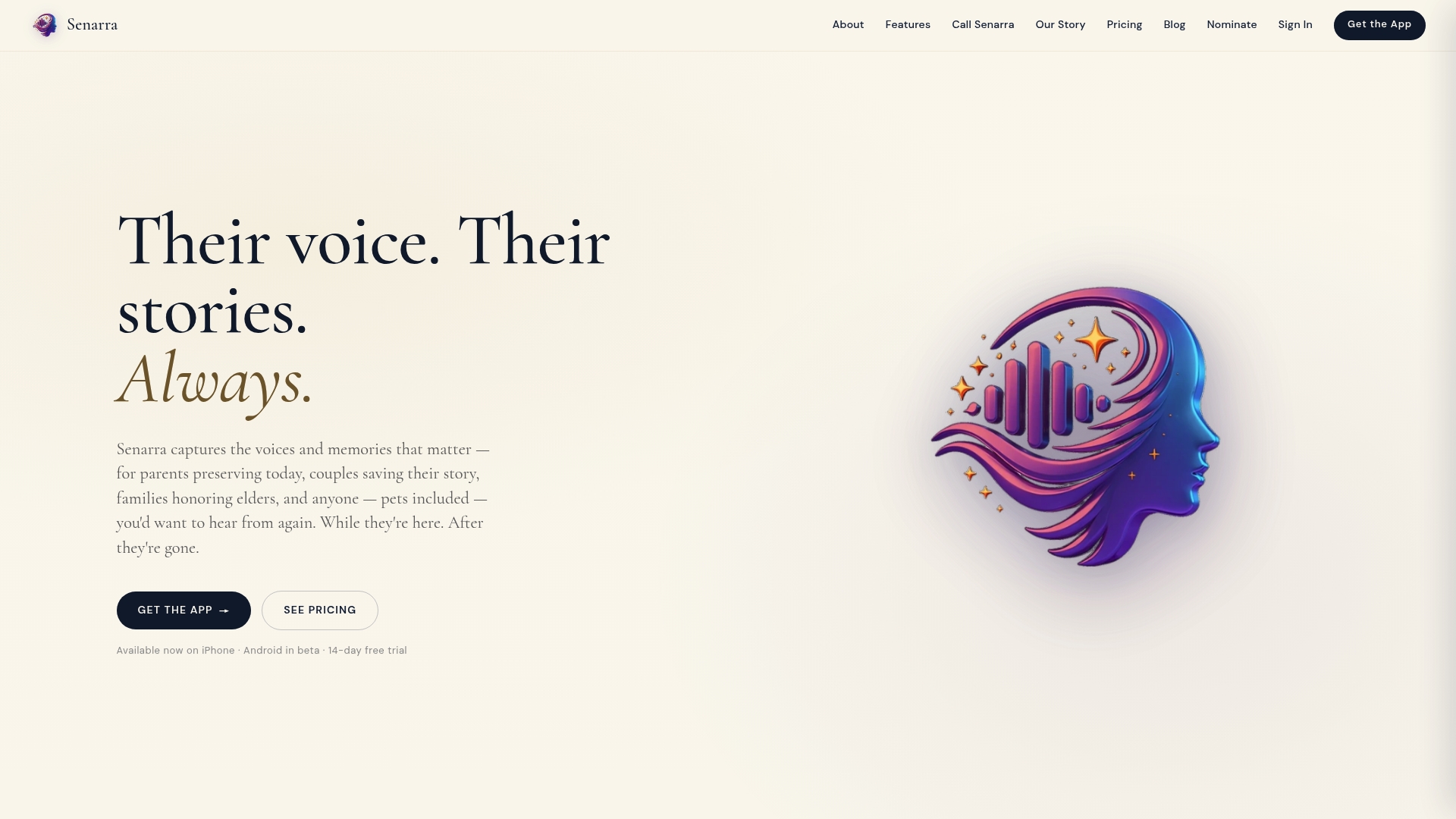
Experience the difference that an accessible memory line can make. See how Senarra lets relatives call preserved stories by phone and lets families create lasting connections. Start preserving meaningful legacystories.com alternatives at Senarra today.
FAQ
How does Senarra support memory preservation for pet personas?
Senarra includes a unique feature that treats pets as named family members, allowing them to have their own stored memories and responses. This capability stands out as it provides a way for pet owners to include their pets in family histories, which is rare among memory tools. Families seeking to honor their pets within their legacy stories will find this feature particularly valuable.
What is the difference between Senarra and StoriedLife?
StoriedLife excels with its guided AI biographer, Eva, which leads conversational storytelling, making it effective for users looking for natural storytelling without manual editing. In contrast, Senarra focuses on voice cloning and provides access via a phone memory line, targeting those who want a more private and conversational approach to preserving legacies. Readers can choose Senarra if they want a seamless blend of voice preservation and accessibility through phone access.
Can I easily share memories with family members using Senarra?
Senarra allows simple sharing of captured memories and generates memory chapters for easy browsing. This user-friendly approach makes it accessible for less tech-savvy family members through a phone memory line, ensuring that everyone stays engaged in the archive regardless of their tech skills. Expect a straightforward process for keeping family connected through shared stories.
What should I consider about the price of Senarra?
Senarra offers a 14-day free trial, allowing users to explore its features before committing financially. Specific pricing tiers and plans are not publicly listed, so it's advisable to contact the vendor for the most current rates and details on what each plan includes. This provides flexibility for potential subscribers to assess the service based on their needs.
Does Senarra have advanced editing features for multimedia stories?
Senarra captures stories through various modes, including recorded interviews and photos, but it may lack advanced multimedia editing features for those seeking heavy postproduction. Users looking for extensive editing capabilities should evaluate this aspect before committing, while still enjoying the benefits of memory preservation through organized memory chapters.