
What makes a memory archive worth building before loss
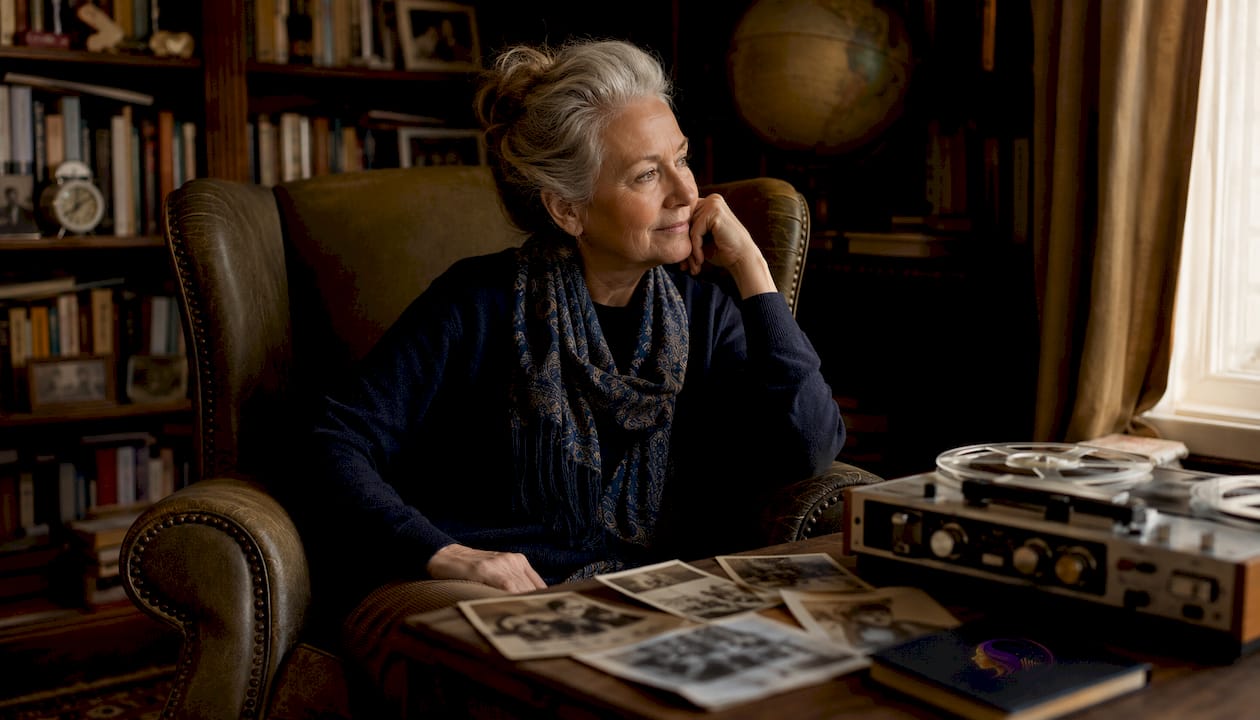
A memory archive is a curated, organized collection of voices, stories, photographs, and personal artifacts captured while the people you love are still here to contribute to it. The difference between building one now versus scrambling after a loss is enormous. Grief clouds recall. Details that feel unforgettable today, the specific way someone laughs, the exact words of a story they told a hundred times, fade faster than anyone expects.
The core elements of a meaningful archive:
- Voice and audio recordings of stories, opinions, and everyday conversation, because audio captures emotional nuance that photographs and text simply cannot
- Video interviews covering life history, values, and personal milestones
- Written narratives including family recipes, letters, and handwritten notes
- Photographs organized with names, dates, and context, not just dumped into a folder
- Physical keepsakes documented and cross-referenced with digital records
- Structured organization using indexes, categories, and consistent file naming so future generations can actually find things
- Multiple storage locations, both offline and cloud-based, to protect against hardware failure or account loss
- Privacy protections that respect the wishes of everyone whose stories are included
The goal is not a perfect archive. It is a living one, built with intention before the window closes.
Table of Contents
- Practical steps to start capturing memories right now
- Why preserving memories before loss matters for legacy and healing
- Human curation versus AI-only archiving: what actually gets preserved
- How Senarra preserves voices and stories in a way other tools don't
- Senarra: hear the people you love, whenever you need to
- Key Takeaways
Practical steps to start capturing memories right now
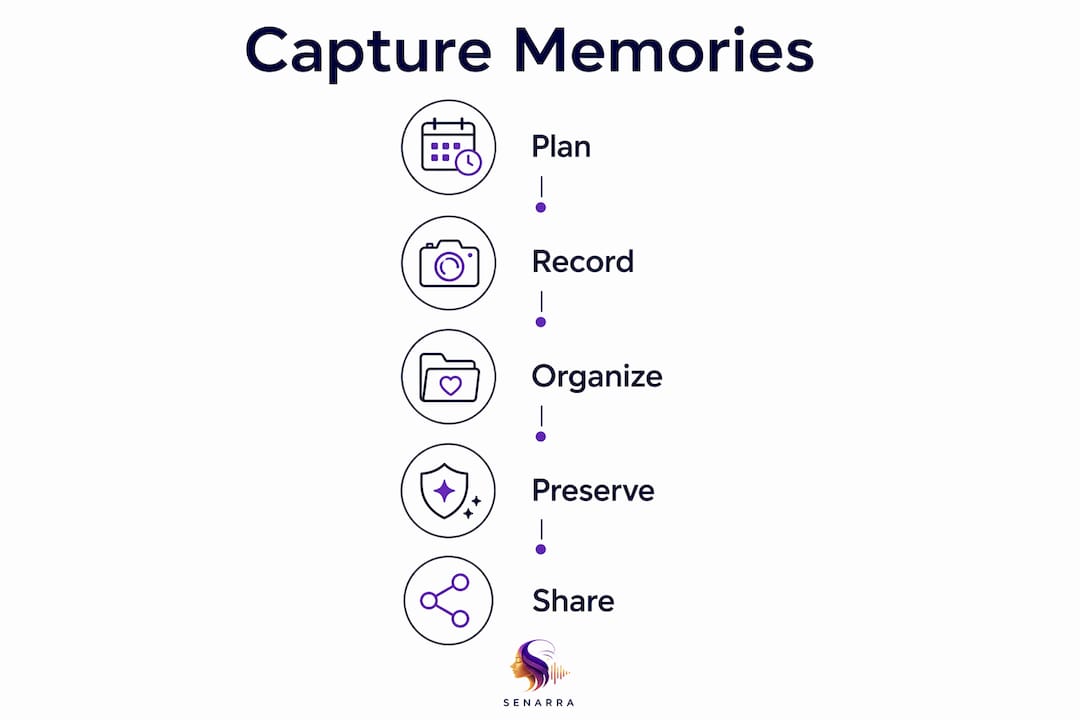
The single biggest mistake people make is waiting for the right moment. There is no right moment. Start with whatever you have today.
- Record first, organize later. Capturing a raw memory quickly in 30 seconds is more effective than reconstructing it later. Voice memos on a phone work perfectly. Spontaneous recordings carry authenticity that staged sessions rarely match.
- Gather diverse media. Combine voice recordings, video interviews, written stories, scanned photographs, and physical mementos. Each format preserves something the others miss.
- Create a master index. A simple spreadsheet or text file listing every item, its format, its location, and a brief description transforms a chaotic folder into a searchable archive.
- Use at least two storage locations. An external hard drive plus cloud backup covers you against hardware failure, account lapses, and natural disasters. Never rely on a single copy.
- Involve family members. Ask siblings, cousins, and old friends to contribute their own recordings and photographs. A multi-perspective archive is richer than any single person's memory of someone.
- Schedule regular updates. Set a calendar reminder every few months to add new material, update the index, and back everything up again.
- Plan for end-of-life keepsakes alongside the digital archive, so physical and digital records reinforce each other for generations to come.
Pro Tip: Use open, non-proprietary formats: MP3 or WAV for audio, MP4 for video, JPEG or PNG for images, and plain Markdown or PDF for text. Avoiding proprietary formats keeps your archive readable by any tool, now or decades from now.
Why preserving memories before loss matters for legacy and healing
Grief does something specific to memory: it fragments it. The timeline scrambles. Details blur. What felt vivid the week before a loss can feel unreachable six months later. A structured memory archive converts that fragmentation into continuity, giving families a fixed point to return to rather than chasing fading impressions.
The emotional benefits run deeper than comfort. Sharing stories at family gatherings, holidays, and memorial services keeps a person's spirit genuinely present for younger generations who may have known them only briefly. A grandmother's recorded voice telling the story of how she met her husband lands differently for a grandchild than a secondhand retelling ever could. Memory preservation also shifts grief from emotional overload into something more sustainable: a continuing legacy woven into family traditions and rituals.
Physical keepsakes and digital records work best together. Framed photographs, memorial jewelry, and handwritten letters carry a tangible weight that screens cannot replicate. Pairing them with organized digital files, audio recordings, and online memorials creates redundancy and emotional depth simultaneously.
The most durable archives are not the most technically perfect ones. They are the ones built around meaningful human connections, according to mortuary professionals at Hilgenfeld Mortuary.
Human curation versus AI-only archiving: what actually gets preserved
AI tools can transcribe, tag, and organize at scale. What they cannot do is decide which story matters, or why the way someone paused before answering a question reveals something essential about who they were.
Human-focused archives retain context, emotional truth, and the process behind a person's creations. An AI trained on surface-level data can mimic outputs but misses the depth of lived experience entirely. Think of it as the difference between a photograph of a painting and the artist's sketchbook: the photograph captures the result; the sketchbook captures the thinking.
Key distinctions worth understanding:
- Context and intent: Human curators record why a memory matters, not just what happened. That annotation is what makes an archive meaningful rather than merely comprehensive.
- Emotional tone: A person's voice, their hesitations, their humor, their grief, these are preserved through deliberate human capture, not automated extraction.
- The archaeology of creation: Capturing creative processes, personal reflections, and the evolution of someone's thinking creates what EverArchive calls an "archaeology of creation" that AI-only systems cannot replicate.
- Meaningful connections: Human archives facilitate the kind of connection that survives beyond technical outputs, the kind a grandchild feels when they hear a voice for the first time after a loss.
AI tools are genuinely useful as aids: transcription, tagging, search indexing, and format conversion all save time. The mistake is treating them as a substitute for the human judgment that decides what to capture and why.
How Senarra preserves voices and stories in a way other tools don't
Most memory tools store files. Senarra does something different: it preserves the experience of a person.
Senarra combines AI voice cloning with personalized, conversational memory capture, so the people and pets you love remain present in an interactive way, not just as a folder of recordings. The platform's memory line is accessible by phone, meaning you can call in and hear a loved one's voice responding in their own words, drawn from the stories and conversations already captured.
| Feature | What it does |
|---|---|
| Voice cloning | Preserves authentic vocal personality for ongoing interaction |
| Memory line | Phone-accessible archive of conversations and stories |
| Personalized conversations | Captures context and emotional nuance, not just raw audio |
| Pet memory support | Extends preservation to beloved animals, not only people |
| Privacy focus | Protects sensitive personal stories with security built in |
Senarra suits families navigating cognitive decline, individuals who want to document their own stories for future generations, and anyone who has felt the specific regret of not recording a voice while they still could. It works alongside a broader archive strategy, not instead of one. The audio memory benefits that make voice recordings so powerful are exactly what Senarra is built to capture and sustain.
Senarra: hear the people you love, whenever you need to
Most families realize too late that what they miss most is not photographs. It is the sound of a voice.
Senarra was built for exactly that moment. Where a traditional archive stores files you browse, Senarra lets you have a conversation, hear a laugh, revisit a story, through a phone call or the app, whenever you need that connection. It captures voices and personal narratives before loss, then keeps them alive and accessible long after. Families dealing with dementia, aging parents, or simply the passage of time have found it to be the one tool that makes a memory feel real rather than archived. If you want to preserve the voice of someone you love while you still can, start with Senarra today.
Key Takeaways
Building a memory archive before loss works best when human curation, diverse media formats, and structured organization combine with tools that preserve authentic voice and emotional context.
| Point | Details |
|---|---|
| Start capturing now | Record voice memos and stories immediately; early details are the most vivid and authentic. |
| Use multiple storage locations | Keep copies on an external drive and in cloud storage to prevent permanent loss. |
| Human curation is irreplaceable | Context, emotional tone, and intent require human judgment that AI tools alone cannot supply. |
| Open formats protect longevity | Use MP3, MP4, JPEG, and plain text to keep your archive readable by any future tool. |
| Senarra preserves voice interactively | Senarra's voice cloning and phone-accessible memory line keep loved ones' voices alive beyond static recordings. |