Losing a pet can trigger grief as intense as losing a human family member, and there's a real psychological reason for that. Pets function as attachment figures, primary caregiving relationships, and daily routine anchors all at once, so their death removes several emotional supports simultaneously instead of just one. If you feel like you're falling apart over an animal and worry that reaction is excessive, it isn't. Clinicians who study bereavement now recognize pet loss as a legitimate trigger for clinically significant grief, not an overreaction to a minor loss.
What's driving the intensity usually comes down to a few overlapping mechanisms:
- Attachment disruption — your pet likely served as a steady, nonjudgmental presence you turned to for comfort, the same role attachment figures play in human relationships.
- Loss of caregiving identity — feeding, walking, and looking after another creature gave your day structure and gave you a role, and that role just vanished.
- Routine collapse — the small rituals built around your pet (morning walks, bedtime check-ins) get erased overnight, leaving a gap your nervous system notices immediately.
If your grief starts interfering with work, sleep, eating, or safety for more than a few weeks, or if you're having thoughts of self-harm, that's the signal to talk to a therapist or your doctor rather than wait it out alone.
Key Takeaways
Pet loss causes deep grief because it strips away attachment, caregiving identity, and daily routine all at once, and research confirms this intensity is clinically real for a meaningful share of owners.
| Point | Details |
|---|---|
| Grief intensity is legitimate | About 21% of surveyed people called pet loss their most distressing bereavement, and 7.5% met prolonged grief disorder-like criteria. |
| No fixed timeline exists | Grief follows the dual-process model, oscillating between loss-focused and restoration-focused coping rather than a straight line. |
| Disenfranchised grief compounds pain | Social minimization ("it was just a pet") increases shame and isolation, so naming the invalidation helps. |
| Seek help for functional impairment | Get professional support when grief blocks work, sleep, or safety for weeks, or produces thoughts of self-harm. |
| Memory preservation supports continuing bonds | Tools like Senarra help you keep your pet's voice and memories accessible as part of healthy, ongoing grieving. |
Why Pet Loss Causes Deep Grief: The Psychological Mechanisms
Pets often function as genuine attachment figures, not metaphorical ones. In attachment theory terms, an attachment figure is someone (or something) that provides a "safe base" you return to for comfort and a sense of security. Dogs and cats do this reliably: they greet you the same way whether you had a great day or a terrible one, and that consistency wires them into your nervous system's stress response the same way a spouse or parent does. When that figure disappears, the brain registers an actual threat to your sense of safety, not just sadness.
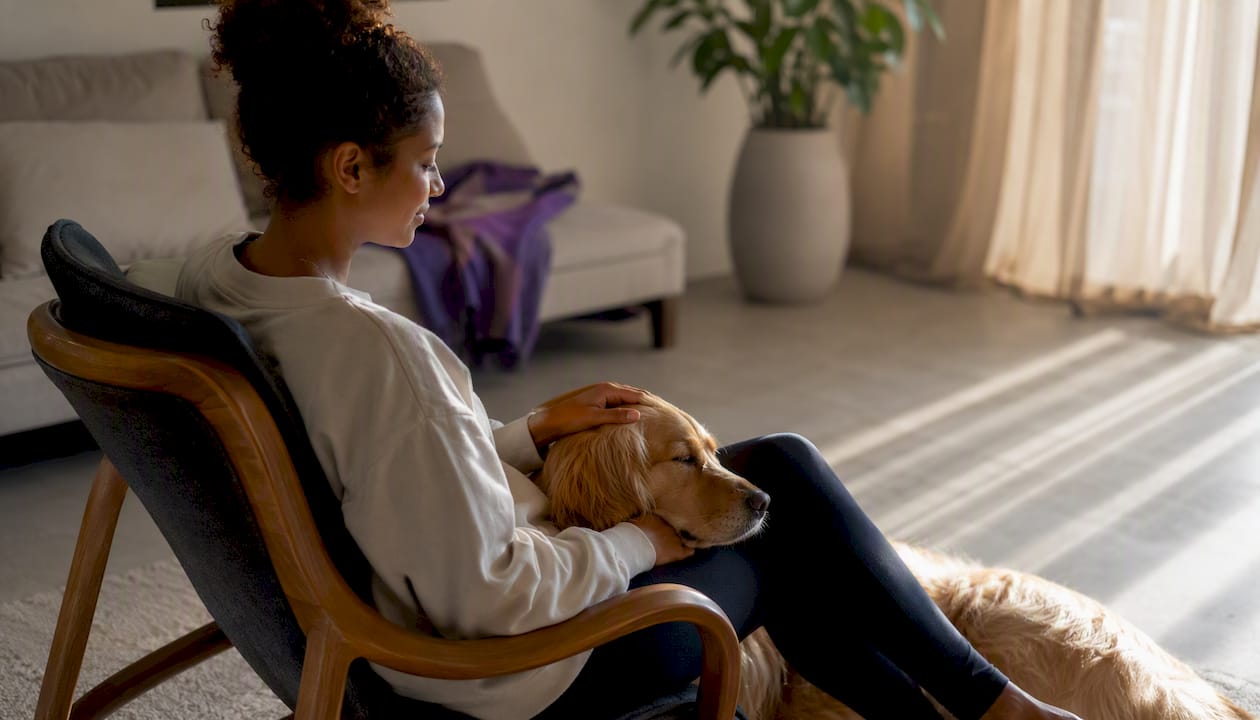
Caregiving compounds the problem. Owning a pet usually means you're the one who feeds it, medicates it, and interprets its needs when it can't tell you what's wrong. That role gives you purpose in a very literal, scheduled way. Take that away and you lose more than the animal. You lose the part of your identity that was "the person who takes care of this creature," and that identity gap is disorienting in a way that's hard to explain to someone who hasn't experienced it.
Routines matter more than people give them credit for. A daily 7 a.m. walk isn't just exercise. It's a regulatory anchor, something your body and mind expect and organize around. Psychology Today's coverage of pet attachment notes that losing a pet often means losing a primary source of unconditional support and stability at the same time you lose the coping mechanism you'd normally use to process hard emotions. That's a double hit: the stressor and the tool you'd use to manage the stressor disappear together.

Euthanasia adds its own layer of intensity. Making the decision to end a pet's life, even when it's clearly the right call, often produces what clinicians call anticipatory grief. You start mourning before the death happens, and the guilt of having "chosen" the moment can linger long after. A pet owner who sat with a dying cat for a week, adjusting medication doses and timing the final vet visit, is carrying a different weight than someone whose pet died suddenly. Reporting on pet bereavement has found that grief after pet loss can reopen old wounds and interact badly with unresolved trauma from earlier losses, human or animal.
Pro Tip: In the first week, write down your pet's daily routine exactly as it was: the walk times, the feeding schedule, the spot they slept in. Naming what you lost specifically, rather than grieving a vague absence, makes the loss feel concrete and gives you something to gradually replace or ritualize instead of just an open wound.
What Does the Research Say About Pet Grief Intensity?
The data on this is more striking than most people expect. A widely cited analysis found that about 21% of people who had lost a pet called it the most distressing bereavement they'd ever experienced, ranking it above losses of human relationships in some cases. That same sample found roughly 7.5% of respondents met criteria similar to prolonged grief disorder, the clinical diagnosis used when mourning doesn't ease over time and instead stays severe enough to disrupt daily life.
A PLOS One study examining prolonged grief following pet death backs this up, showing that pet bereavement produces symptom profiles comparable in rate and severity to some human bereavements. That's not a small or fringe finding. It puts pet loss in the same clinical conversation as losing a parent or sibling, at least for a meaningful subset of grieving owners.
| Finding | What It Shows |
|---|---|
| 21% called pet loss their most distressing bereavement | Pet grief can outrank human losses in subjective intensity |
| 7.5% met prolonged grief disorder-like criteria | A measurable minority experience clinically significant, lasting grief |
| Comparable rates to some human bereavements | Pet loss belongs in the same clinical category as major human losses |
Why does grief hit the body this hard? The stress response triggered by losing a pet mirrors what happens with any major loss: cortisol spikes, sleep gets disrupted, appetite swings in either direction, and fatigue sets in even when you haven't done anything physically demanding. These aren't signs something is wrong with you. They're the standard biological signature of acute grief.
The clinical threshold worth watching for is duration and function, not intensity alone. Intense grief in the first few weeks is expected. What matters is whether, weeks later, you're still unable to work, sleep, or eat normally, or whether physical symptoms like chest tightness or persistent insomnia are showing up alongside the emotional weight. Clinical guidance is consistent on this: when grief interferes with daily functioning or produces thoughts of self-harm, that's the point to bring in a professional rather than push through alone.
Why Do People Minimize Pet Loss, and What Can You Say Instead?
There's a term for what happens when the world doesn't treat your grief as legitimate: disenfranchised grief. It describes loss that isn't socially recognized with the usual rituals, bereavement leave, or condolences that human deaths get automatically. Pet loss is a textbook case. There's no funeral norm, no standard time off work, and often a friend or coworker who responds with a shrug instead of sympathy. A qualitative review of pet bereavement research found that this social minimization consistently increases feelings of shame and isolation in grieving pet owners, on top of the grief itself.
You've probably heard some version of these lines, and they land worse than the person saying them realizes:
- "It was just a pet." A better response: "That sounds like it really hurt. Tell me about them."
- "You can always get another one." A better response: "There's no replacing them. How are you holding up?"
- "At least it wasn't a person." A better response: "Grief doesn't need a comparison. This is a real loss."
That gap between what you're feeling and how others respond doesn't just sting in the moment. It teaches you to hide the grief, which delays processing it and can deepen isolation over weeks or months. Research on disenfranchised grief and pet loss identifies this social invalidation as a specific clinical target, something worth naming out loud rather than absorbing silently.
Pro Tip: If someone minimizes your loss, try naming it directly: "I know pet loss isn't always taken seriously, but this is genuinely hard for me right now." That one sentence reframes the conversation and often gets you the support you actually needed the first time.
How Long Does Pet Grief Last, and Is Intense Grief Normal?
There's no fixed timeline for mourning a pet, and clinical guidance actively pushes back against the idea that grief should follow a schedule. The AVMA's guidance on pet loss frames healthy recovery as reconciliation, not resolution: you're not aiming to stop feeling anything, you're working toward integrating the loss into your life so it stops running the show.
The most useful framework for understanding how this actually unfolds is the dual-process model. Picture two tracks running side by side rather than a single line moving from "grief" to "okay." One track is loss-oriented: crying, missing your pet, replaying memories, feeling the absence acutely. The other is restoration-oriented: going back to work, making plans, laughing at something unrelated. Healthy grieving oscillates between these two tracks. You don't move steadily from one to the other. You bounce, sometimes within the same afternoon, and that bouncing is the process working, not a sign you're doing it wrong.
Grief after pet loss rarely moves in a straight line. Bereavement resources describing the dual-process model note that owners typically alternate between periods of functioning normally and sudden waves of sorrow, and that this oscillation, not steady linear improvement, is what a healthy grieving process actually looks like.
As for ranges: major disruption to sleep, appetite, and mood commonly lasts weeks to a few months. Some sadness lingering for six months to a year, especially around anniversaries or the pet's usual routines, is common and not a red flag on its own. If you had prior trauma, lost the pet suddenly, or made a euthanasia decision, expect the timeline to run longer, and don't treat that as failure.
Is extreme grief after pet loss normal? Given that a real subset of owners meet criteria resembling prolonged grief disorder, intense reactions are well within the range of normal. The distinction isn't intensity, it's whether the intensity is easing over months or staying flat. Flat, unchanging severity that blocks daily function for months is the signal to get clinical support, not a sign you're grieving "too much" for an animal.
What Helps: Practical Steps for Coping With Pet Grief
The first weeks are mostly about stabilization, not resolution. Sleep gets disrupted, appetite swings, and motivation for basic self-care drops. Protecting the basics, even loosely, keeps you from adding a second crisis on top of the grief itself.
Here's a workable structure for the first month:
- Week 1: Keep eating and sleeping on any schedule, even an imperfect one. Tell a few people what happened so you're not carrying it alone.
- Week 2: Create one memorial ritual, whether that's a photo collage, a planted tree, or a saved voicemail of your pet's name being called.
- Week 3: Reintroduce one piece of the old routine deliberately, like the walking time, even without the pet, to signal to your body that structure still exists.
- Week 4: Check in with yourself honestly: is grief easing even slightly, or is it flat and still blocking basic function? Use that answer to decide whether outside help makes sense.
Continuing bonds matter more than most grief advice acknowledges. This isn't about "moving on" from your pet. It's about keeping a version of the relationship alive on your terms: talking to a photo, keeping a collar somewhere visible, or gathering photos, voice recordings, and stories into something you can revisit (more on that in the next section). Resources like HelpGuide's coping guide consistently show that rituals and continued connection reduce isolation better than trying to suppress the memory.
Get professional support if grief is interfering with work for more than a few weeks, if you're having thoughts of self-harm, or if physical symptoms like chest pain or persistent insomnia show up alongside the emotional weight. Pet-loss support groups and bereavement therapists who specialize in this area exist specifically because generalist grief counseling sometimes misses how central a pet's role was in someone's daily life.
Pro Tip: Set a 30-minute timer, gather three to five photos or one voice recording, and write down one specific memory tied to each. That's a complete memorial ritual. It doesn't need to be elaborate to matter.
How Memory Helps You Heal, and How to Tell When It Isn't
The memories that hurt most are the same ones that carry you forward. Memories fuel grief in two ways: happy memories contrast painfully with the absence, and negative ones trigger regret. The goal isn't to stop remembering. It's to change your relationship with what you remember.
Different kinds of memory tend to behave differently:
- Sensory triggers (a scent, the jingle of tags, a time of day) hit hardest in the first weeks.
- Narrative memories, the stories you tell about your pet, build meaning over time.
- Regret memories (things left unsaid or undone) often need deliberate attention to avoid prolonged distress.
- Joyful memories usually turn bittersweet before they turn comforting. That arc is normal.

Giving memories somewhere to live
- Write the ordinary. Grief journaling helps organize scattered memories into a coherent story. Start with the mundane: what they ate for breakfast, their favorite spot in the house. Contemporaneous, everyday records anchor memory better than highlight-focused memorials, because they hold the texture you miss most. Try one memory a day for the first two weeks.
- Keep a small, repeating ritual. Structured grief rituals give grief a predictable outlet. Light a candle at their usual feeding time, or walk their favorite trail on their birthday.
- Keep physical anchors. A collar, a blanket, a paw print cast. Physical anchors let memory surface naturally, without forcing yourself to recall.
- Save the sounds and footage. Digital memory keepsakes like voice recordings, photo timelines, and video hold details a physical object can't.
- Ask others for their memories. Everyone who knew your pet holds a different piece of the story. Sharing one memory a week with someone also builds the social recognition pet grief so often lacks.
Pro Tip: Build at least three kinds of access point: one written, one physical, and one audio or video. On a hard day, you'll have more than one way back to them.
Many people panic when they can't picture their pet's face clearly or recall the exact sound of their bark. That isn't failure. It's often the memory moving inward, becoming part of who you are rather than something you retrieve from outside.
Healthy bonds versus stuck ones
Not all memory work heals. An internalized bond feels warm: you think of your pet and feel love, gratitude, or gentle sadness. An externalized bond feels stuck: you depend on objects or behaviors to feel connected, and their absence brings acute anxiety. Healthy memory bonds support growth, while externalized ones tend to prolong distress.
Signs memory work is going well:
- Memories bring a mix of sadness and warmth, not only pain
- You can talk about your pet without being incapacitated
- Rituals feel comforting rather than compulsive
Signs it may need support:
- Memories trigger panic or an inability to function weeks after the loss
- You avoid every reminder because the pain is unmanageable
- Isolation is increasing rather than easing over time
Pro Tip: If one memory keeps bringing distress rather than comfort after several weeks, write it down in detail, then write what you wish had been different. Putting regret into words helps shift it toward acceptance.
How to Support Children and Older Adults Through Pet Loss
Age changes how grief shows up and how much support a person needs to process it well.
Young children often don't understand death as permanent, so they may ask the same question repeatedly ("When is Max coming back?"). Answer plainly and consistently rather than using euphemisms like "went to sleep," which can create confusion or fear around actual sleep. A useful script: "Max died. That means his body stopped working and he won't come back, but we can remember him together."
Tweens and teens may grieve in bursts, seem fine, then suddenly break down days later. That's typical, not a sign something's wrong. A useful opener: "I know this might come and go in waves. I'm here whenever it hits, even if it's at a weird time."
Older adults, especially those who live alone, often lose a companion that structured their entire day and provided a sense of ongoing responsibility. For seniors with dementia or cognitive decline, grief may express itself as confusion, agitation, or repeated searching for the pet rather than verbal sadness. That shift in expression doesn't mean the loss registers less. It means it's showing up differently, and caregivers should watch for behavioral changes rather than expecting a clear verbal reaction.
Prior trauma changes the picture for any age group. Reporting on pet bereavement notes that pet loss can reopen earlier unresolved grief, so someone who lost a parent recently or has an anxiety disorder may need professional support sooner than someone without that history.
Pro Tip: For seniors, a short daily habit, like looking at one photo and saying one sentence about the pet out loud, keeps the bond alive without requiring them to relive the loss in full each time.
What to Say (and Not Say) When Someone Loses a Pet
Most people mean well and still say the wrong thing, mostly because there's no cultural script for pet loss the way there is for a human death.
What tends to land well:
- "I'm so sorry. [Pet's name] was lucky to have you."
- "Tell me about them, if you want to."
- "This is a real loss. Take whatever time you need."
What to avoid, even with good intentions:
- "At least you can get another one."
- "It was just a dog/cat."
- "You seem to be handling it well" (said too early, it can read as pressure to perform being fine).
Small actions often matter more than words. Dropping off a meal, offering to handle the vet paperwork, or helping plan a small memorial takes real weight off someone who's barely functioning. If you're not sure what they need, ask directly: "Do you want company, or do you want space right now?" Both are valid, and guessing wrong in either direction adds friction to an already hard week.
A Personal Note on Grief and Memory
I've spent a long time thinking about why we hold onto voices, photos, and small recorded moments after someone or something we love is gone, and pet grief keeps surfacing as one of the most underestimated forms of loss people carry. The instinct to save a voicemail, a video of a dog running to the door, or a recording of the specific way you used to talk to your cat isn't sentimental excess. It's your mind trying to keep the continuing bond alive in a tangible form, which the research on personalized memory experiences backs up as a real part of healthy adjustment, not avoidance.
What I'd push back on is the idea that grieving "well" means eventually not thinking about your pet much. That's not what the dual-process model or the clinical literature on pet bereavement supports. Grieving well means the memory becomes something you can hold without it destabilizing you, and that's a different goal entirely. Preserving the specific details, not just the general fact that you had a pet, is often what makes that shift possible.
Preserving Your Pet's Voice and Memory With Senarra
If part of what you're grieving is the sound of your pet's tags jingling, the specific way they'd bark at the door, or the voice you used every day to talk to them, there's a way to hold onto that beyond photos. Senarra is a memory-preservation app built to capture voice, audio, photos, and video into an organized, lasting record you and your family can revisit. It works through guided interviews, voice recordings, and simple imports from your phone, letting you build something closer to a full memory rather than a scattered photo roll.

This isn't a substitute for grief counseling or a bereavement therapist, and if grief is interfering with your daily functioning, that professional support should come first. What Senarra offers is a companion piece: a way to keep your pet's presence accessible on your own terms, whether that's a saved voice memory or a pet memory companion you can return to when you want to feel close to them again. Start a free trial at Senarra and see what preserving those memories looks like before your next difficult anniversary arrives.
Frequently Asked Questions
Is it normal to grieve a pet as much as a person? Yes. Research shows a meaningful share of pet owners rate the loss as their most distressing bereavement, and grief responses can mirror those seen after losing a close human relationship.
How long does pet grief usually last? There's no fixed timeline. Major disruption to sleep and mood commonly eases within weeks to a few months, though lingering sadness around anniversaries for six months to a year is also common.
What is disenfranchised grief? It's grief that isn't socially recognized with the usual rituals or support, which happens often with pet loss and can deepen feelings of isolation and shame.
When should I see a therapist about pet loss? Seek professional help if grief blocks work, sleep, or eating for several weeks straight, or if you're having thoughts of self-harm at any point.
Can preserving memories actually help with grief? Continuing bonds, including saved voice recordings, photos, and stories, are associated with healthier long-term adjustment, though they work alongside professional support rather than replacing it.
How do I know if my memory work is healthy? Healthy memory work brings a mix of sadness and warmth, and memories grow more comforting over time. If a specific memory keeps triggering panic or stops you functioning weeks after the loss, a grief counselor or pet loss support group can help.
Why am I afraid of forgetting my pet? It's common to panic when you can't picture their face clearly or recall their bark exactly. That usually reflects the memory becoming part of you rather than true loss. Writing and recording ordinary moments early gives you something to return to.
This article is general information, not a substitute for advice from a qualified doctor. Consult a qualified healthcare professional about your own circumstances before acting on anything here.
Sources
- What Pet Loss Reveals About Attachment | Psychology Today
- Coping with the loss of a pet — AVMA
- Losing a pet can trigger grief as intense as human loss — Harvard Health
- Why grieving a pet can be as hard as grieving a person — MedicalXpress