Start here: pick one format, get spoken consent with an easy exit clause, test your gear for two minutes before you press record for real, ask one sensory question before any timeline question, save your file in three places tonight, and tell the family where it lives. That is the whole system in one breath.
Every other decision in personal story documentation best practices branches off those six moves. The Library of Congress guide to recording oral histories recommends sessions of limited length and equipment testing before you begin. A 2023 BMC Geriatrics meta-analysis of 32 studies and 2,353 participants found that reminiscence-based life review measurably improves quality of life and life satisfaction for the person telling the story, not just the family listening to it later.
- Get ongoing consent, not a one-time yes, and offer final review rights.
- Choose one format (audio, video, written, or hybrid) before you schedule anything.
- Run a two-minute test clip in the actual room you'll use.
- Open with a sensory question, not a date.
- Back up to three locations before you sleep on it.
- Decide now who gets access and when.
Key Takeaways
The most reliable way to preserve a personal story is combining ongoing consent, sensory-driven questions, and a multiple-copy backup plan before technical perfection.
| Point | Details |
|---|---|
| Consent is ongoing | Give narrators final review rights and the ability to revoke permission at any time. |
| Sensory prompts beat timelines | Open with smell, taste, or touch questions before asking for dates or facts. |
| Backups need three homes | Keep copies on the recording device, an external drive, and off-site or cloud storage. |
| Metadata prevents future confusion | Log dates, participants, tags, and permissions inside the file itself, not a separate note. |
| Senarra handles the full workflow | It captures, transcribes, organizes, and clones voices with consent, then shares securely with family. |
Personal Story Documentation Best Practices Start With a Plan
Before anyone picks up a phone or microphone, decide why you're doing this. A grief-support project for a parent's final months looks different from a multigenerational archive meant for grandchildren not yet born. Write down the purpose in a sentence, name who's involved, and set the intended audience. Some families choose a "sealed until" date for sensitive material, which is worth deciding upfront rather than negotiating mid-interview.
Consent is the part people rush and later regret. Oral-history practitioners treat it as ongoing, not a signature you collect once and forget, and they give narrators final say over what stays in the record. A verbal script can be as simple as: "I'm recording this so our family can hear your voice and stories for years to come. You can ask me to stop, edit, or delete anything, anytime."
- Right to review transcripts or clips before sharing
- Right to edit or remove specific sections
- Right to seal content for a set period
- Right to revoke consent entirely, even after recording
Pro Tip: Send a rough transcript back to the storyteller within a week. People open up more in session two once they know you'll show them what you captured first.
Which Format Fits Your Story: Audio, Video, or Written?
Audio works best for voice-first memories and people who freeze up in front of a camera. Video captures gestures, facial expressions, and the way someone's hands move when they talk about building a house or holding a first child. Written formats suit legacy letters, structured memoirs, or people who think better with a pen than a microphone. Hybrid, meaning audio or video plus a written companion, gives you the richest record but takes the most effort to maintain.
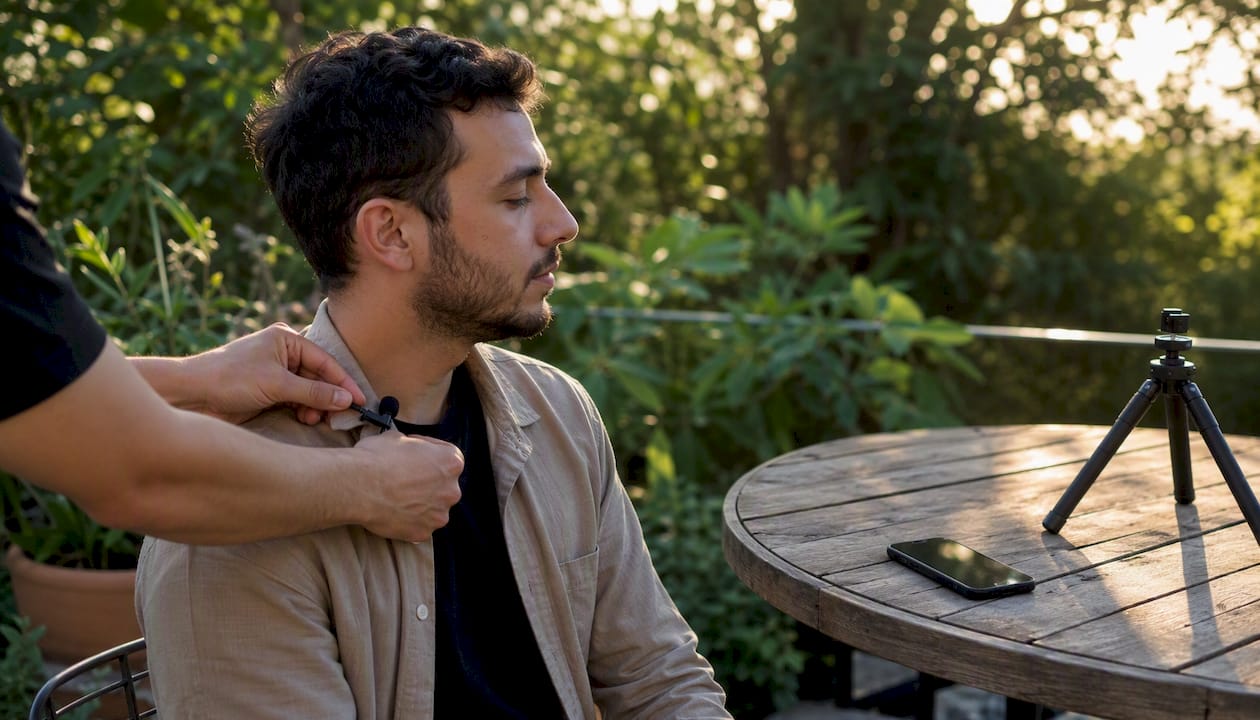
Your kit doesn't need to be fancy. A smartphone, a $20 lavalier microphone, a small tripod, a spare battery, and a quiet room with soft furnishings (to cut echo) will outperform expensive gear used carelessly. The genealogist's field guide on oral history interviews recommends testing your setup in the actual location, not just at your kitchen table, since HVAC noise and hard floors ruin more recordings than bad microphones do.
| Format | Best File Type | Ideal For |
|---|---|---|
| Audio | M4A or MP3 | Voice-first memories, low-pressure setting |
| Video | MP4 | Visual storytelling, gestures, home tours |
| Written | PDF or TXT | Legacy letters, structured memoirs |
| Hybrid | MP4 + PDF | Maximum fidelity, family archives |
How Do You Ask Questions That Unlock Real Memories?
Skip the interrogation. Open with something sensory, "What did your grandmother's kitchen smell like on a Sunday?", before you ever ask a date or a name. The Legacy Project's life interview guidance recommends the funnel technique: start broad, narrow to specifics, then follow up on whatever surprised you. Silence is a tool, not a failure. Let a pause sit for five full seconds before you jump in with another question.
Themed question sets keep sessions from wandering:
- Childhood: "What's a smell or sound that instantly takes you back to being a kid?"
- Relationships: "How did you know your spouse was the one?"
- Work and purpose: "What job taught you the most about who you are?"
- Values: "What's a rule you lived by that you'd want passed down?"
- Messages forward: "What do you want your great-grandchildren to know about you?"
Bring physical triggers into the room: photographs, an old recipe card, a keepsake, a favorite record. Reminiscence research backs this up. Multisensory prompts consistently surface memories that direct questions never reach on their own.
Pro Tip: If a topic turns painful, pause and ask directly: "Do you want to keep going, or should we come back to this another time?" Recording someone's grief without their explicit go-ahead undoes the trust you're trying to build.
What Should Happen Before, During, and After a Session?
Before:
- Test your equipment in the actual room, not a different one.
- Pick a time when your storyteller is rested, not right after a meal or medication.
- Record a two-minute test clip and play it back.
- Set out water and tissues where they're easy to reach.
- Re-explain the project's purpose and consent terms out loud.
During:
- State the date, location, and who's present at the very start of the recording.
- Ask open questions and let pauses breathe.
- Note approximate timestamps when something especially vivid comes up.
- Watch body language. If energy drops, wrap up rather than pushing for one more story.
After: Stop recording, back up the file immediately (before you do anything else), and jot down names, dates, and topics while they're fresh. Schedule a follow-up session or a review call within the week.
How Do You Organize Recordings So They're Searchable Later?
Raw recordings are only useful if someone can find them in five years. Transcription is where most families fall behind, so decide upfront whether you'll transcribe manually, use automated software, or blend both, running an automated pass first, then correcting names and dialect by hand. Timestamps and speaker labels turn a wall of text into something searchable.
A simple file-naming template avoids the "Recording\_47.mp3" problem: YYYYMMDD_PersonTopic_Device, for example 20260214_GrandmaKitchenStories_iPhone. Alongside each file, log metadata that will matter later:
- Date and location of the recording
- Names of everyone present
- Topic tags (childhood, career, wartime, recipes)
- Rights and permissions granted
- Sealed-until date, if any
Link related photos and documents to the recording they reference, rather than storing everything in separate, disconnected folders. Senarra's guide to oral history preservation walks through this same documentation structure in more depth.
Pro Tip: Never edit your only copy. Duplicate the raw file first, then trim or clean the copy. Original audio and video are the closest thing you have to a primary source.
How Long Do Story Recordings Actually Survive?
Hardware fails, cloud services shut down, and file formats go obsolete. Guides on family legacy preservation call this the three-copy rule: one copy on the device you recorded with, one on an external drive, and one off-site, whether that's cloud storage or a drive kept at another relative's house. Check your files once a year to confirm they still open.
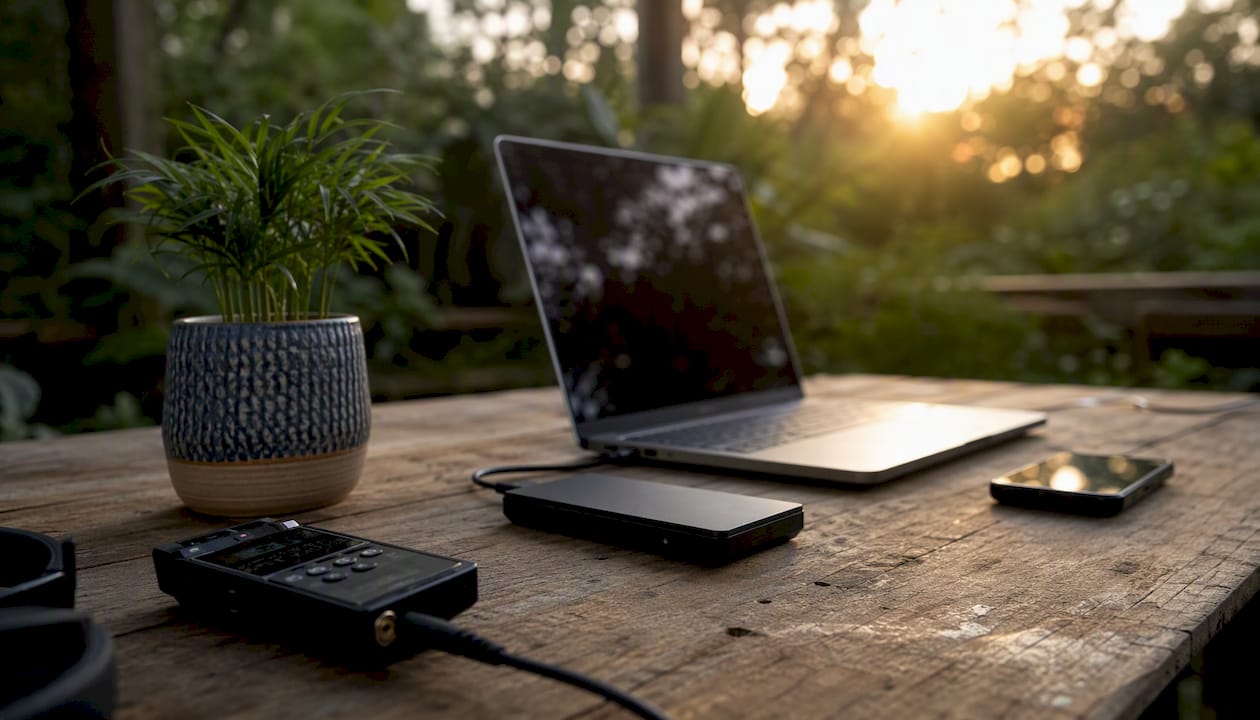
Stick to durable, widely supported formats. Lossless or high-bitrate audio and MP4 video using H.264 compression will still be readable in a decade, unlike proprietary formats tied to a single app that might not exist by then.
| Preservation Layer | Where | Check Frequency |
|---|---|---|
| Primary copy | Recording device | Weekly during active project |
| Secondary copy | External hard drive | Monthly |
| Off-site copy | Cloud storage or relative's home | Annually, verify it still opens |
If formal archiving matters to your family, the Veterans History Project and StoryCorps both accept donated interviews, though each has its own minimum length and file-format requirements worth checking before you record your final session.
Who Gets Access, and Who Decides What Stays Private?
Draft a short permission checklist before you share anything: who can listen, who can download, who can repost publicly, and who has authority to request something be sealed or removed. A verbal agreement works fine for a private family archive; a formal written release matters more once you're posting publicly, donating to an institution, or involving anyone outside the immediate family.
Release language doesn't need to be complicated: "I give permission for this recording to be shared with [family/organization] for [purpose], and I understand I can request changes or removal at any time." Keep that language in your metadata alongside the recording itself, not in a separate document that's easy to lose.
- Who can access the raw files
- Who can access edited or shared versions
- Whether public posting is allowed, and where
- How a request to redact or seal a section gets handled
Pro Tip: Store provenance details, who approved sharing, and what was agreed to, right inside the file's metadata. A recording without its permission history attached is a liability five years from now, not an asset.
How Do You Interview Someone With Memory Loss or Deep Grief?
Cognitive decline calls for shorter sessions, ideally 15 to 20 minutes, built around familiar sensory triggers rather than chronological questions. Involve a caregiver, and if there's a legal guardianship in place, get their consent recorded alongside the storyteller's own. A 2026 practical guide and companion workbook includes a dedicated section for interviewing older adults and people with early cognitive decline.
Grief-sensitive interviewing means pacing matters more than coverage. Offer breaks often, and don't press into trauma in the first session.
Pet stories deserve their own approach: shorter sessions, favorite toys or photos as prompts, and questions built around personality and daily routine rather than milestones. "What did she do every morning when you woke up?" beats "Tell me about her life."
Is It Ethical to Clone Someone's Voice From These Recordings?
Voice cloning only belongs in a family archive when consent is explicit, documented, and revisited, never assumed from the act of recording alone. Ask directly: "Are you comfortable with your voice being used to create a synthetic version people could interact with after you're gone?" Offer a real opt-out, not a buried checkbox.
Record who approved the cloning, what it can be used for, and whether there's a time limit, right in the file's metadata. If a cloned voice gets shared with anyone outside the immediate household, label it clearly as synthetic. Transparency here isn't optional; it's what keeps the technology from feeling like a trick played on grieving people.
- Get documented, revisitable consent before cloning any voice
- Log approval details and intended use in metadata
- Add a transparency label whenever a cloned voice is shared
- Keep the original recording untouched and separate from any cloned output
Pro Tip: Treat your raw recordings as immutable. Store any AI-generated voice artifacts in a separate folder with its own access controls, so nobody accidentally confuses a synthetic clip with the real thing.
Where Can You Learn More or Submit Your Recordings Formally?
If a formal archive is the goal, the Veterans History Project has minimum length requirements worth checking before your last session, and StoryCorps accepts donated conversations through its own submission process. The Library of Congress's American Folklife Center publishes practical guides for family interviewers.
For hands-on tools, the 2026 practical guide and companion workbook packages themed questions, session logs, and toolkit recommendations in one place. Formal submission makes sense when a story has historical or public value; private family archiving covers everything else, and it's the right call for most households.
What I've Learned Watching Families Wait Too Long
The families who regret the most aren't the ones who recorded badly. They're the ones who kept meaning to start. Dignity and trust come from asking permission at every step, not from having perfect audio. Senarra exists because capturing a voice while you still can, and organizing it so it's findable years later, shouldn't require technical skill or a film crew.
Capture, Organize, and Keep a Voice Alive With Senarra
Senarra is built for exactly the workflow this article just walked through, minus the spreadsheet of file names and the guessing about where backups live. The app captures text, audio, photo, and video memories in one place, transcribes voicemails automatically, and guides you through interview questions when you're not sure what to ask next.
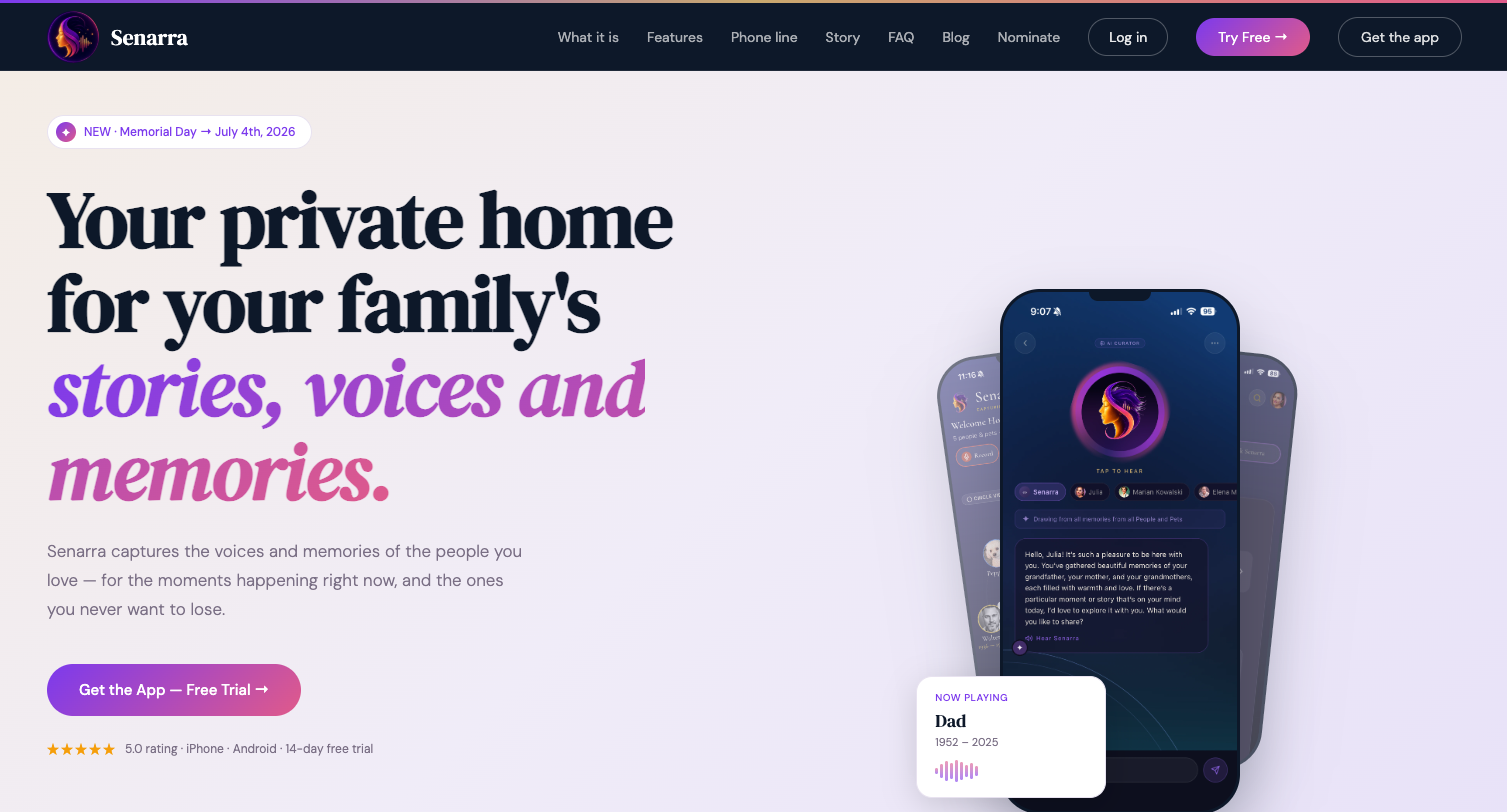
With explicit, revisitable consent, Senarra also offers voice cloning, so a loved one's actual voice can answer questions through AI-powered chat grounded in their real memories, accessible right from the app or by phone. Family members can collaborate securely, share access on their own terms, and even preserve a pet's personality through the same tools. If you've been meaning to start a recording project and keep putting it off, start a free trial at Senarra and record your first conversation this week, while the voice you want to keep is still easy to reach.
Where to Go Next for Deeper Archival Work
- Library of Congress: Preserving Family Stories, the definitive guide on formal oral-history recording and archive submission.
- StoryCorps and the Veterans History Project, both accept donated interviews with their own length and format minimums.
- Senarra's guide to creating a family oral history archive, covering taxonomy, access control, and long-term organization.
Frequently Asked Questions
What are the most important personal story documentation best practices to start with? Get ongoing, revisitable consent first, then pick one format and test your equipment before a real session. Everything else, from sensory prompts to backup plans, builds on those two decisions.
How long should a personal story interview last? The Library of Congress recommends 60 to 90 minutes for formal sessions, though shorter sessions work better for people with cognitive decline or grief-sensitive topics.
What's the best way to preserve recordings long term? Follow the three-copy rule: one copy on your device, one on an external drive, and one off-site or in the cloud, checked annually to confirm the files still open.
Do I need written consent, or is a verbal agreement enough? A verbal agreement, recorded at the start of the session, works for private family archives. Formal written releases matter more once you're sharing publicly or donating to an institution.
Is it okay to clone a loved one's voice using AI? Only with explicit, documented consent that includes an opt-out for future use. Keep the original recording untouched and label any synthetic voice clearly if it's shared beyond the immediate family.
Sources
- Preserving Family Stories: A guide to recording oral histories (Library of Congress)
- How to Interview Your Family Members Like an Oral Historian | KQED
- Life Interview Tips | The Legacy Project
- Practical guide for recording personal life stories and oral histories (2026) — companion workbook
- How to Record Your Life Story (Even If You're Not a Writer) | Memorial Merits