Dementia memory preservation is defined as the intentional use of therapeutic and family-centered strategies to maintain memories, identity, and emotional connection despite progressive cognitive decline. For families watching a loved one lose their grip on the past, this practice is not optional. It is a core part of quality dementia memory care. Clinically recognized approaches like reminiscence therapy and Cognitive Stimulation Therapy (CST) give families and caregivers a real framework to work from. Combined with practical home-based techniques, these strategies help protect what matters most: the stories, voices, and relationships that define a person.
What is dementia memory preservation and why does it matter?
Dementia memory preservation is the structured practice of using evidence-based therapies and family-led activities to slow memory loss and sustain emotional connection in people with dementia. Memory loss in dementia is not uniform. Procedural memories (how to ride a bike) often survive longer than episodic memories (what happened last Tuesday). Preservation strategies work by targeting the memory systems that remain most intact.
The stakes are high. Dementia affects not just recall but identity, relationships, and self-worth. When a person can no longer remember their own story, they lose a sense of who they are. Memory preservation addresses that loss directly by reinforcing identity through repeated, meaningful engagement with personal history.
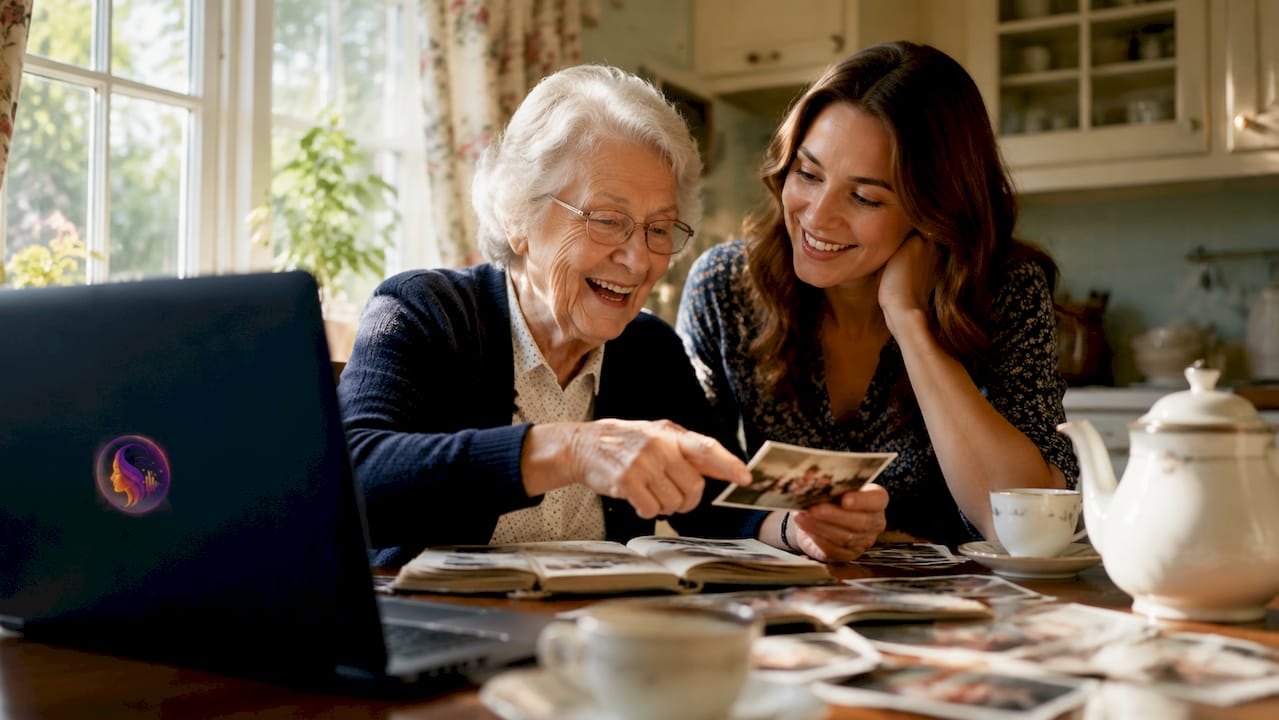
Families play a central role. Caregivers who actively participate in memory activities report stronger emotional bonds and reduced caregiver burnout. The practice benefits both the person with dementia and the people who love them.
What evidence-based therapies support dementia memory preservation?
Clinical research identifies several therapies that demonstrably improve cognitive function and emotional well-being in people with dementia. These are not experimental. They are recognized, studied, and recommended by dementia care specialists.
Reminiscence therapy
Reminiscence therapy (RT) is the structured practice of recalling and discussing past experiences, typically using photographs, music, or familiar objects as prompts. A meta-analysis of 24 randomized controlled trials involving 1,963 patients confirmed that RT significantly improves cognitive function, reduces depression, and enhances quality of life in older adults with cognitive impairment. That scale of evidence makes RT one of the most validated non-pharmacological tools in dementia care.
The neuroscience explains why it works. RT activates the hippocampus and medial prefrontal cortex, two brain regions central to autobiographical memory. Engaging these areas repeatedly helps reconsolidate memories and may slow functional decline. For families, this means that sitting with a loved one and looking through old photos is not just comforting. It is clinically meaningful.
Cognitive Stimulation Therapy
Cognitive Stimulation Therapy (CST) delivers clinically relevant improvements in communication, social interaction, and short-term cognition for people with mild to moderate dementia. A 2023 meta-analysis confirmed these benefits. CST typically involves group or individual sessions with themed activities like word games, discussions of current events, and sensory exercises.
CST works differently from RT. Where RT focuses on the past, CST engages the present. Together, they cover a broader range of memory and cognitive systems.
Other recognized approaches
- Reality orientation uses repeated cues about time, place, and identity to reduce confusion and anchor the person in the present.
- Cognitive rehabilitation sets personalized goals around everyday tasks, helping people maintain functional independence longer.
- Life review therapy is a structured form of RT that moves chronologically through a person's life, often resulting in a tangible narrative output.
"Reminiscence therapy does more than trigger pleasant memories. It activates the brain's core memory architecture, offering a non-pharmacological path to slowing cognitive decline while restoring a sense of self."
How can families preserve memories for loved ones with dementia?
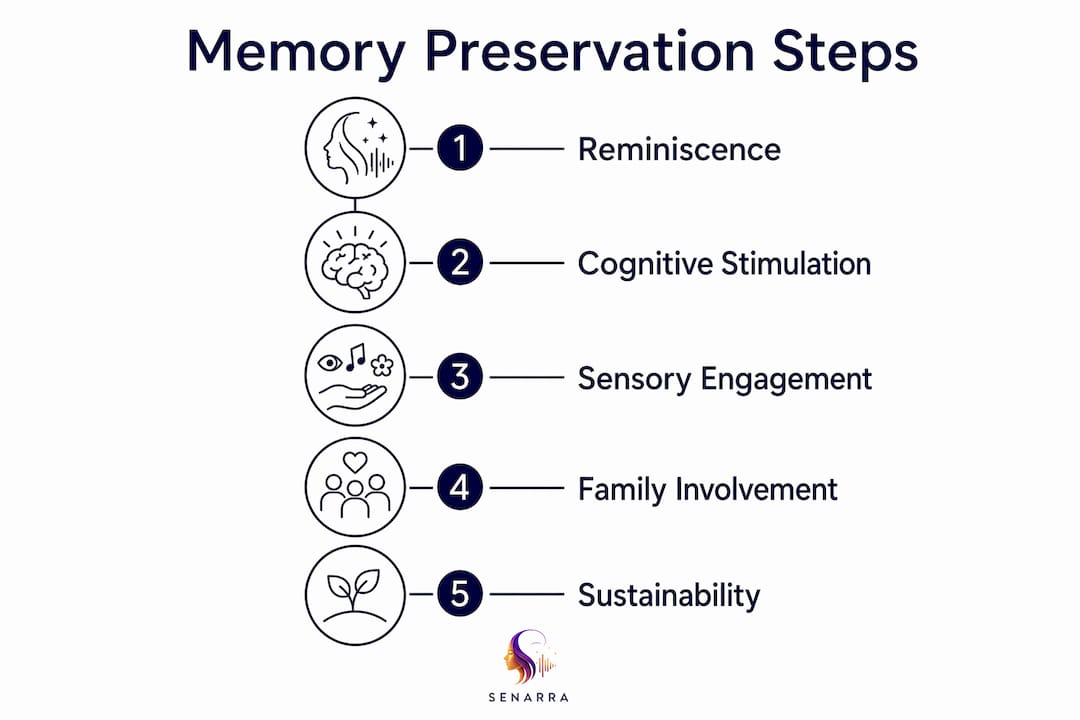
Families do not need clinical training to make a real difference. A structured five-step framework gives any family a clear path to follow.
- Set a clear goal. Decide what the final output will be. A printed memory book, a digital album, or a recorded audio collection all work. A defined goal prevents the project from stalling.
- Choose your capture method. Select the tools you will use consistently: a smartphone, a voice recorder, a scanner for old photos. Consistency matters more than quality.
- Collect multimedia. Gather photographs, letters, home videos, and audio recordings. Prioritize items that carry emotional weight and personal context.
- Curate into chapters. Organize memories thematically or chronologically. Group by life stages, relationships, or places. Structure transforms a pile of files into a story.
- Publish and share. Create the final output and make it accessible. Print it, share it digitally, or store it somewhere the whole family can reach.
Context enrichment is the step most families skip. A photograph without names, dates, and relationships becomes meaningless within a generation. Write captions. Record who is in the photo, when it was taken, and why it mattered. Capturing metadata about who, when, and where is what separates a living archive from an orphan file collection.
Tangible projects like memory boxes, scrapbooks, and printed photo books serve a specific purpose in dementia memory care. They give the person with dementia something physical to hold and explore. Sensory contact with familiar objects triggers recall in ways that screens often cannot.
Pro Tip: Treat the project as a narrative, not a data collection exercise. One completed memory book does more for a family than a hard drive full of unsorted files. Completion is the goal.
What role do sensory and emotional engagement play in dementia memory care?
Sensory engagement is one of the most powerful and underused tools in memory support for dementia. The brain's emotional and sensory memory systems often remain more intact than verbal recall, especially in later stages of dementia.
Music, familiar scents, textures, and taste can trigger vivid autobiographical memories and reduce anxiety in people with dementia. A song from a person's twenties can unlock a flood of associated memories that direct questioning cannot reach. Scent is particularly powerful because the olfactory system connects directly to the hippocampus and amygdala, the brain's memory and emotion centers.
Reminiscence therapy deliberately uses sensory prompts for exactly this reason. A caregiver might bring in a familiar perfume, a piece of fabric from a meaningful garment, or a recording of a favorite song before beginning a memory conversation. The sensory trigger lowers the barrier to recall.
The emotional benefits extend beyond memory itself. Engaging in reminiscing boosts self-esteem, social confidence, and reduces withdrawal and depression in people with dementia. The goal is not to test memory. The goal is to create joyful, connected moments that reinforce identity and belonging.
- Use a personal playlist of songs from the person's teens and twenties.
- Bring familiar scents: a favorite soap, a food they loved, or a garden flower.
- Offer textured objects with personal history: a worn tool, a piece of jewelry, a soft blanket.
- Cook or share a food tied to a strong memory, like a family recipe.
Pro Tip: Never frame sensory sessions as memory tests. Ask open questions like "Does this remind you of anything?" rather than "Do you remember when?" The first invites. The second pressures.
What practical steps help families maintain a memory preservation project?
Sustainability is where most family memory projects fail. The initial effort is strong, but momentum fades. Building routines and using sound digital practices keeps the project alive.
Consistent daily routines reduce anxiety and confusion in people with dementia, which directly improves their ability to engage in memory activities. A predictable schedule frees cognitive capacity for recall and social interaction. Schedule memory sessions at the same time each week, in the same comfortable space, with the same familiar cues.
For digital archives, the 3-2-1 backup rule is the standard: keep 3 copies of every file, stored on 2 different formats, with 1 copy offsite. This protects against hardware failure, accidental deletion, and platform obsolescence. Use open standard file formats like JPEG for photos and MP4 for video. Proprietary formats risk becoming unreadable as software changes.
Platform obsolescence is a real threat. Services shut down. Apps stop being supported. A physical and digital combination gives the archive the best chance of surviving long term. Printed books do not require software updates.
| Approach | Best for | Key limitation |
|---|---|---|
| Physical archive (printed books, scrapbooks) | Sensory engagement, immediate accessibility | Vulnerable to damage, hard to duplicate |
| Digital archive (cloud, external drives) | Long-term storage, easy sharing | Requires ongoing maintenance and format updates |
| Combined physical and digital | Resilience and accessibility | Requires more initial effort to set up |
Pro Tip: Assign one family member as the archive steward. Caregiver digital archive responsibilities should not be shared vaguely. One person owns the backups, the updates, and the format checks.
What I've learned about memory preservation that most guides miss
Most families approach dementia memory preservation as a one-time project. They gather photos, record a few conversations, and consider it done. That mindset is the single biggest reason these projects fail to deliver lasting value.
Memory preservation is stewardship, not archiving. The archive needs tending. Formats change. Family members who hold context pass away. A file labeled "IMG\_4872" tells the next generation nothing. The story behind the image is the asset, not the image itself.
The other thing I have seen families underestimate is the identity dimension. For a person with dementia, engaging with their own story is not nostalgia. It is a form of self-recognition. When a person hears their own voice on a recording, or holds a photo from their wedding day, they are not just remembering. They are being reminded that they exist, that they mattered, and that they are loved. That is a different kind of medicine.
Involve the wider family early. Cousins, siblings, and old friends hold pieces of the story that immediate caregivers do not. A single phone call with a childhood friend can surface memories that no amount of prompting from a spouse will reach. The more voices in the archive, the richer and more resilient it becomes.
Finally, do not wait for a diagnosis to start. The best time to capture someone's voice and stories is while they are fully present. Digital storytelling for families is most powerful when it begins before loss, not after.
— Bryan
Senarra and the work of preserving what matters most
Families navigating dementia memory care need more than advice. They need tools that make preservation feel possible, not overwhelming.
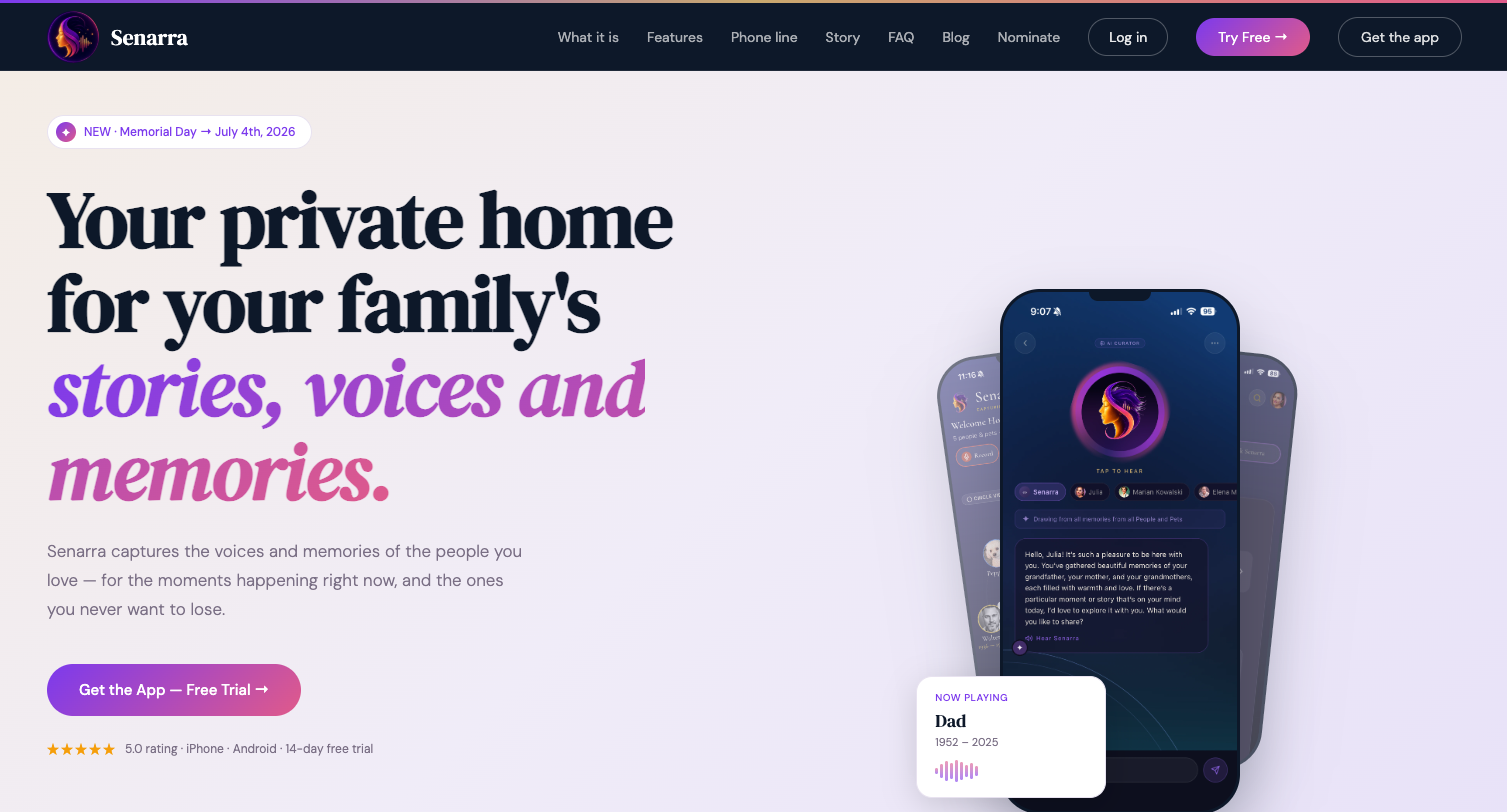
Senarra is built for exactly this. It captures a loved one's voice and stories in their authentic voice, creating a living memory that families can return to whenever they need it. Features like voice cloning and a memory line accessible by phone mean that connection does not end when a conversation does. For families working through the strategies in this article, Senarra provides the platform to collect, curate, and keep those memories safe. Learn more about memory curation for families and how Senarra supports the full preservation process.
Key takeaways
Dementia memory preservation works best when families combine evidence-based therapies, structured storytelling, sensory engagement, and consistent digital maintenance into one sustained effort.
| Point | Details |
|---|---|
| Reminiscence therapy is clinically validated | A meta-analysis of 24 trials confirmed RT improves cognition, reduces depression, and enhances quality of life. |
| Sensory prompts unlock recall | Music, scent, and familiar textures trigger autobiographical memories when verbal prompts cannot. |
| Context is as valuable as content | Metadata about who, when, and where transforms files into meaningful stories for future generations. |
| Completion beats collection | One finished memory book delivers more lasting value than an unsorted archive of thousands of files. |
| Digital archives need ongoing care | Apply the 3-2-1 backup rule and use open file formats like JPEG and MP4 to future-proof memories. |
FAQ
What is dementia memory preservation?
Dementia memory preservation is the use of intentional therapeutic and family-led strategies to maintain memories, identity, and emotional connection in people experiencing cognitive decline. It includes clinical approaches like reminiscence therapy and practical activities like memory books and sensory engagement.
What helps memory in dementia most effectively?
Reminiscence therapy is one of the most evidence-backed approaches, with a meta-analysis of 24 randomized controlled trials confirming improvements in cognition, mood, and quality of life. Sensory engagement using music, scent, and familiar objects also produces strong results by activating intact emotional memory systems.
How do families start a dementia memory care project?
Start by defining one clear output, such as a printed memory book or a recorded audio collection, then gather photos, letters, and recordings with full context notes. A structured five-step framework covering goal setting, capture, collection, curation, and publishing prevents the project from stalling.
How often should a digital memory archive be updated?
A digital archive needs regular maintenance, not a one-time setup. Apply the 3-2-1 backup rule, check that file formats remain accessible, and add new context notes as family knowledge surfaces. Assigning one family member as the archive steward keeps this from being neglected.
Can memory preservation slow dementia progression?
Memory preservation strategies do not reverse dementia, but reminiscence therapy has been shown to slow functional decline and reduce depression. The primary goal is improving quality of life, reinforcing identity, and sustaining emotional connection for as long as possible.